
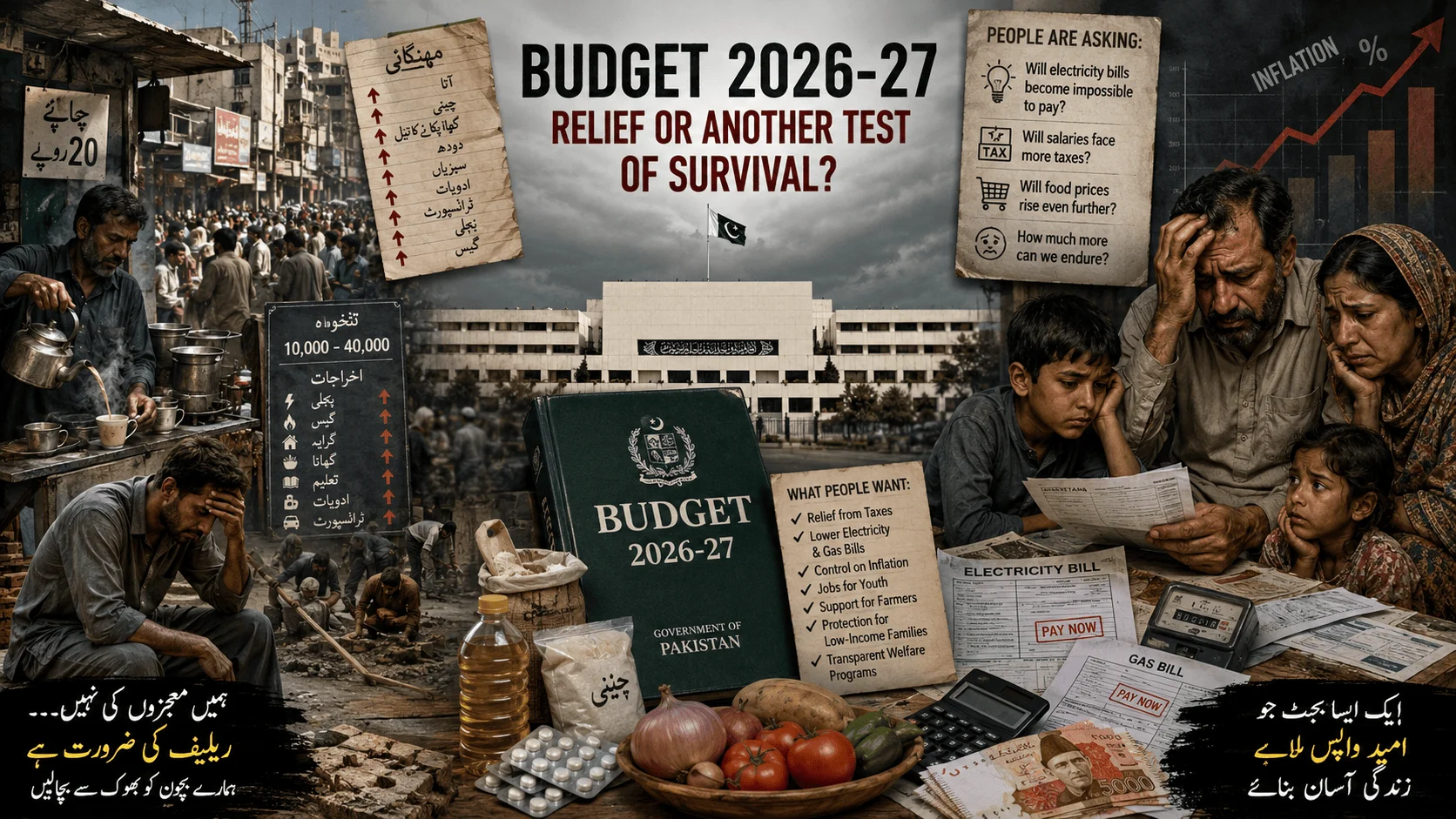
Pakistan’s Budget 2026–27: Millions of Eyes Fixed on Parliament for Relief
Pakistan Budget 2026–27 Relief: Will Parliament Answer the Cries of Millions?

By Saadia Sehar Haidari
From the narrow streets of villages to the crowded markets of major cities, from roadside tea stalls to busy office corridors, one question echoes across Pakistan today: Will the coming budget bring relief, or will it deepen the suffering of ordinary people already crushed by inflation and economic uncertainty?
As the Federal Budget 2026–27 approaches, millions of anxious eyes are fixed on Parliament. For the ruling elite, the budget may be a document filled with figures, targets, and economic negotiations. But for the common citizen, it is nothing less than a question of survival.
Pakistanis are already living under what many describe as a silent economic lockdown — a painful reality where families are forced to reduce meals, delay medical treatment, cut children’s educational expenses, and sacrifice even the most basic necessities simply to stay alive.
Inflation is no longer confined to newspaper headlines or television debates; it has entered kitchens, school bags, medicine cabinets, and electricity meters.
Today, a single salary often supports families of seven, eight, or even more members. Yet incomes remain stagnant while the prices of flour, sugar, cooking oil, milk, vegetables, medicines, transport, school fees, electricity, and gas continue to rise relentlessly. For countless households, every month begins with fear and ends with unpaid bills.
For the middle class, life has become a slow and painful collapse.
A laborer earning between Rs10,000 and Rs40,000 a month can no longer sustain a household with dignity. A major portion of income disappears into electricity, gas, and fuel expenses alone. Utility bills arrive like punishment notices. Petrol price hikes increase transportation costs, which eventually raise the prices of essential food items. Rent continues to climb beyond reach, while medicines for elderly parents and sick children are becoming unaffordable luxuries.
The painful truth is visible everywhere.
Many families have quietly stopped buying meat altogether. Mothers skip meals so their children can eat first. Fathers spend sleepless nights calculating expenses with trembling hands, silently hiding tears behind forced smiles. Young graduates wander through cities searching for jobs that do not exist. Pensioners say medicines consume their entire pension before the month even begins.
This is no longer merely economic hardship — it is emotional and psychological exhaustion.
Financial pressure is breaking families from within. Anxiety, depression, hopelessness, and domestic tensions are increasing rapidly. Stories of people crushed by debt and unbearable inflation are becoming alarmingly common. No nation can truly progress when its citizens spend every waking moment worrying about survival.
The upcoming budget is reportedly being prepared under strict economic conditions and pressure from the International Monetary Fund (IMF). Discussions surrounding new taxes, increased petroleum levies, and higher utility tariffs have already created deep public anxiety.
But the question ordinary Pakistanis continue to ask is painfully simple:
How much more can the people endure?
Will electricity bills become impossible to pay?
Will salaried individuals face additional taxes?
Will food prices rise even further?
Will another father lose hope because he cannot feed his children?
The people are not asking for luxury.
They are asking for dignity.
They want affordable food, fair utility bills, employment opportunities, stable prices, and the ability to educate their children without fear of financial ruin. Farmers need relief from rising fertilizer prices, diesel costs, and electricity shortages. Shopkeepers need customers who can once again afford to buy goods. Young people need jobs instead of endless promises. Widows, pensioners, and daily wage workers need protection from an economy that grows harsher with every passing month.
Economic experts may speak about fiscal discipline, reforms, and market confidence, but the common man measures economic success differently:
Can I feed my family?
Can I pay my bills?
Can my children sleep without hunger?
A budget cannot be considered successful merely because international lenders approve it. A truly successful budget is one that restores hope and dignity to ordinary citizens.
The rulers of this country must remember that budgets are not prepared for spreadsheets alone. They shape human lives. Every tax imposed, every subsidy removed, and every tariff increased directly affects millions already standing at the edge of despair.
At this critical moment, the people of Pakistan expect leadership with compassion, wisdom, and courage. They expect policies that protect the vulnerable instead of placing additional burdens upon them.
The nation seeks immediate relief measures:
Reduction in taxes on essential food items
Lower electricity and gas burdens
Salaries and wages adjusted according to inflation
Employment opportunities for youth
Protection for middle- and lower-income families
Transparent and honest social welfare programs
Relief for farmers, laborers, pensioners, and small businesses
Pakistan today stands at a sensitive crossroads. Economic stability is important, but stability without public relief cannot sustain a nation. A hungry household does not understand fiscal targets; it understands only empty plates, rising bills, and sleepless nights.
As Parliament prepares to unveil Budget 2026–27, millions of Pakistanis wait with silent prayers in their hearts and uncertainty in their eyes.
They are not demanding miracles.
They are simply asking their leaders:
“Give us relief, not another test of survival.”
Comments are closed, but trackbacks and pingbacks are open.