
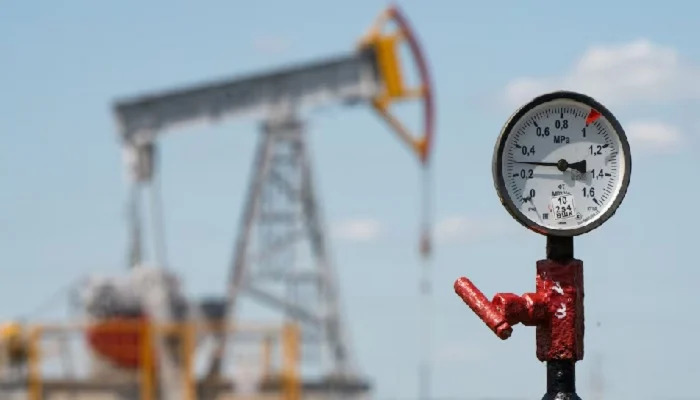
Oil and equities climb amid Iran tanker strike, Trump signals
Oil Hits Record Highs and Stocks Bounce Back — But the Strait of Hormuz Still Has the World Holding Its Breath

Global Stock Markets – (Web Desk) – Global stock markets climbed on Tuesday, and oil prices were heading toward their biggest monthly rise ever, wrapping up a rough and unsettling March that has been largely shaped by the ongoing war with Iran.
The tension escalated early Tuesday when Iran struck a fully-loaded oil tanker near Dubai, coming just after President Donald Trump threatened to wipe out Iran’s energy infrastructure if it kept the Strait of Hormuz blocked. It was yet another jarring moment in a conflict that has kept the world on edge.
Yet despite the attack, investors found a reason to feel cautiously hopeful. A Wall Street Journal report revealed that Trump has privately told his team he may be open to wrapping up the military campaign — even if the strait doesn’t fully reopen. That news gave markets the boost they needed.
This war, which kicked off on February 28 when the US and Israel launched joint strikes on Iran, has rattled financial markets worldwide and stoked fears of a global recession.
By the numbers, world stocks — as measured by MSCI’s global index — gained about 1%, rising to 971.29. Back home on Wall Street, the Dow jumped 1.21%, the S&P 500 added 1.52%, and the tech-heavy Nasdaq led the charge with a 2.02% gain.
Across the Atlantic, European markets also moved higher, with the main indexes gaining around 0.85–0.91%. That said, European stocks are still on track for their worst month since June 2022 — a stark reminder of just how much damage this conflict has done.
“We’re in oversold territory, and this glimmer of potentially good news has helped fuel today’s bounce,” said Fiona Cincotta, a senior market analyst at City Index. She was quick to add, though, that investors shouldn’t get too carried away just yet.
Colin Graham of Dutch investment firm Robeco put it plainly: markets are “taking the US administration at their word” that the war will end. But he warned that nobody has thought through what happens next — especially if the Strait of Hormuz stays closed.
On the oil front, Brent crude surged nearly 5% to $118.38 a barrel, heading for a record monthly gain. US crude (WTI), however, dipped slightly to $102.27.
Oil has been on a tear since the war began, largely because Iran’s near-total blockade of the Strait of Hormuz — a critical waterway that carries roughly one-fifth of the world’s oil and natural gas — has squeezed global supply. Feeling it at home, the average American is now paying $4 a gallon at the pump for the first time since the pump price spike of recent years.
The oil shock meant eurozone inflation jumped past the European Central Bank’s 2% target in March, data showed.
Government bond yields had retreated from multi-year highs at the start of the week after rising sharply this month because of the conflict, with investors appearing to refocus on the risk of weaker growth stemming from the energy shock.
The German 2-year yield DE2YT=RR fell 0.2 basis points to 2.62%.
The European Union’s energy chief has told governments to prepare for “prolonged disruption” to energy markets as a result of the war, ahead of an emergency meeting on Tuesday.
“If the Strait of Hormuz remains closed for the next week or two, then I think we’ll be raising our probabilities of recession in our scenario analysis,” Robeco’s Graham said, adding that this was not yet the case.
Pakistan, China urge US-Israel and Iran stop strikes, dialogue
The Japanese yen JPY= strengthened 0.35% against the greenback to 159.14 per dollar.
Japan’s finance minister said that the government was ready to respond “on all fronts” against foreign exchange volatility, underscoring Tokyo’s alarm over the yen’s recent slide.
In commodities, spot gold XAU= rose 2.25% to $4,612.60 an ounce.
Comments are closed, but trackbacks and pingbacks are open.