
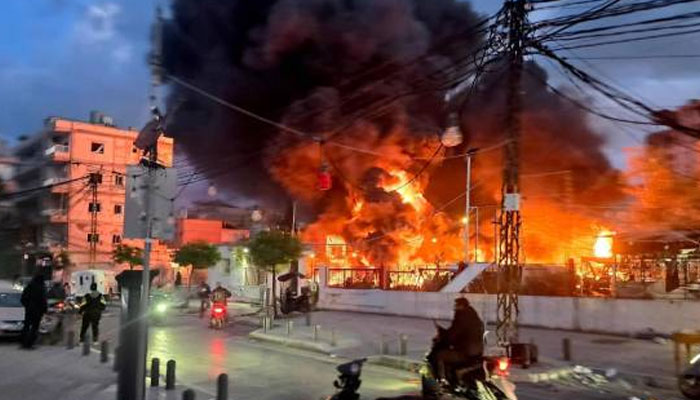
Tehran hits Kurdish groups in Iraq as conflict widens
Middle East conflict escalates as Iran retaliates against US strikes

TEHRAN (Web Desk) – Fresh explosions were reported in Tehran on Thursday as Iran targeted Iraq-based Kurdish groups and issued a stern warning to “separatist groups” amid the widening Middle East conflict.
The war erupted Saturday following United States and Israel strikes that reportedly killed Iran’s Supreme Leader Ali Khamenei. The confrontation has since spread across the region, disrupting energy markets, causing global economic pressure, and creating travel chaos.
Iran’s retaliatory strikes have targeted Gulf neighbours hosting US bases, while Israel has hit Lebanon, moving troops across its border. Tehran said its attacks on Iraq-based Kurdish groups were aimed at factions “opposed to the revolution,” after reports suggested the US was considering arming Kurdish guerrillas to infiltrate Iran.
Ali Larijani warned, “Separatist groups should not think that a breeze has blown and try to take action. We will not tolerate them in any way.”
US Senate backs Trump strikes on Iran
The conflict has already caused mass casualties, particularly in Lebanon. State media reported Israeli strikes killed at least two civilians in a Tripoli refugee camp and three more on a road in southern Lebanon. Israeli military operations have displaced tens of thousands in recent days after Hezbollah began firing rockets into Israel.
In Qatar, authorities evacuated residents living near the US embassy in Doha after earlier preventing attacks on Hamad International Airport. Gulf states, including the UAE, Saudi Arabia, and Qatar, have intercepted Iranian missiles, including one targeting Saudi Arabia’s Ras Tanura refinery. Turkey was also involved after a missile launched from Iran was destroyed by NATO air defenses en route to Turkish airspace.
The conflict reached the high seas when a US Navy submarine torpedoed an Iranian warship, the IRIS Dena, off the coast of Sri Lanka, the US Senate rejected a resolution aimed at limiting further US military action. Republican support for President Donald Trump allowed the continuation of strikes without congressional restrictions.
The war shows no immediate signs of abating, raising concerns over a prolonged regional crisis with potentially far-reaching consequences.


Comments are closed, but trackbacks and pingbacks are open.