
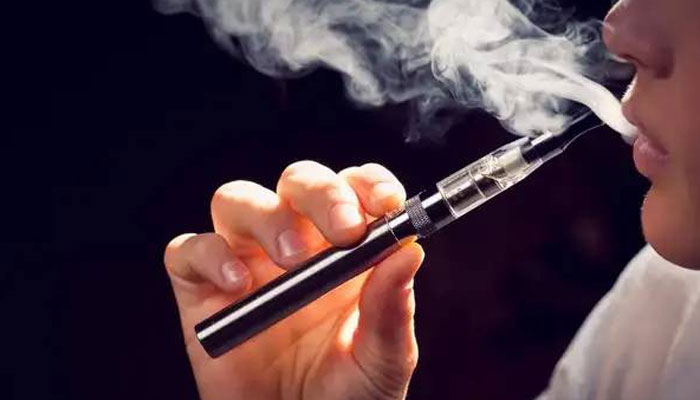

ISLAMABAD: (Web Desk) – The Senate Standing Committee on National Health held a detailed session on Tuesday under the chairmanship of Senator Amir Waliuddin Chishti, focusing on a private member’s bill to curb vaping among minors and reviewing medical college admission policies.
During deliberations, Senator Sarmad Ali criticized the Ministry of Health’s response to his proposed bill banning vaping for children under 18. “It makes you want to bang your head after reading the ministry’s response,” he said, emphasizing that technical concerns had already been addressed. He plans to reintroduce a version specifically targeting minors.
Senator Sarmad questioned why vaping is restricted while other harmful substances, such as alcohol, remain legally accessible, drawing parallels with Pakistan’s historical alcohol ban.
Federal Health Minister Mustafa Kamal said the government was ready to address all concerns, urging lawmakers not to link vaping to tax issues. He noted that vaping is banned in 47 countries and strictly regulated in others. Kamal stressed that effective regulation is needed as the trend grows among youth and foreign exchange is being lost due to imports.
The committee also examined admission policies of medical colleges under the Pakistan Medical and Dental Council. Officials explained that 50 percent of admission weightage is based on the MDCAT exam, with the remaining 50 percent based on intermediate exam results. Lawmakers expressed concern that heavy reliance on MDCAT marginalizes underprivileged students and noted that many prominent doctors built their careers before the exam’s introduction.
Senator Anusha Rehman highlighted financial barriers preventing qualified students from securing admission. Senator Rubina Khalid warned that the current system favors wealthy students, while Senator Agha Shahzeb questioned the rationale for MDCAT’s 50 percent weightage.
The committee raised concerns over vacant medical seats in Sindh and Punjab, attributing the issue to high MDCAT weightage and stringent criteria. Senator Anusha Rehman urged introducing a supplementary facility in MDCAT, noting that students can lose an entire academic year over a single mark. Chairman Chishti recommended fixing passing marks at 33 percent and instructed PMDC to submit a detailed report.
Trump, Mamdani meet again to discuss housing, ICE detentions
Members also criticized high tuition fees at private medical colleges, with some charging up to Rs3 million annually despite government directives setting fees at Rs1.8 million. Health Minister Mustafa Kamal assured the committee that PMDC would review admission criteria, passing marks, and fee structures, acknowledging infrastructure and faculty limits that cap annual medical student enrollment at 22,000.
The committee concluded the session by requesting comprehensive reports from the ministry and PMDC, signaling potential further reforms in vaping regulations, medical admission policies, and fee compliance.
Comments are closed, but trackbacks and pingbacks are open.