
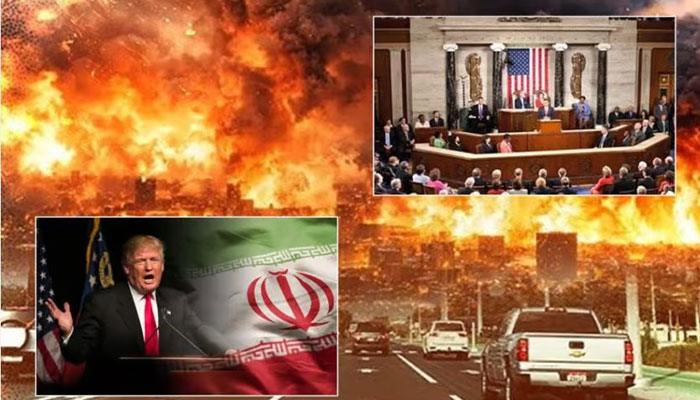
US Senate backs Trump strikes on Iran
Senate vote allows continued US military strikes on Iran

WASHINGTON (Web Desk) – The United States Senate has rejected a resolution aimed at blocking further US military action against Iran, effectively allowing continued strikes ordered by Donald Trump.
The vote highlighted a deeper dispute in Washington over the limits of presidential authority during wartime and the role of Congress in approving military operations abroad.
Lawmakers voted 47–53 against the measure, which sought to restrict the administration’s ability to continue military operations against Iran without formal authorization from Congress. Most Republicans opposed the resolution, arguing that limiting the president’s authority during an ongoing conflict could undermine US security.
The proposal was introduced by Senator Tim Kaine and received backing from some Democrats as well as Republican Senator Rand Paul. Supporters argued that decisions involving war should remain the responsibility of Congress under the US Constitution.
Deputy PM Ishaq Dar visits Iranian Mission after Khamenei’s killing
The resolution called on the administration to withdraw US forces from hostilities with Iran unless lawmakers formally approved the military campaign. Its defeat suggests that the United States House of Representatives may also reject a similar attempt to limit the president’s powers.

Advocates of the proposal warned that the ongoing operations risk turning into a full-scale war without proper legislative oversight. They pointed to statements from officials describing the strikes as part of a broader conflict.
The administration, however, has defended the military action as a response to Iranian aggression. US airstrikes, reportedly conducted in coordination with Israel, were said to have targeted senior Iranian leadership and key military infrastructure, including operations linked to Supreme Leader Ali Khamenei.
President Trump has indicated that the campaign will continue for as long as necessary, refusing to outline a specific timeline for the operation. His stance has raised concerns among critics about the possibility of a prolonged military conflict in the region.
Opponents of the resolution also argued that limiting executive authority during wartime could weaken the country’s ability to respond quickly to threats.
The debate has revived discussion of the War Powers Resolution of 1973, which allows the president to deploy troops temporarily but requires congressional approval for extended military engagements.
Meanwhile, retaliation from Tehran has reportedly caused casualties among US allies in the region and resulted in the deaths of several members of the United States Army. Details about the victims have not been fully disclosed, prompting calls for greater transparency.

Comments are closed, but trackbacks and pingbacks are open.