
US Clears Saudi Path for Nuclear Enrichment Program
Washington-Riyadh Nuclear Agreement Sparks Regional Security Debate

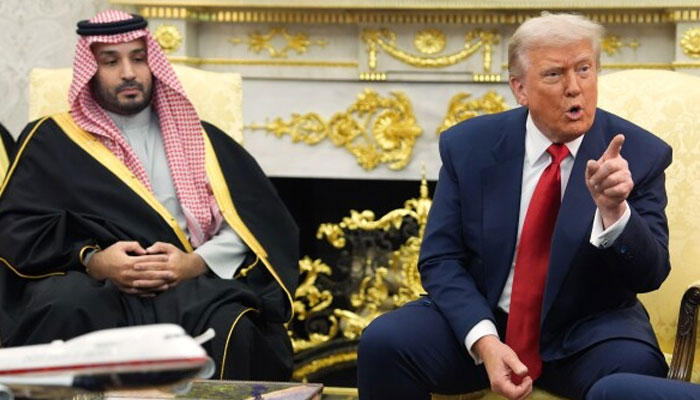
WASHINGTON: (News Desk) – The United States has reportedly agreed to allow Saudi Arabia to develop a civilian nuclear program with uranium enrichment capabilities, according to CNN, which cited draft agreements and sources familiar with ongoing negotiations.
The report stated that discussions over the proposed agreement have concluded and that the deal is now awaiting approval and signature from President Donald Trump.
Under the reported framework, Riyadh would not be required to implement the International Atomic Energy Agency’s (IAEA) Additional Protocol, a measure that provides inspectors with expanded access to nuclear sites and strengthens efforts to identify undeclared nuclear activities.
The agreement would reportedly provide Saudi Arabia with access to uranium enrichment technology similar to the capability that has remained at the center of international disputes involving Iran. The United States and Israel have previously raised concerns that Iran’s enrichment activities could potentially support a nuclear weapons program, while Tehran has repeatedly maintained that its nuclear ambitions are strictly peaceful.
Iran argues that its membership in the Nuclear Non-Proliferation Treaty (NPT) gives it the right to enrich uranium for civilian energy purposes. The country had also implemented the IAEA Additional Protocol temporarily, allowing enhanced inspections beyond standard safeguards.
Saudi Arabia has been pursuing the development of a nuclear sector for years, citing goals such as utilizing domestic uranium resources, diversifying energy production, reducing domestic oil consumption, expanding exports, and supporting industrial and water desalination projects. Riyadh has maintained that it has the same rights as other NPT members to pursue peaceful nuclear technology.
If finalized, the reported agreement would mark a shift from Washington’s traditional “gold standard” model for nuclear cooperation, under which countries receiving US nuclear assistance have been encouraged to abandon uranium enrichment and plutonium reprocessing capabilities. The 2009 US-UAE nuclear agreement became a key example of this approach after Abu Dhabi agreed to permanently forgo such activities.
Arms-control specialists have warned that permitting Saudi Arabia to develop enrichment capabilities could challenge global nonproliferation standards and encourage similar demands from other countries in the region. Experts note that while enrichment technology can support civilian nuclear energy, the same centrifuge infrastructure could potentially be modified to produce weapons-grade uranium if enrichment levels are increased.
Comments are closed, but trackbacks and pingbacks are open.