
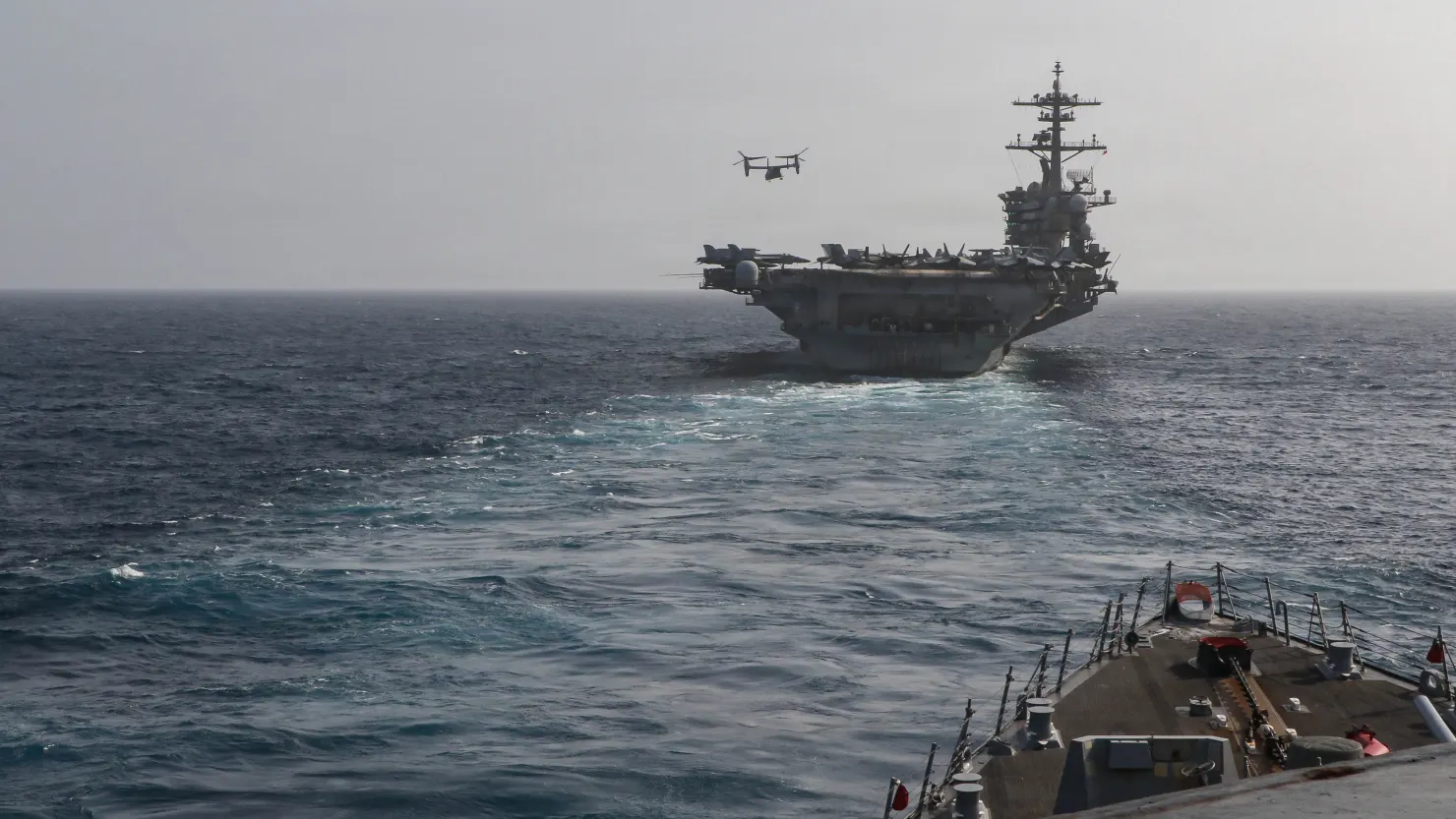
U.S. Hits Iran for Ninth Straight Night as Hormuz Tensions Boil Over
Strait of Hormuz Strikes Today Push Oil Prices Higher Amid Growing Fears of Wider War

US vs IRAN – (Special Correspondent/Web Desk) – The U.S. hits Iran for ninth consecutive night on Sunday, marking another chapter in a campaign meant to weaken Tehran’s ability to strike ships passing through one of the world’s busiest oil routes.
U.S. Central Command confirmed the latest round of strikes wrapped up around 10 p.m. ET. The three-hour operation hit military command posts, air defense sites, coastal radar stations, and missile and drone launch points across Iran.
Officials say the goal is simple. They want to stop Iran from threatening commercial ships and civilian sailors moving through the Strait of Hormuz. This narrow waterway once carried close to one-fifth of the world’s oil supply.
News about strait of hormuz strikes today has spread fast, as both sides trade blame over a June agreement meant to calm tensions. Washington and Tehran now accuse each other of breaking that deal.
The fighting began back in late February when U.S. and Israeli forces launched their first strikes on Iran. Since then, the conflict has dragged on for nearly five months, and the toll keeps rising.
Oil markets reacted quickly to the news. Brent crude jumped almost 3%, reaching close to $90.70 a barrel. U.S. crude wasn’t far behind, climbing over 2% to settle near $84.60.
Sadly, human lives continue to be lost. American forces confirmed a third service member died in recent clashes. Search teams also found remains believed to belong to a soldier previously reported missing in Jordan. That brings the total American death count to 17 since the war started.
On the Iranian side, officials report at least 50 people killed and more than 500 injured this month alone due to renewed American strikes.
Experts say the core problem lies in unclear wording. Michael Feller, a strategist at Geopolitical Strategy, explained that the original agreement never spelled out how violations should be handled. That gap left both sides arguing over whether the deal even still stands.
Strikes have also expanded beyond military targets. A desalination plant known as Bonji was hit, cutting off clean water access for roughly 10,000 residents nearby.
Iran hasn’t stayed quiet either. Its forces have launched fresh attacks on nearby nations, including Bahrain, Saudi Arabia, and Jordan. Kuwait reported intercepting hostile drones fired from Iranian territory early Monday.
Hormuz Southern Corridor Route Becomes Flashpoint for New Danger
The hormuz southern corridor route, backed by the U.S. and Oman, has turned into a serious risk zone. Iran’s Revolutionary Guard claims two oil tankers exploded while trying to use this so-called unsafe path.
Tehran insists ships must stick to routes it approves. Anything else, according to Iranian authorities, puts vessels in danger.
Shipping data backs up growing caution. Maritime tracking firm Kpler reported only eight ships passed through Hormuz on Thursday, down sharply from 15 the day before. That’s the slowest traffic seen in three weeks.
Still, U.S. officials push back against claims that shipping has nearly stopped. Energy Secretary Chris Wright said roughly two-thirds of normal traffic, close to 14 million barrels daily, continues moving through the strait.
Before the war, nearly 20 million barrels of oil and fuel products passed through this route every single day.
Speaking on ABC News Sunday, Wright dismissed reports suggesting shipping had collapsed, calling them inaccurate and misleading.
As tensions rise across the Gulf, the world watches closely, wondering how much further this conflict might spread before calm returns.
Comments are closed, but trackbacks and pingbacks are open.