
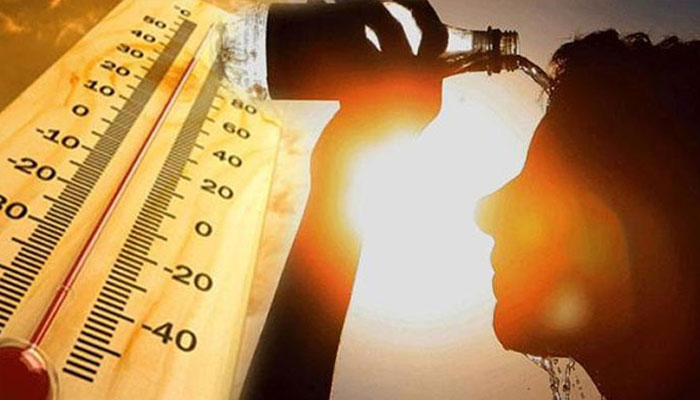

Every summer, Pakistan talks about heatwaves.
We discuss temperatures, power shortages, air-conditioners, water consumption and the possibility of rain. But there is a deeper question that deserves much greater attention:
Are our cities themselves making the heat worse?
Walk through a densely built urban area at noon and compare it with a tree-lined neighbourhood. The difference is immediately noticeable. Concrete buildings, asphalt roads, vehicles and paved surfaces absorb and retain heat, while trees and vegetation provide shade and cooling.
This is part of what scientists describe as the urban heat island effect—the tendency of built-up urban areas to become warmer than surrounding areas because buildings, roads and other surfaces absorb and release heat.
For Pakistan’s rapidly expanding cities, this is no longer an abstract environmental discussion. It is becoming a question of public health, energy, productivity and urban survival.
Islamabad, Rawalpindi, Lahore, Peshawar, Karachi and other cities have expanded enormously. New housing schemes, commercial centres, roads and buildings have transformed the urban landscape. Yet development has not always been accompanied by a similar expansion of trees, parks, shaded pedestrian routes and climate-sensitive architecture.
The result is a city that often asks its residents to fight heat with machines.
When temperatures rise, people switch on air-conditioners. Electricity demand increases. Household bills rise. Power infrastructure comes under pressure. Those who cannot afford cooling equipment are left much more exposed.
This is why heat is not merely a weather story.
It is an economic story.
A construction worker standing under the sun, a traffic police officer directing vehicles, a delivery rider travelling across the city, a street vendor sitting beside a busy road and a farmer working in the fields experience heat very differently from someone sitting inside an air-conditioned office.
For millions, avoiding heat is not an option.
This makes urban planning a public-health issue.
Trees are among the simplest tools available. But tree planting should not become a ceremonial exercise in which saplings are planted for photographs and forgotten afterwards. What cities need are long-term urban forests, properly maintained green spaces and shaded pedestrian corridors.
A mature tree provides something no air-conditioner can provide to a pedestrian: shade without an electricity bill.
Buildings also matter.
The design of roofs, windows, ventilation systems, building orientation and construction materials can influence indoor temperatures and energy consumption. Cities around the world are increasingly exploring reflective roofs, green roofs, shaded streets and climate-sensitive building design.
Pakistan needs to make these considerations part of ordinary urban planning rather than treating them as luxury ideas.
When a new housing development is approved, authorities usually discuss roads, commercial areas, plots and infrastructure. But there should be equally serious questions.
Where will pedestrians walk?
Where will children find shade?
How many trees will exist after twenty years?
Where will rainwater go?
What happens during an extreme heat event?
Where can vulnerable citizens find temporary relief?
These are not cosmetic questions. They are questions about the survival and livability of a city.
Schools deserve particular attention.
Children should not merely be told to drink more water during hot weather. School buildings, playgrounds, classrooms and transport arrangements should also be designed with extreme heat in mind.
The same principle applies to public transport.
A bus stop without shade may be a minor inconvenience for an office worker. For an elderly person, a child or a labourer standing under direct sunlight for twenty minutes, it can become a serious physical burden.
Heat also exposes another form of inequality: the ability to buy protection from the weather.
The wealthy can move indoors, turn on air-conditioning and retreat into climate-controlled environments. The poor often cannot.
This is why the future of Pakistani cities cannot be measured only by the number of buildings they contain.
A modern city should also be measured by how safely a child can walk through it, how comfortably an elderly person can wait for transport, how much shade a worker receives and how resilient the city remains during extreme weather.
Climate adaptation does not always require futuristic technology.
Sometimes the solution is remarkably simple: more trees, better shade, cooler roofs, thoughtful architecture, accessible parks and streets designed for people rather than vehicles alone.
The hottest days of the future will test more than our electricity grid.
They will test our imagination.
A city that responds to every heatwave by switching on more air-conditioners is treating the symptom.
A city that redesigns itself to remain cooler is treating the cause.
The real question for Pakistan is therefore not merely:
“How hot will this summer become?”
It is:
“What kind of cities are we building for the summers our children will inherit?”
Comments are closed, but trackbacks and pingbacks are open.