WASHINGTON: (News Desk)- A discarded SpaceX Falcon 9 rocket stage has crashed into the Moon at a speed of approximately 5,400 mph (8,690 km/h), with scientists confirming the impact through observations made by a powerful telescope in Chile.
The European Southern Observatory’s (ESO) Very Large Telescope recorded the event on August 5, detecting distinct spectral signatures of sodium and lithium gases produced when the rocket struck the lunar surface. The gas cloud, created by dust and debris from the collision, remained visible for about five to ten minutes and stretched across dozens of kilometres.
Researchers said the telescope captured the “chemical fingerprints” of the impact plume, with sodium believed to have originated from the Moon’s surface and lithium likely coming from the rocket itself. Although astronomers had hoped to directly image the collision, no telescope recorded a clear visual of the moment of impact.
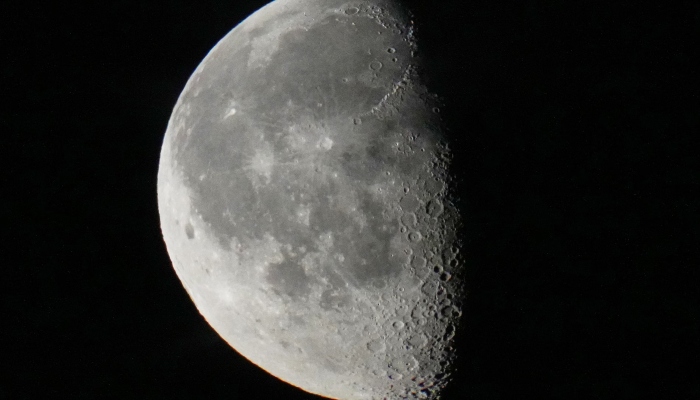
The rocket fragment, roughly the height of a five-storey building and weighing around four tonnes, struck the Moon near the boundary between its sunlit and shadowed regions. The impact is expected to have created a crater about 20 metres wide and five metres deep, according to scientists.
Experts believe the accidental collision will provide valuable scientific data on how artificial space debris interacts with the lunar surface. The findings could help future missions assess impact risks, particularly as NASA and other space agencies work toward establishing a sustained human presence on the Moon.
NASA’s Lunar Reconnaissance Orbiter and South Korea’s Danuri (Korea Pathfinder Lunar Orbiter) are expected to photograph the impact site in the coming days to evaluate the extent of the damage.
The rocket stage originated from a January 2025 SpaceX mission that carried two lunar landers. While the reusable first-stage boosters safely returned to Earth, the upper stage remained in space before eventually colliding with the Moon.


Comments are closed, but trackbacks and pingbacks are open.