
Pakistan’s Future and the Universal Lessons of History
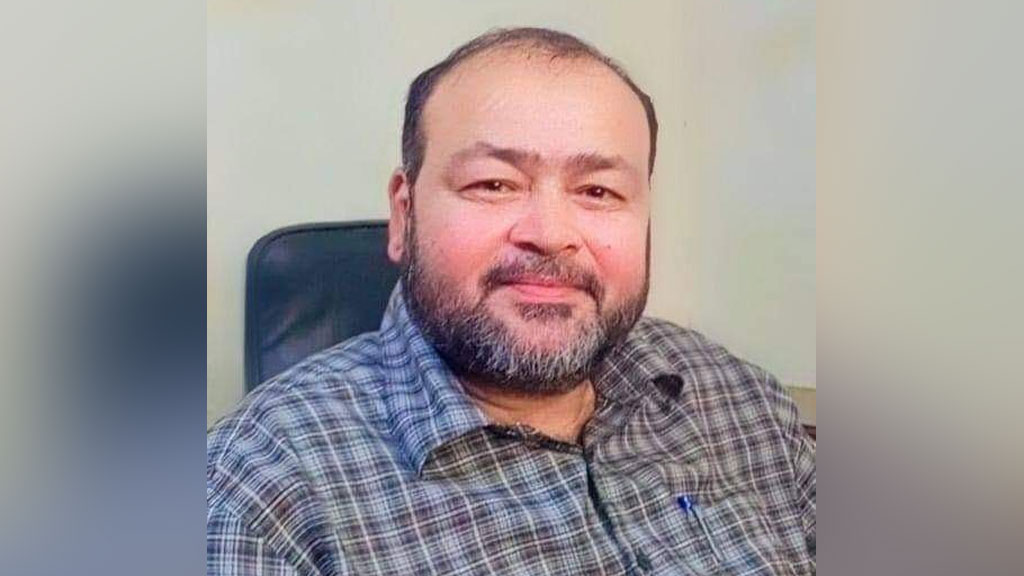
(By: Dr. Muhammad Tayyab Khan Singhanvi, Ph.D)

In a rapidly transforming global political and economic landscape, Pakistan stands at a critical juncture where the experiences of the past intersect intensely with the imperatives of the future. History always offers guidance but only to those nations willing to learn from it. Observing Pakistan’s current political, economic, and social conditions, one inevitably confronts the question: Have we absorbed anything from our past? And can we, in the light of history’s universal lessons, chart a sound direction for our future?
From the inception of Pakistan to the present day, our national journey has been marked by highs and lows, sacrifices, and a continuous confrontation with internal and external challenges. In the early years, despite geographical vulnerabilities, scarce resources, and political instability, the leadership endeavored to maintain national cohesion. Yet, over time, political self-interest eroded the foundational unity of the nation.
As we enter the year 2025, Pakistan’s greatest challenge is economic fragility and the absence of policy continuity. Economic growth remains uncertain, foreign exchange reserves are under pressure, and the country’s export capacity has weakened. Reliance on international financial institutions has further constrained our sovereignty. This moment, however, is precisely where history reminds us that decline sets in when nations lose their direction, and resurgence occurs when they reconstruct their internal systems through meaningful reforms.
The contemporary world is no longer unipolar; it has become distinctly multipolar. The United States, China, Russia, Europe, and emerging Middle Eastern coalitions have reshaped global power dynamics. In this context, Pakistan must prioritize a diplomatic strategy grounded in “non-alignment” or “balanced engagement,” which has become a crucial necessity.
China remains our closest strategic partner, yet its slowing economy and the pressures of global trade have created challenges for the China–Pakistan Economic Corridor (CPEC). Meanwhile, the growing U.S.–India partnership is altering the strategic equilibrium of the region. Under such circumstances, Pakistan must adopt a proactive, balanced, and interest-driven foreign policy one that simultaneously safeguards national interests, economic autonomy, and regional stability.
History illuminates the fact that nations attain strength only when they build their economies upon sustainable foundations. Pakistan must move beyond debt dependency and prioritize a productive economy, export expansion, agricultural modernization, and technology-driven industrialization.
In 2025, the global economy is being reshaped by digital transformation, artificial intelligence, and green energy. If Pakistan harnesses its young population, expands its freelancing and IT-export potential, and modernizes agricultural technology, the country could not only enhance its foreign exchange earnings but also create vast new employment opportunities.
History offers us the examples of Japan, South Korea, and Singapore nations that achieved remarkable progress despite limited natural resources because they built their futures on knowledge, discipline, and national cohesion. Pakistan is not deprived of resources; what it lacks is vision, transparency, and continuity.
No state can achieve durable stability through foreign policy alone. Internal cohesion, institutional harmony, and public participation form the bedrock of national strength. In Pakistan, political polarization, institutional friction, and pervasive mistrust have slowed decision-making processes. History’s lessons make it clear that states achieve resilience when public welfare is placed at the center; when education, healthcare, justice, and employment are provided on equitable terms.
We must accept the reality that national security is not confined to the defense of borders; it is equally rooted in economic strength, youth empowerment, and social equality.
More than sixty percent of the world’s nations have built their development strategies upon technology and education. Pakistan’s youth today constitute its greatest potential asset provided they are equipped with professional skills, advanced education, research opportunities, and global connectivity. Increasing the education budget, linking universities with research-driven innovation, and encouraging private and public-sector collaboration in technology would allow Pakistan to meaningfully participate in the race for the future.
Peace, trade, and energy corridors across South Asia are intrinsically linked to Pakistan’s own long-term interests. Stability in Afghanistan, trade linkages with Iran, and economic connectivity to Central Asia can all form critical pillars of Pakistan’s future. History demonstrates that isolation and antagonism do not lead nations toward progress. Instead, regional partnership, economic cooperation, and an atmosphere of mutual trust constitute the true foundations of enduring strength. Pakistan must embed this principle at the core of its diplomacy.
Policy Recommendations and Strategic Directions:

1. Economic Reforms:
Expansion of exports, broadening of the tax net, and establishing an investment-friendly business environment.
2. Education and Skill Development:
Prioritizing modern scientific and technical education to ensure that the youth remain aligned with global economic demands.
3. Energy and Natural Resources:
Investing in renewable energy especially solar and wind to reduce dependence on imported fuels.
4. Diplomatic Balance:
Cultivating balanced relations with China, the United States, the Gulf states, and Central Asian republics.
5. Transparent Governance:
Implementing non-politicized and sustained institutional reforms to eliminate corruption.
6. Media and Intellectual Stability:
Promoting a national narrative grounded in research, truth, and constructive thought rather than sensationalism.
History has repeatedly taught us that decline befalls nations that ignore the signals of their time. For Pakistan, the moment has arrived to avoid repeating past mistakes and instead learn from them instilling continuity, transparency, and public trust within national policymaking.
The world is moving ahead with unprecedented speed. Now the choice rests with us: Will we remain mere spectators of history or become the architects of a new future?
Comments are closed, but trackbacks and pingbacks are open.