

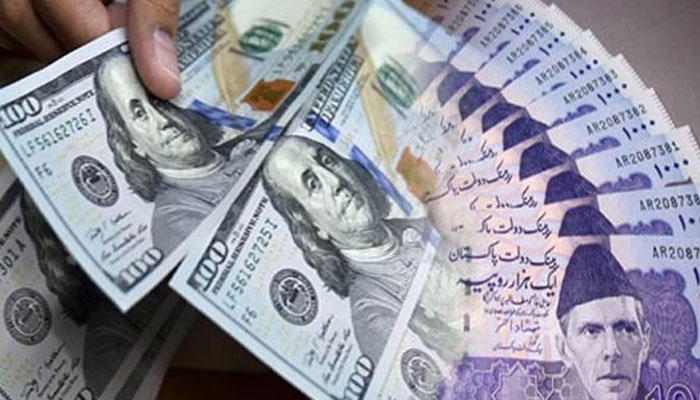
Pakistan’s Forex Reserves Rise 52% as Exports and Investment Grow
Exports, remittances and foreign investment also climb in July-September 2026, but the finance ministry’s scorecard leaves out imports, inflation and poverty data.

Pakistan – (Staff Reporter/Web Desk) – Pakistan’s forex reserves rise 52% to a record $21.5 billion, according to the latest Ministry of Finance scorecard for July to September 2026. The figures cover the first quarter of fiscal year 2026-27.
The ministry’s Macro, Reform and Investment Scorecard shows gains in exports, investment and remittances. However, it leaves out some key numbers, such as imports, inflation, per capita income and poverty.
Reserves and Currency
State Bank of Pakistan reserves are now at $21.5 billion. Total liquid reserves, which include commercial banks, reached $26.8 billion.
This gives the country more than three months of import cover. A year ago, it was only 2.2 months. The rupee also gained 1.5% against the dollar over the same period.
Exports and Remittances
Total exports grew 11% to $11.2 billion. IT and technology exports did even better, rising 18% to $1.25 billion.
Workers’ remittances increased 14% to $10.9 billion. These transfers from overseas Pakistanis remain a major support for the economy.
Foreign direct investment rose 20% to $720 million. Net foreign investment reached $3.65 billion. A year earlier, there was a net outflow of $33 million.
Foreign private investment grew 44% to $691 million. Foreign public investment brought in $2.96 billion, compared with an outflow of $512 million last year.
Not every number is positive. The current account deficit widened to $874 million, up from $755 million a year earlier. This shows the external account still faces pressure.
Ratings and IMF Support
Moody’s raised Pakistan’s rating from Caa1 to B3. S&P lifted its rating from B- to B. Fitch kept its B- rating. All three agencies hold a stable outlook.
The ministry also pointed to a staff-level agreement with the IMF. It covers the fourth review of the Extended Fund Facility and the third review of the Resilience and Sustainability Facility. Once the IMF board approves it, $1.2 billion could be released.
The Federal Board of Revenue collected Rs3.1 trillion, up 7% and above its target. Income tax return filers jumped 45% to 5.77 million.
The policy rate stayed at 11.5% through September. Its peak was 22% in June 2024.
Total government debt stood at Rs86 trillion in August, down Rs714 billion from June. External debt held steady at $98.2 billion. The debt-to-GDP ratio was 68% in FY2026, down from 75% in FY2022-23.
Large-scale manufacturing grew 1.85% in July and August. Car sales rose 28%, petroleum 6%, cement 4% and fertiliser 2%.
Private sector credit grew 16.6% to Rs11.28 trillion. Loans to small and medium businesses rose 66% to Rs1.14 trillion. Housing finance climbed 71.9% to Rs365 billion.
Privatisation and Digital Growth
Due diligence is under way for several power distribution companies. Ten investors are pre-qualified for each of Faisalabad and Islamabad Electric Supply Companies. Nine are pre-qualified for Gujranwala Electric Power Company.
The Apna Ghar programme disbursed Rs76 billion against approvals of Rs426 billion. Digital payments made up 92% of retail transactions, with 13.2 billion transactions recorded. Company registrations rose 45% to 15,440.
Despite these gains, the scorecard does not report imports, inflation, per capita income or poverty. Without them, it is hard to judge how ordinary households are doing.
Comments are closed, but trackbacks and pingbacks are open.