
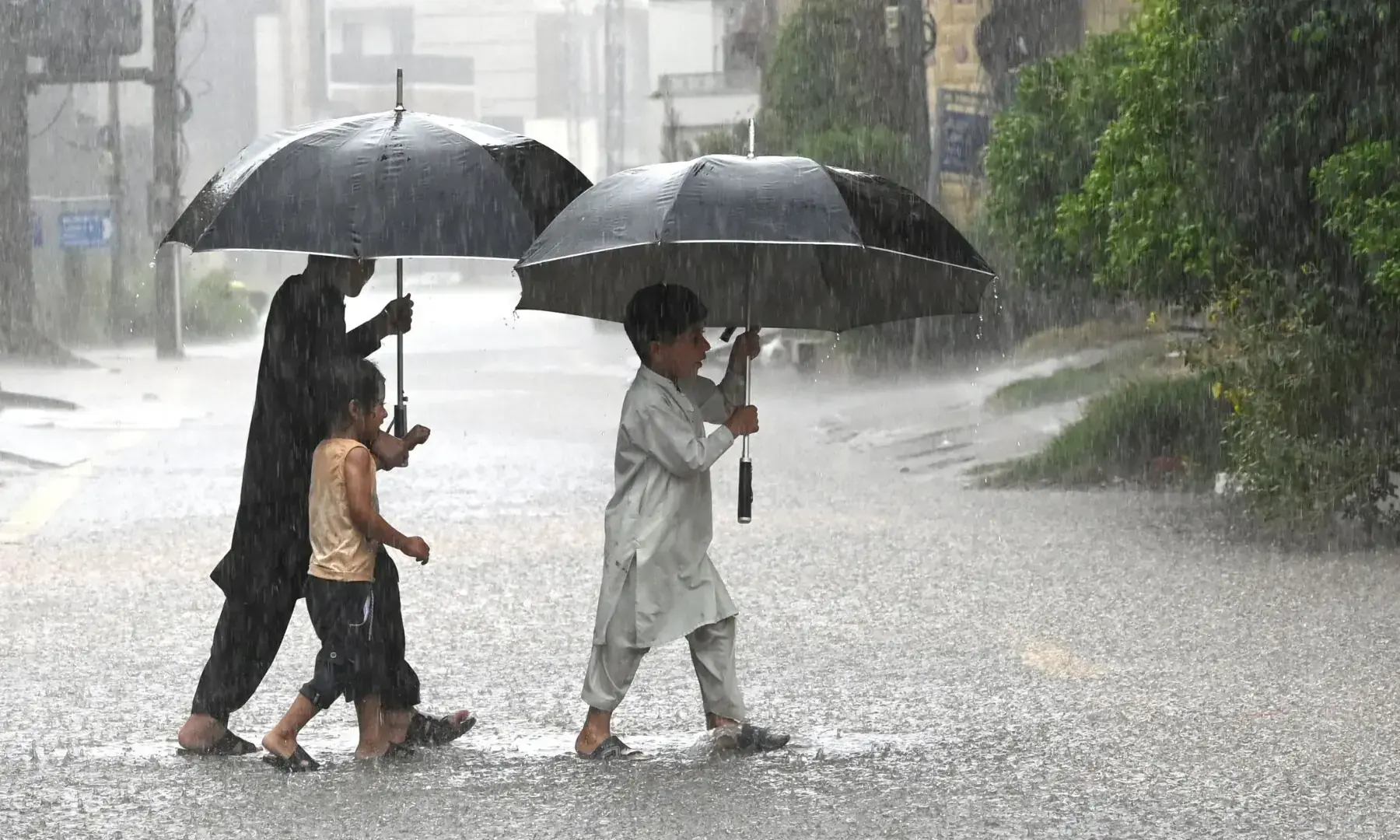
Pakistan Monsoon Rain August 13: PMD Warns of Fresh Spell Across Upper and Central Areas
Heavy Showers, Landslides and Urban Flooding Expected in KP, Punjab, Kashmir and GB Till August 15

Pakistan – (Staff Reporter/Web Desk) – Pakistan monsoon rain August 13 is set to sweep across the upper and central parts of the country, according to a fresh advisory from the Pakistan Meteorological Department. The weather body says this new spell will last from August 13 to 15, bringing much-needed rain along with some real safety concerns for people living in low-lying and hilly areas.
The PMD explained that monsoon currents are now moving into the northern regions of Pakistan. These currents are joining forces with a westerly wave coming from the west. When these two weather systems meet, they usually bring stronger and longer spells of rain.
In Kashmir, several areas are on the forecast list. Neelum Valley, Muzaffarabad, Rawalakot, and Poonch may see rain along with strong winds and thunder. Hattian, Bagh, Haveli, Sudhanoti, Kotli, Bhimber, and Mirpur are also expected to get wet weather during this period.
Gilgit-Baltistan is not left out either. The Met Office says rain is likely in Diamir, Astore, Ghizer, and Skardu. Hunza, Gilgit, Ghanche, and Shigar are also on the list of areas that should prepare for showers.
Up in Khyber Pakhtunkhwa, the northern districts will feel the brunt of this weather system. Dir, Chitral, Swat, and Kohistan are named in the advisory. So are Malakand, Shangla, Battagram, Mansehra, and Abbottabad. The list continues with Galiyat, Buner, Bajaur, Mohmand, Peshawar, Nowshera, Mardan, Swabi, Haripur, Kurram, and Khyber.
Punjab’s northeastern belt will also see rain starting from the night of August 12 and running through August 15. This includes Murree, Sialkot, Narowal, and Mandi Bahauddin. Gujrat, Gujranwala, Hafizabad, and Wazirabad round out the list, along with Lahore, Kasur, Sheikhupura, and Nankana Sahib. The rain may come with gaps in between rather than nonstop pouring.
Islamabad and Rawalpindi residents should also brace for wet and windy conditions. The twin cities, along with the wider Pothohar region, are expected to get rain, strong winds, and thunderstorms from the night of August 13 through August 15. A few areas might even see heavy downpours during this stretch.
Central Punjab towns are on the forecast too. Sargodha, Faisalabad, Jhang, and Toba Tek Singh are named, as are Khushab, Layyah, Bhakkar, and Noorpur Thal. The advisory also covers Sahiwal, Pakpattan, Bahawalnagar, Bahawalpur, Dera Ghazi Khan, Zhob, Barkhan, and Musakhel, all expected to receive rainfall between August 12 and 15.
Sindh’s weather story looks a little different this time. The southeastern and coastal parts of the province will stay partly cloudy to cloudy. Tharparkar, Umerkot, and Sanghar districts might get rain, wind, or thunderstorms on August 12 and 13. The rest of Sindh, though, will likely stay hot and humid without much rain relief.
Along with the rain comes a real warning about flooding. The Met Office flagged Islamabad, Rawalpindi, Mardan, and Swabi as places where low-lying areas could see urban flooding. Gujranwala, Gujrat, Sialkot, and Lahore made this list too, so residents in these cities should watch for waterlogged streets and low areas.
Landslides are another big worry this week. The advisory pointed to upper KP districts like Dir, Chitral, Swat, and Kohistan as high-risk zones. Buner, Battagram, Mansehra, and Haripur were also named. Gilgit-Baltistan, Murree, Galiyat, and parts of Kashmir round out the areas where hillsides could give way after heavy rain.
The Met Office had a simple message for tourists heading to these areas this week: be careful. Anyone planning a trip to Murree, Kashmir, or the northern valleys should keep an eye on local weather updates before setting off. Farmers were also told to plan their crop work around the coming rain instead of against it.
The bigger picture here is sobering. The National Disaster Management Authority shared that this monsoon season has already claimed 155 lives across Pakistan. Another 460 people have been injured in rain-related incidents since the season began.
Monsoon rains typically run from June through September in this part of the world. They bring welcome relief from the summer heat and help refill rivers, lakes, and groundwater that the country depends on. But every year, the same rains that help farmers and fill reservoirs also bring danger. Flash floods, landslides, and displacement remain constant threats, especially in areas where drainage is poor or population density is high.
As this new spell moves in, the message from officials is clear: stay alert, stay informed, and take the warnings seriously.
Comments are closed, but trackbacks and pingbacks are open.