

Naqvi Vows to Continue Campaign for Creation of New Provinces
New Provinces Should Be Created Through Public Consensus: Naqvi

LAHORE: (Staff Reporter) – Interior Minister Syed Mohsin Naqvi has said that resetting the country’s system does not mean derailing it, but correcting its weaknesses and making it more effective. He stressed that the existing system should be revived and improved rather than replaced.
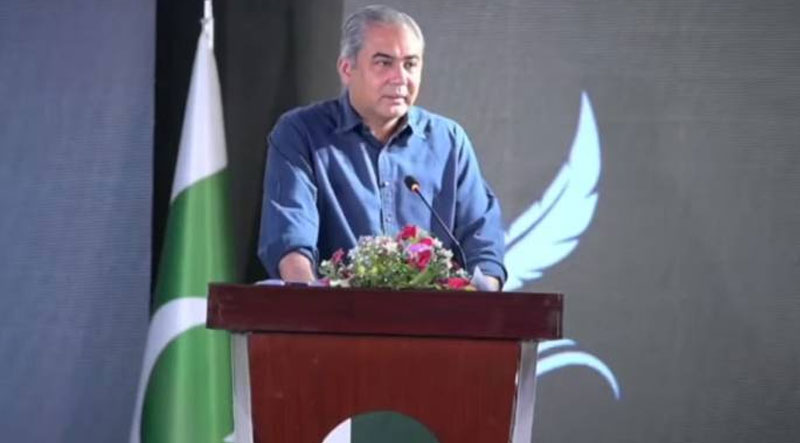
Addressing the National Policy Dialogue at the University of Management and Technology (UMT) in Lahore, Naqvi said Pakistan needed to revisit its governance structure while remaining firmly within the constitutional framework.
He emphasized the need to improve the quality of education and ensure access to basic facilities, including clean drinking water and healthcare. According to Naqvi, around 55 percent of the country’s population still lacks access to clean drinking water, while nearly two million cases remain pending in courts.
On the issue of new provinces, the interior minister said the decision should ultimately reflect the will of the people. If the public supports the creation of new provinces, they should be established, while opposition from the people should be respected.
Naqvi said the issue required a national dialogue to develop political and public consensus. Personally, he said, he supported the idea of making Islamabad a province.
Clarifying his earlier remarks about reforming the governance system, Naqvi said his comments were not aimed at any political party or political arrangement. He maintained that the administrative structure had lost much of its effectiveness and was failing to deliver its intended impact to ordinary citizens.
The interior minister called for administrative reforms through democratic and constitutional means. He said political parties should engage in serious deliberations on the matter and rejected the notion that Pakistan had become incapable of reforming its system.
Naqvi said he would continue advocating for new provinces and would not abandon the issue even if he were no longer a minister. He cautioned politicians against approaching the debate emotionally, stressing that the creation of new administrative units would require careful planning rather than a rushed decision.
He argued that no individual or political party should be able to permanently block the creation of new provinces. At the same time, he said new administrative units should not be established on ethnic grounds.
Naqvi questioned whether bureaucrats based in Lahore or other provincial capitals could effectively manage the affairs of entire provinces. He said the creation of new provinces would not mean the end of Punjab or Sindh, adding that the decision should be based on administrative needs and calculated planning.

The minister also highlighted the country’s education and nutrition challenges, saying more than 20 million children remain out of school. He added that the government has failed to provide adequate nutritious food to four out of every 10 children.
Naqvi rejected the argument that new provinces would necessarily become a financial burden on the national exchequer. He also criticized the fact that Islamabad had received no share from the National Finance Commission (NFC) Award.
Referring to a speech by Quaid-e-Azam Muhammad Ali Jinnah, Naqvi recalled his criticism of provincialism and questioned whether Pakistan was moving away from the founder’s vision. He expressed hope that new administrative units would eventually be established across the country.
Trust Deficit, Not Trade Deficit: Khalid Maqbool
Speaking at the same event, Federal Minister for Education and Professional Training Khalid Maqbool Siddiqui said dialogue was the only viable way to address the country’s challenges.
He argued that democracy had little meaning if its benefits failed to reach ordinary citizens. Siddiqui said political representation had increasingly become concentrated within influential families, while the ruling elite often appeared to use laws according to their own interests.
He said the country’s biggest challenge was not the trade deficit but the trust deficit, emphasizing that restoring public confidence was essential for meaningful democratic progress.
Federal Minister for Overseas Pakistanis Chaudhry Salik Hussain also supported the creation of new provinces, saying they could provide administrative, economic and security benefits. He suggested that every division could potentially be converted into a province and challenged opponents of the proposal to explain why they rejected the idea.
Punjab Assembly Speaker Malik Ahmed Khan stressed the need for civil service reforms, pointing out that overlapping responsibilities between local and provincial governments were creating administrative problems.
He said meaningful reforms could not be achieved without implementing the Constitution and argued that sustainable development required empowering elected public representatives.
Comments are closed, but trackbacks and pingbacks are open.