
Motegi Faisal Call Confirms Japan-Saudi Cooperation to Restore Hormuz Stability
Japan condemns Houthi attacks, offers full support to Saudi Arabia, and promises to help protect calm in two key sea routes.

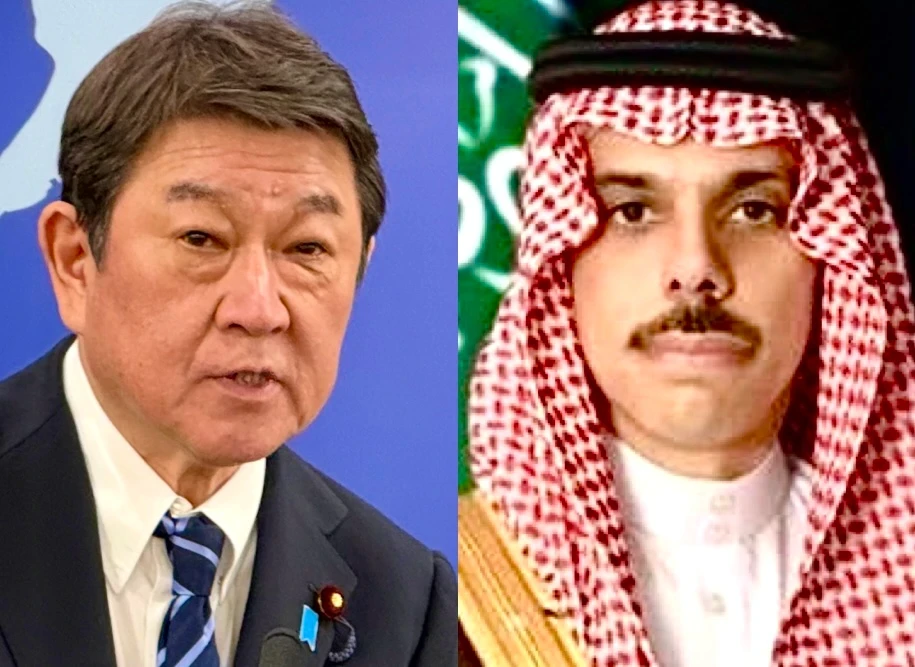
Japanese & Motegi: Motegi apanese Foreign Minister Toshimitsu Motegi spoke with his Saudi counterpart, Prince Faisal bin Farhan Al-Saud, by phone on October 15. The Motegi Faisal call had one clear message. Japan stands with Saudi Arabia and supports its efforts to bring back stability to the Strait of Hormuz.
The Foreign Ministry in Tokyo shared the details of the talks. Motegi began by expressing his sadness over the lives lost in the recent Houthi attacks, including Saudi citizens. He also wished the injured a quick and full recovery.
He then asked for Saudi help in keeping Japanese nationals safe inside the Kingdom. Prince Faisal agreed. He said Riyadh is ready to protect Japanese people living in or visiting Saudi Arabia.
Motegi used strong words about the attacks. He said that hitting civilians and civilian sites cannot be accepted under any reason. Japan, he said, strongly condemns the Houthi aggression.
Tokyo has not stayed silent behind the scenes. Motegi said Japan has urged the Houthis to stop the escalation. Japan has also spoken directly to Iran and asked it to encourage restraint from the Houthis.
The Japanese minister also praised Saudi Arabia for its work to build peace in the Middle East, especially in Yemen. He said a lasting answer in Yemen must be political, not military. Japan will keep pushing the Houthis to return to the UN-led peace process.
Sea routes were another big part of the call. Motegi said Japan will work closely with the international community, including Saudi Arabia, to restore stability in the Strait of Hormuz and the Bab Al-Mandab Strait. Both waterways are vital for global shipping and energy trade.
On Iran, Motegi said Japan remains committed to working with the countries involved. The goal is to create the right conditions for a diplomatic solution. Japan believes talks, not more tension, offer the best way forward.
The two ministers also talked about economic safety. Motegi gave an update on Japan’s wide cooperation plan to strengthen the economic and energy resilience of the Gulf Cooperation Council countries. Prince Faisal welcomed the chance to work with Japan on this plan.
In reply, the Saudi foreign minister thanked Japan for its firm stand against the Houthis. He also thanked Tokyo for showing solidarity with Saudi Arabia in a hard time. He then gave Motegi an overview of the situation in Yemen and shared his view on where U.S.-Iran relations may be heading.
The call matters for a simple reason. Japan imports a large share of its energy from the Gulf, so calm in these sea lanes touches everyday life in Japan. By backing Riyadh in public, Tokyo shows it wants both safe trade routes and a peaceful region.
The call also shows that Japan wants to play a steady, helpful role. It is not only condemning violence. It is also offering diplomacy, economic cooperation, and support for peace talks.
Comments are closed, but trackbacks and pingbacks are open.