
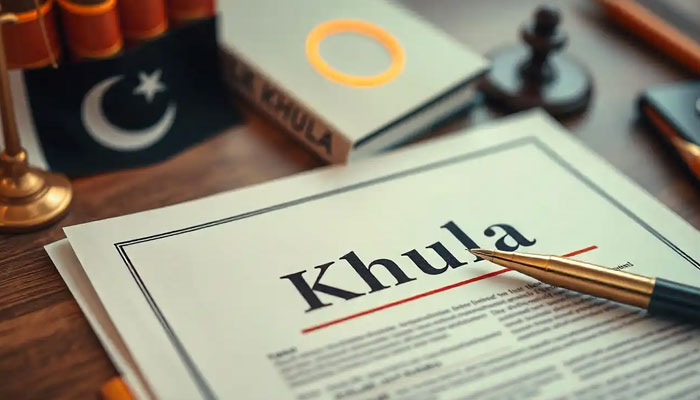

In Pakistan, the number of khula cases in family courts has been increasing rapidly with each passing day. While the law grants women the independent right to seek khula, it is equally important to consider the long-term consequences of such proceedings on minor children and even on Plaintiff/Applicant. In most cases, temporary custody of minor children is granted to the mother without a detailed examination of whether the welfare of the child is better served with the father or the mother. Courts often pass interim orders allowing children to remain with the mother until the final decision of the case, while the father is granted only limited visitation rights for a few hours or days. This arrangement can have serious implications for the physical and psychological development of children. The absence of a father’s consistent presence and support can significantly affect a child’s ability to grow, develop confidence, and move forward in life. In many cases, it is observed that children without regular parental balance struggle to build resilience and ambition. Once a khula case begins, a prolonged legal battle often follows, dragging innocent children into court environments they neither understand nor belong in. Courtrooms, arguments between litigants, and the harsh behavior often witnessed in such settings can mentally disturb children to the extent that they begin to carry the burden of their parents’ conflict. In this battle of egos, either the mother or the father may eventually win the case, but the real loss is borne by the children—who are the future builders of the nation. Pakistani society has undergone rapid social and economic changes in recent decades, and one clear reflection of this transformation is the growing number of khula cases filed in family courts. Khula is a legal right through which a woman can seek dissolution of marriage through the court, and this right is protected under the Dissolution of Muslim Marriages Act 1939. However, the increasing trend of such cases has begun to challenge the stability of the family system, with the most serious consequences affecting the lives of minor children. Several factors contribute to the rise in khula cases. One emerging factor is the widespread circulation of misleading legal advice on social media platforms. Many online videos present one-sided narratives about family law without highlighting the long-term social consequences of marital breakdown. In the past, women often tolerated difficult marriages due to financial dependence and social pressure, but disputes between spouses were frequently resolved within families by respected elders who played a constructive role in reconciliation. Today, however, even minor disagreements or temporary domestic conflicts often escalate into lengthy litigation. Instead of seeking constructive solutions, families sometimes rush toward filing court cases that may last for years. While education brings awareness and empowerment, it should also cultivate patience, wisdom, and the ability to manage social relationships responsibly. Unfortunately, the growing number of pending cases suggests that intolerance and impatience are gradually weakening the social fabric of our society. At the same time, it is important to acknowledge that domestic violence, psychological pressure, irresponsibility, and substance abuse by husbands also contribute to the breakdown of marriages. Courts frequently attempt to create an environment for reconciliation between spouses, particularly in higher courts where judges often encourage settlement and family restoration. However, such efforts are rarely witnessed at the level of family courts. Although the law provides for reconciliation proceedings, these often remain a mere formality. In many cases, decisions are made quickly without allowing sufficient time for genuine reconciliation, and a decree of khula may be granted within minutes. The granting of khula is sometimes celebrated as a legal victory for the wife, giving her confidence in subsequent claims for maintenance and other legal rights. While this may provide emotional relief to one party, it simultaneously pushes minor children into a prolonged legal struggle. Children frequently find themselves waiting outside courtrooms, witnessing arguments, hostility, and disrespect between adults. Such experiences can severely damage their emotional stability and distract them from education and personal development. It must also be acknowledged that fathers are not always passive in these disputes. Once litigation begins, many fathers engage in their own legal battles, using every available legal strategy to assert their position. Unfortunately, in this contest of pride and ego, the future of children is often overlooked. Islam clearly assigns the financial responsibility for the welfare of the wife and children to the father, yet prolonged litigation often transforms this responsibility into an endless legal dispute. Another troubling aspect is the issue of financial support. In many cases, courts fix minimal monthly maintenance for children due to the absence of concrete financial evidence regarding the father’s income. As a result, the amount ordered may be insufficient even for basic living expenses. This financial gap directly affects children’s education, health, and upbringing, sometimes forcing them to abandon educational opportunities due to economic hardship. Modern technology and social media have also reshaped family dynamics. Rising expectations, impatience, and impulsive decision-making have made marital conflicts more complicated. In earlier times, the joint family system allowed elders to mediate and resolve disputes within the household. Today, however, the shift toward nuclear families has reduced such opportunities for reconciliation, and disagreements often escalate into courtroom battles. Determining whether a child’s welfare lies with the mother or the father is rarely straightforward. In reality, the absence of either parent can harm a child’s emotional development. Children caught in parental disputes often suffer from insecurity, anxiety, and emotional emptiness. Their academic performance may decline, and they may become socially withdrawn or aggressive. When a child grows up deprived of a balanced relationship with both parents, the long-term effects on personality development can be profound. The solution to this complex issue does not lie solely in legal rulings. It also requires improvement in social attitudes and responsible behavior from both parents. Family disputes should, wherever possible, be resolved through mediation and reconciliation before reaching the courts. Parents must recognize that the price of their personal conflicts is often paid by their children. Ultimately, the rising number of khula cases reflects broader social changes within Pakistani society. Yet, regardless of these changes, both the state and society share a collective responsibility to prioritize the welfare of children above all else. A healthy, emotionally stable, and well-educated generation is the true foundation of a nation’s future. If the well-being of minor children continues to be overlooked in family disputes, the consequences will extend far beyond individual families and affect the future of society as a whole.

Sardar Naveed Anjum Advocate
Comments are closed, but trackbacks and pingbacks are open.