
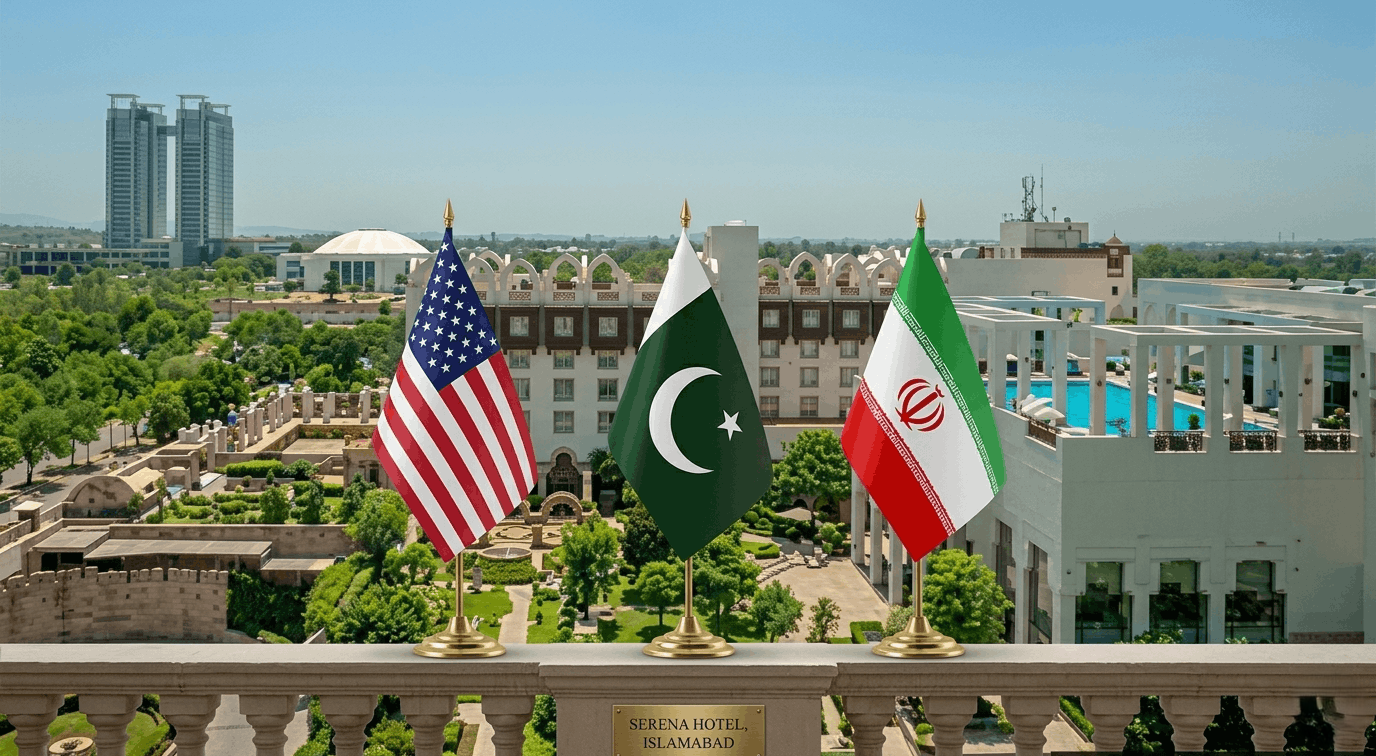
Islamabad Peace Talks: “No Breakthrough, No Breakdown”
Pakistan Reaffirms Diplomatic Role in U.S.-Iran Talks, Stresses Commitment to Peace and Stability

Islamabad (Web Desk) — Pakistan on Thursday highlighted its growing diplomatic significance in facilitating dialogue between the United States and Iran, emphasizing its role in promoting de-escalation, ceasefire efforts, and long-term regional stability.
During the weekly press briefing, the Foreign Office spokesperson stated that Pakistan’s engagement with both Washington and Tehran reflects a consistent policy rooted in dialogue and peaceful conflict resolution. Under the leadership of Prime Minister Shehbaz Sharif, along with Deputy Prime Minister and Foreign Minister Ishaq Dar and Chief of Army Staff Asim Munir, Islamabad has maintained open channels of communication to help create space for meaningful negotiations.
The spokesperson noted that Pakistan’s efforts have received strong international recognition, with several global leaders expressing support for Islamabad’s role in facilitating the ceasefire and talks.
He highlighted that the recent Islamabad Peace Talks between the United States and Iran marked a significant diplomatic development. The delegations, led by U.S. Vice President J. D. Vance and Iranian Parliament Speaker Mohammad Bagher Ghalibaf, engaged in intensive negotiations lasting around 21 hours. Pakistani leadership, including Ishaq Dar and Asim Munir, played a key role in mediating discussions.
Describing the outcome, the spokesperson said the talks were constructive and positive in spirit. While no formal agreement was reached, there was also no breakdown, which he termed a significant achievement given the complexity of the issues involved. He emphasized that sustained engagement and willingness to continue dialogue were encouraging signs.
The spokesperson further stated that Pakistan’s facilitative role did not end with the conclusion of the talks. Ongoing diplomatic efforts, including high-level visits and continuous communication, are part of a broader strategy to maintain momentum toward peace. However, he refrained from confirming any details about the next round of negotiations, including dates or venue, urging media to avoid speculation until official announcements are made.
He also pointed out that several countries, including China, Saudi Arabia, and Russia, have shown support for Pakistan’s efforts. While these nations remain important partners, the primary channel of communication between the United States and Iran continues through Pakistan’s facilitation.
Trump Signals Possible Islamabad Visit if Iran Deal Finalized
Discussing the Prime Minister’s ongoing visits to Saudi Arabia, Qatar, and Türkiye, the spokesperson said these engagements are aimed at strengthening bilateral ties and consulting key regional partners. In Saudi Arabia, Prime Minister Shehbaz Sharif met Crown Prince Mohammed bin Salman and shared updates on Pakistan’s peace initiatives, receiving appreciation for Islamabad’s constructive role.
Turning to regional issues, the spokesperson strongly condemned Israeli actions in Palestine and Lebanon, calling them violations of international law and a threat to regional peace. He reiterated Pakistan’s longstanding support for the Palestinian cause.
On the issue of Indian-administered Kashmir, the spokesperson rejected India’s proposed delimitation measures, describing them as illegal and an attempt to alter the demographic and political structure of a disputed territory. He reaffirmed Pakistan’s support for the Kashmiri people’s right to self-determination in accordance with United Nations resolutions.

Following the briefing, the spokesperson responded to a range of media queries, elaborating on Pakistan’s diplomatic engagements and regional concerns.
He explained that the recent visit of Pakistan’s high-level delegation to Tehran should be viewed as part of ongoing efforts to maintain communication between the concerned parties. While acknowledging the importance of such engagements, he declined to share specific details, emphasizing the need to preserve confidentiality and trust in the mediation process.
Regarding expectations of a final peace agreement, he expressed cautious optimism, stating that Pakistan remains hopeful that continued dialogue will eventually lead to a durable and comprehensive understanding between the United States and Iran.
Responding to concerns about India’s promotion of an officer linked to the Samjhota Express incident, the spokesperson condemned the move, calling it deeply troubling and reflective of a lack of accountability. He stressed that justice for the victims remains overdue and urged the international community to take note.
He also addressed reports of vigilante violence in India, describing such acts as deeply disturbing and indicative of a broader pattern of intolerance and human rights violations against minorities. He warned that such developments raise serious concerns about the rule of law.
On the possibility of additional countries joining future peace talks, the spokesperson said Pakistan remains in close contact with its partners and welcomes their support. However, decisions regarding participation in negotiations rest with the primary parties involved.
When asked about the timing and venue of the next round of talks, he reiterated that no official decision has been made and emphasized that any announcements would be made at the appropriate time.
He acknowledged that complex issues, including nuclear concerns and regional conflicts such as Lebanon, are part of the broader dialogue, but refrained from discussing specifics, citing the sensitive nature of the negotiations.
Addressing questions about Pakistan’s role, he clarified that Islamabad is acting as a facilitator rather than a guarantor, focusing on maintaining open communication channels and fostering an environment conducive to dialogue.
The spokesperson also confirmed that the United Nations has engaged at a high level in the process, though he did not provide details about the involvement of other international organizations.
Concluding his remarks, he reiterated Pakistan’s commitment to peace, stability, and constructive diplomacy. He also appreciated the responsible role played by the media in maintaining professionalism and avoiding speculation during the sensitive negotiations.
“Pakistan will continue to act with impartiality, uphold trust, and work tirelessly for peace and stability in the region,” he said, adding that dialogue remains the only viable path forward in addressing complex geopolitical challenges.
Comments are closed, but trackbacks and pingbacks are open.