
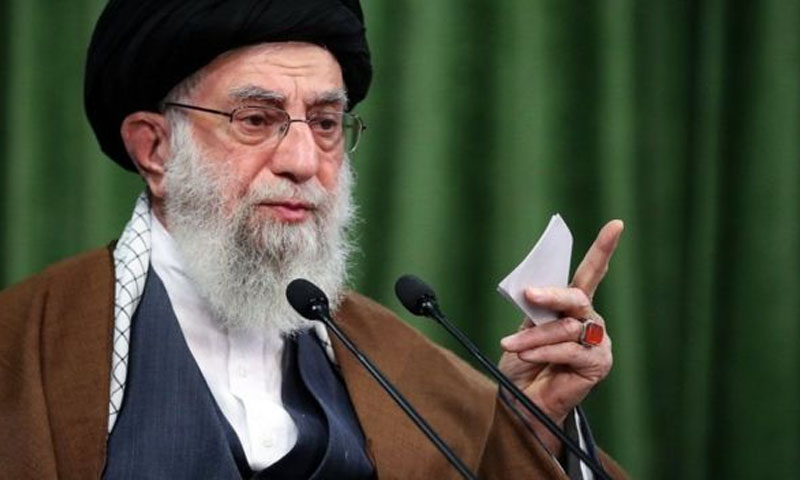
Iran’s Supreme Leader Rejects U.S. Threats, Reaffirms Defiance Amid Protests
Decades of Iran–US Tensions: From 1953 Coup to Hostile Relations

TEHRAN: Iran’s Supreme Leader Ayatollah Ali Khamenei has strongly rejected recent threats from the United States, declaring that Tehran will never bow before its enemies and will instead force them to retreat with what he described as divine help and perseverance.
Addressing the nation, Ayatollah Khamenei said Iran has faced pressure, sanctions, and intimidation for decades but has consistently resisted foreign coercion. “The Islamic Republic has never surrendered to threats, and it never will,” he said, adding that Iran believes steadfastness and faith will ultimately compel its adversaries to back down.
Referring to the country’s internal situation, the Iranian leader acknowledged public discontent and said peaceful protest is a legitimate right of the people. However, he stressed that there is a clear difference between protest and unrest. “Protest is acceptable, but chaos and violence are not,” he said, urging authorities to engage in dialogue with demonstrators while taking firm action against those inciting disorder.
Ayatollah Khamenei recognized that many protesters have genuine economic grievances, largely driven by years of harsh international sanctions. He said the president and senior officials are actively working to address economic challenges, particularly those affecting livelihoods, inflation, and employment. “The people’s economic demands are valid,” he said, while emphasizing that destructive actions only harm national stability.
Iran’s tensions with the United States have deep historical roots, dating back to the 1953 CIA-backed coup that overthrew Prime Minister Mohammad Mossadegh and intensified after the 1979 Islamic Revolution, which ended the rule of the US-supported Shah. Relations further deteriorated following the US embassy hostage crisis in Tehran and have remained hostile ever since.

In recent decades, disputes over Iran’s nuclear program, regional influence, and US-led sanctions have fueled recurring confrontations. The US withdrawal from the 2015 nuclear deal in 2018 and the subsequent “maximum pressure” campaign severely strained Iran’s economy, contributing to inflation, currency depreciation, and public frustration.
Read more: Trump warns US will intervene if Iran kills protesting citizens.
Despite these pressures, Iran’s leadership has repeatedly framed resistance as a central pillar of national identity. Ayatollah Khamenei reiterated this stance, saying that past experience has shown that standing firm against foreign pressure ultimately strengthens the country.
He concluded by calling for unity, urging officials to listen to public concerns while safeguarding national security. “Enemies seek to exploit internal problems,” he warned, “but awareness, patience, and resilience will protect the nation.”
The remarks come at a time of heightened regional and international tensions, with Iran signaling that it remains unwilling to compromise under pressure, while seeking to manage internal challenges through a balance of dialogue and authority.

Comments are closed, but trackbacks and pingbacks are open.