


- TEHRAN: Pakistan hosted the Islamabad talks between Iran and the United States after both sides agreed to a two-week ceasefire following nearly 40 days of intense conflict. The war began on February 28, when joint US and Israeli strikes targeted Iran, killing several senior leaders, including Supreme Leader Ali Khamenei.
-
Pakistan pushes for Iran-US talks as delegations expected amid Tehran’s distrust
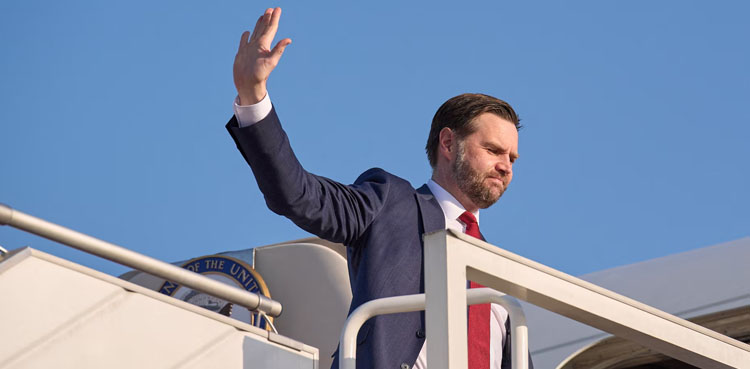
Islamabad/Washington/Tehran-(Mudassar Iqbal/Web Desk/News Desk/X )-Iran-US peace talks expected to take place in Pakistan remain uncertain, as US Vice President JD Vance has not yet left Washington, casting doubt over the timing of the meeting.
Sources said there is still no confirmation on when the US delegation will arrive in Islamabad. The visit had been anticipated ahead of a key ceasefire deadline, but delays have raised concerns about whether the talks will proceed as planned.
Iran has also not officially confirmed its participation. Officials in Tehran indicated that a final decision is still under review amid ongoing tensions with Washington.
The uncertainty comes at a critical time, as diplomatic efforts continue to support a fragile ceasefire following weeks of conflict. Pakistan has been working to facilitate dialogue between the two sides, but the lack of clarity from both parties has complicated preparations.
Recent regional developments and disagreements over US actions have further reduced the likelihood of immediate progress in the negotiations.
Iranian nation will not bow to force, says President Pezeshkian
Earlier,
Masoud Pezeshkian has reiterated that Iran’s longstanding mistrust of the United States remains intact, stressing that any meaningful dialogue depends on honoring commitments. In a statement shared on social media, he said inconsistent and conflicting remarks from US officials send negative signals and could undermine diplomatic efforts.
The Iranian president emphasized that the nation will not yield to external pressure, making it clear that coercion will not influence Tehran’s stance.

Meanwhile, Iran has formally ruled out any immediate plans for renewed negotiations with Washington. Foreign Ministry spokesperson Esmail Baqaei stated during a press briefing that there is currently no intention to engage in talks with the United States. He added that ongoing US policies show no meaningful change and that past mistakes continue to shape present tensions.
According to Iranian officials, Washington’s approach risks further destabilizing the region, warning that repeated policy failures will not lead to constructive outcomes.
While, Pakistan has accelerated diplomatic efforts to facilitate a second round of talks between Iran and the United States, with developments pointing to both progress and uncertainty as positions from Tehran remain cautious.
According to sources, preparations for the next phase of negotiations have largely been finalised, with both sides initially showing willingness to engage on Pakistani soil. Islamabad has been in active contact with the two countries in a bid to bring them to the table, positioning itself as a key intermediary in efforts aimed at reducing tensions.
A United States delegation is expected to arrive in Pakistan, with officials indicating that logistical arrangements for discussions have been put in place. The anticipated arrival is being seen as a step forward in reviving diplomatic engagement between the two long-standing adversaries. Meanwhile, an Iranian delegation was also expected to travel to Pakistan in the near future, signalling the possibility of parallel diplomatic activity.
However, statements from Tehran have introduced a note of caution into the evolving situation. Iran’s Foreign Ministry spokesperson Esmaeil Baghae has publicly expressed scepticism over the prospect of renewed negotiations with Washington, citing a lack of trust and concerns over the United States’ commitment to diplomacy.
No plans to participate in second round of talks with US: Iran’s Foreign Ministry
Speaking at a press briefing, Baghaei stated that Iran does not consider the United States a reliable negotiating partner, emphasising that Tehran would continue to safeguard its national interests. He pointed to what he described as a pattern of behaviour by Washington that undermines diplomatic processes, asserting that recent actions have demonstrated a lack of seriousness in advancing dialogue.
The spokesperson also referenced what he termed as aggressive measures and alleged violations of ceasefire understandings, reinforcing Iran’s position that conditions are not conducive for talks at present. He noted that, under the current circumstances, there is no intention for Iran to participate in negotiations or dispatch a delegation to Pakistan.
Baghaei further linked broader regional dynamics to Iran’s stance, highlighting developments related to ceasefire arrangements in Lebanon. He said that previous decisions, including the reopening of the Strait of Hormuz, were tied to understandings linked to regional ceasefires. According to him, Iran has observed multiple instances of what it views as bad faith by the United States in this context, raising further doubts about Washington’s commitment to de-escalation efforts.
Despite these reservations, Pakistan continues to pursue diplomatic engagement with both sides, maintaining communication channels and working to create conditions that could support dialogue.
Comments are closed, but trackbacks and pingbacks are open.