

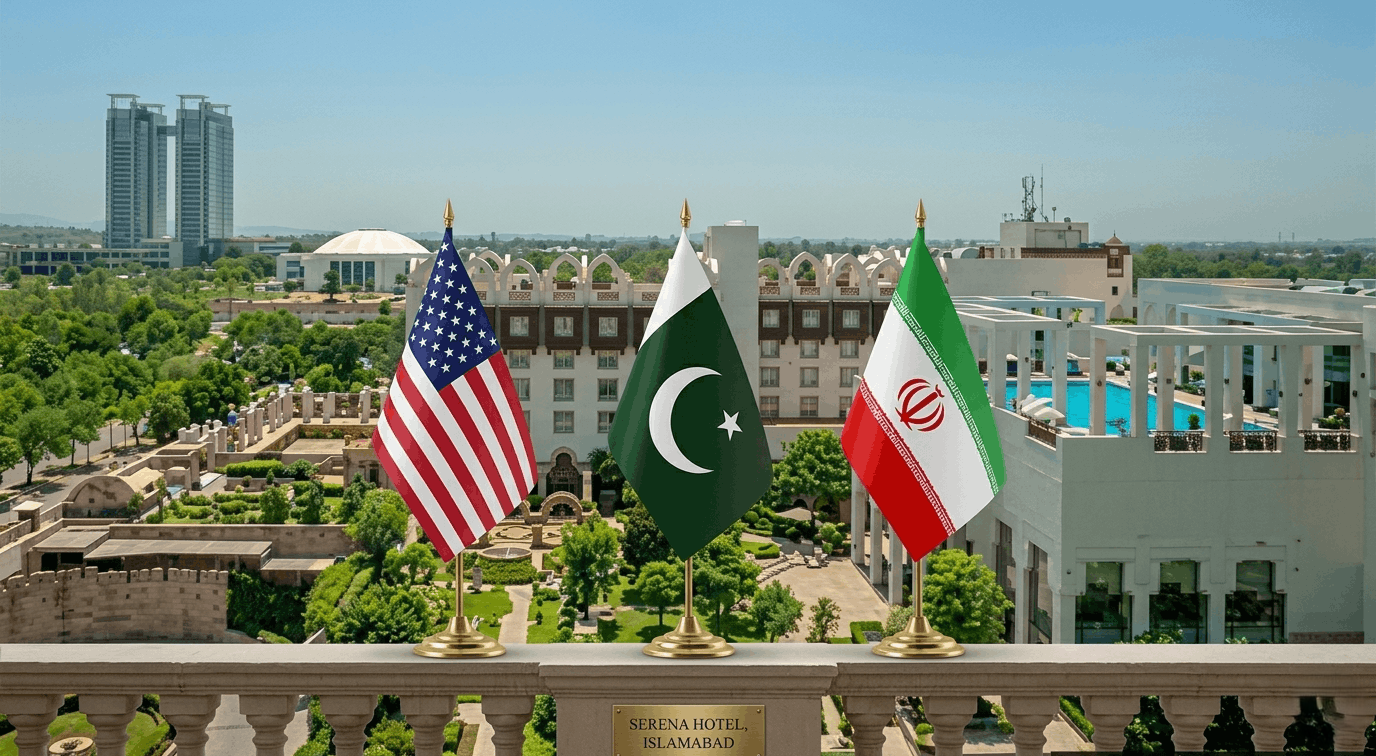
Iran declines US talks amid rising regional tensions
Ceasefire deadline nears as Iran rejects US dialogue

Iran has indicated it is unlikely to participate in upcoming talks with the United States scheduled for Monday, according to state media, as tensions continue to rise just days before a fragile Middle East ceasefire is set to expire.
Reports suggest that ongoing disagreements—particularly over the US naval blockade on Iranian ports—have stalled diplomatic progress. The situation further escalated after President Donald Trump revealed that a US destroyer had engaged and struck an Iranian vessel attempting to bypass the blockade.
Iranian state broadcaster IRIB, along with agencies such as Fars and Tasnim, cited officials expressing pessimism about the negotiations, noting that the removal of the blockade remains a key condition for any meaningful dialogue. State news agency IRNA also criticized Washington’s demands, calling them unrealistic and casting doubt on the prospects of productive talks.
The tensions come as Iran, the United States, and Israel approach the final days of a two-week ceasefire that followed US-Israeli strikes on Iran earlier this year. So far, only one round of talks—held in Islamabad on April 11—has taken place, ending without a breakthrough.
Meanwhile, President Trump reiterated his stance, stating that the US has proposed a fair deal but warning of potential consequences if Iran refuses to comply.
US Delegation to Arrive in Islamabad for Talks: Trump
The situation intensified further after Trump announced that US naval forces intercepted an Iranian-flagged cargo ship attempting to breach the blockade. According to him, the vessel was disabled and taken into custody by US Marines. The ship, identified as Touska, is reportedly under US sanctions due to alleged prior illegal activities.
Iran had briefly reopened the Strait of Hormuz following a ceasefire between Israel and Hezbollah, but quickly closed it again in response to continued US pressure. The strategic waterway, vital for global oil and gas transport, has remained largely empty, highlighting the growing risks to international trade.
Iranian officials have condemned the blockade as unlawful and warned that unauthorized vessels attempting to pass through the strait could be targeted. Recent incidents involving threats and fire directed at commercial ships underscore the volatile security environment.
Despite uncertainty over the talks, security measures have been significantly increased in Islamabad, with road closures and heightened surveillance in place ahead of the expected arrival of US officials, reportedly led by Vice President JD Vance.
A major sticking point remains Iran’s enriched uranium stockpile. While Trump claimed Tehran had agreed to hand it over, Iranian authorities have firmly denied this, insisting the material will remain under their control. President Masoud Pezeshkian has also defended Iran’s right to maintain its nuclear program.
Comments are closed, but trackbacks and pingbacks are open.