

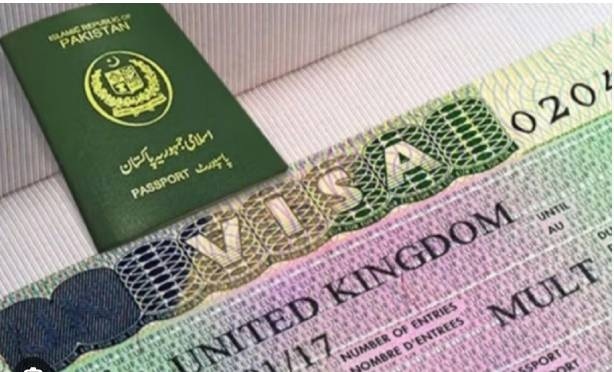
Hue and Cry of an Overseas Pakistani
Thirty Years Abroad — A Personal Reflection on Sacrifice, Belonging, and a Life Half-Lived

By: Malik Muslim Raza
Vancouver, Canada
Sometimes, when I sit alone and look back at the last thirty years of my life, I find myself overwhelmed by questions for which I have no answers.
I do not know where to begin. I do not know whom to blame. Perhaps there is no one to blame. Perhaps it is simply the price of being born in a poor country, into an ordinary family, with dreams bigger than the opportunities available.
Thirty years ago, I left Pakistan in search of a better life. I was young, hopeful, ambitious, and determined. Like so many others, I believed that hard work in a foreign land would eventually bring financial security, peace of mind, and happiness, not only for myself but also for the people I loved.
Today, after three decades, I ask myself a painful question:
What have I really achieved, and what have I lost along the way?
I have worked, struggled, earned, supported, sacrificed, and fulfilled responsibilities. Yet somehow, the responsibilities never ended.
The needs of the family remained. The problems back home remained. The financial expectations remained. And the country I left behind, hoping that one day it would change for the better, continues to struggle with many of the same problems.
Thirty years have passed, but sometimes it feels as though I have been running on a treadmill, moving constantly without ever reaching a destination.
The only thing that has truly changed is me.
I have grown older. My energy is no longer what it used to be. The dreams that once inspired me have slowly been replaced by a longing for peace, simplicity, and a little happiness.
What troubles me most is not the money I have spent or the opportunities I may have missed. It is the realization that I have spent so much of my life preparing for a better tomorrow that I forgot to enjoy today.
Living in Canada exposed me to a different understanding of society. I saw how institutions could function, how ordinary people could expect dignity, how the law could provide protection, and how citizens could build their lives with a reasonable sense of security.
Of course, no country is perfect. Every society has its problems. But I saw enough to understand that human beings do not have to spend their entire lives fighting merely to survive.
And every time I experienced something good in my adopted country, my thoughts returned to Pakistan.
Why can’t my country be like this?
Why can’t an ordinary Pakistani live with dignity?
Why must a person need influence, connections, money, or personal favors to obtain what should be his basic right?
Why do we accept injustice, humiliation, and inequality as though they are unavoidable parts of life?
These questions have followed me for thirty years.
I often discuss these issues with my Indian friends. We share a common history, cultural similarities, and many of the same social challenges. Yet our conversations frequently make me reflect on the different directions our societies have taken.
I feel neither jealousy nor hostility. I simply feel sadness for the opportunities Pakistan has lost and for the generations that have paid the price.
I know that Pakistan is not short of talented, hardworking, intelligent, and generous people. I have met countless Pakistanis who have achieved remarkable success around the world.
So why is it that the same people who flourish abroad often struggle to realize their potential at home?
Perhaps our greatest failure is not economic. Perhaps it is our inability to build a society in which justice, honesty, merit, and human dignity are valued above wealth and power.
But beyond my disappointment with Pakistan lies another pain, a much more personal one.
The loneliness of being an overseas Pakistani.
People back home often imagine that living abroad means living a comfortable and prosperous life. They see the foreign currency, the houses, the cars, the photographs, and the occasional visits.
What they rarely see is the other side of that life.
The long working hours. The loneliness. The endless bills. The missed weddings and funerals. The aging parents we could not spend enough time with. The children who grew up while we were busy earning a living. The friendships that faded with distance.
And above all, the constant feeling of responsibility.
There is always someone who needs help. Always another expense. Another emergency. Another expectation.
We become providers, problem-solvers, and financial supporters.
Somewhere along the way, people stop asking whether we are happy.
And perhaps we stop asking ourselves the same question.
I sometimes wonder whether I have lived my own life or simply spent thirty years fulfilling the expectations of others.
This is not a complaint against my family. I love them, and whatever I have done for them has come from that love.
But love does not eliminate exhaustion.
Responsibility does not eliminate loneliness.
And sacrifice does not always bring satisfaction.
There comes a time when a person begins to question the meaning of it all.
What is the purpose of earning money if we never have time to enjoy life?
What is the meaning of success if our minds are constantly occupied with worries?
What have we gained if, after decades of hard work, we still cannot find peace within ourselves?
Perhaps the most painful realization is that time is the one thing money can never replace.
I can earn more money tomorrow. I can rebuild a business. I can recover from financial losses.
But I cannot bring back my youth.
I cannot relive the years I spent away from loved ones.
I cannot recover the ordinary moments of happiness that passed unnoticed while I was busy planning for the future.

Now, when I return to Pakistan, I experience another strange feeling.
I am home, yet somehow I feel like a stranger.
Everything is familiar, but much of it feels different. The language, the streets, the food, the memories, and the people connect me to my roots. Yet the daily realities of society often leave me frustrated and helpless.
I find myself questioning things that others have learned to accept.
I cannot understand why basic rights are treated as favors, why public institutions so often fail ordinary citizens, or why human dignity seems to depend on wealth and social status.
And yet, despite all this disappointment, I cannot stop loving Pakistan.
That is perhaps the greatest contradiction of my life.
The country that gives me the deepest emotional attachment is also the country that causes me the greatest disappointment.
I have spent thirty years living between two worlds.
One country gave me opportunities, security, and a chance to build a life.
The other gave me my identity, my childhood, my language, my memories, and my roots.
I belong to both, but sometimes I wonder whether I truly belong to either.
As I grow older, my priorities are changing.
I no longer dream of becoming wealthy. I no longer measure success by the size of a house, the value of a business, or the balance in a bank account.
I want something much simpler.
I want peace of mind.
I want to wake up without the burden of endless worries. I want to enjoy a cup of tea without thinking about the next financial obligation. I want to spend time with people I love, read books, walk in the evening, have meaningful conversations, and appreciate the small pleasures of life.
I want to live, not merely exist.
And perhaps, more than anything, I want to forgive myself for the years I spent believing that my own happiness could always wait.
I do not regret helping my family. I do not regret working hard. I do not regret leaving Pakistan in search of opportunities.
But I do regret the moments when I forgot that I, too, was a human being with needs, emotions, dreams, and a limited amount of time on this earth.
I sometimes think about the millions of overseas Pakistanis who must feel the same way.
Men and women who left their homes with hope, spent their best years working abroad, supported families and contributed to Pakistan’s economy, only to discover in later life that their own emotional needs had remained unattended.
We are often praised for the money we send home.
But who counts the years we have lost?
Who measures the loneliness?
Who understands the silent emotional cost of living far from the place where our hearts belong?
And who asks what happens to an overseas Pakistani when he grows old, when his earning capacity declines, and when he finally needs someone to care for him?
These are questions that rarely appear in discussions about overseas Pakistanis.
I am not looking for sympathy. Nor am I claiming that my suffering is greater than anyone else’s.
I know there are people who have endured far more difficult lives.
I am simply trying to understand my own journey.
Perhaps writing these words is my way of acknowledging feelings that I have carried silently for years.
I still have hope for Pakistan. I still dream of a country where ordinary people can live with dignity, where justice is accessible, where young people do not have to leave their families to find opportunity, and where human life is valued beyond its earning potential.
But I also know that I cannot spend the rest of my life waiting for an entire country to change before allowing myself to be happy.
At this stage of my life, perhaps the greatest lesson is that happiness cannot always be postponed.
There will always be another responsibility, another problem, another person who needs help, and another reason to worry.
If I wait until everything is perfect, I may never truly begin to live.
Thirty years ago, I left Pakistan hoping to build a better future. Today, I find myself hoping to recover something far more precious — the ability to enjoy the life that remains.
I cannot change the past. I cannot recover the years that have gone. I cannot solve all the problems of my family or my country.
But perhaps I can learn to live the years ahead differently.
With fewer expectations, fewer unnecessary burdens, more gratitude, more meaningful relationships, and more time for myself.
And when I look back at my journey, I want to remember not only the sacrifices and disappointments but also the courage it took to leave home, the love that motivated me to help others, and the resilience that carried me through three decades.
Maybe my life has not unfolded as I imagined.
Maybe I have not achieved everything I once dreamed of.
But I am still here.
And as long as I am alive, there is still an opportunity to find meaning, peace, and happiness.
I left my homeland in search of a better life. I spent thirty years trying to make life better for others. Now, before it is too late, I want to learn how to live for myself as well.
This is not merely the story of one overseas Pakistani. It is the silent reflection of a generation that crossed oceans in search of a better tomorrow, only to discover that the most valuable part of life was the time passing quietly along the way.
────────
Malik Muslim Raza
Vancouver, Canada
November 2026
Comments are closed, but trackbacks and pingbacks are open.