
Erdogan Trump Iran Call,Turkey Pushes for Peace Talks
Turkish President Urges Washington and Tehran to Return to Diplomacy Amid Rising Tensions

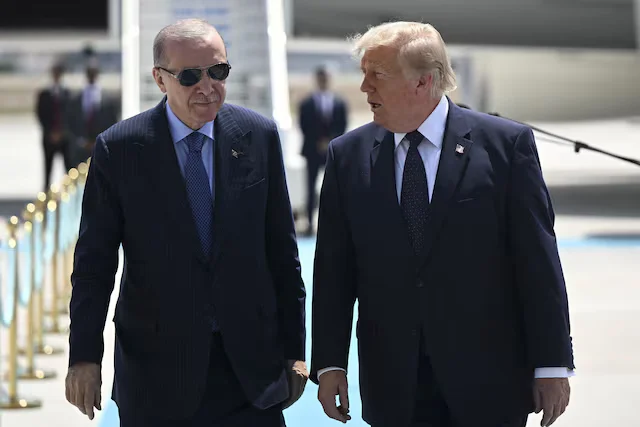
ANKARA – (Special Correspondent/Web Desk) – The Erdogan Trump Iran call took place on Tuesday, as Turkey’s president pushed the American leader to keep diplomatic channels open with Tehran. Turkish President Recep Tayyip Erdogan spoke with US President Donald Trump by phone and asked him to pursue fresh talks with Iran instead of letting tensions grow further.
The Turkish presidency shared details of the conversation in an official statement released after the call ended.
Turkey shares a long border with Iran and has one of the biggest armies in NATO. Because of this, Ankara has taken on a special role during the ongoing standoff between Washington and Tehran.
Turkish officials have stayed in close touch with both sides. They have also worked alongside other regional players, including Pakistan and Qatar, who are helping to calm the situation. Turkey has positioned itself as a bridge between two governments that are struggling to find common ground.
During the call, Erdogan told Trump that diplomacy still offers the best path forward. He said he hoped talks between Iran and the United States would continue rather than break down completely. Erdogan also promised that Turkey would keep backing efforts aimed at restoring calm in the region.
This call did not happen in isolation. It came just one day after a senior Iranian official gave Reuters a worrying update. The official said Iran may soon shift to what he called a fully offensive military stance. He blamed this shift on stalled negotiations, saying that talks meant to bring a lasting end to the conflict had not moved forward.
Adding to the tension, Washington has ruled out extending the temporary ceasefire that had been in place. Without an extension, the fragile pause in fighting looks increasingly uncertain.
Another major concern is the Strait of Hormuz. This narrow waterway is one of the most important routes for global oil shipments. Efforts to restart oil tanker traffic through the strait have stalled, raising fears about energy supply disruptions if the standoff continues.
Turkey has not stayed silent on the broader conflict. It has openly criticized both the United States and Israel for their military actions against Iran. At the same time, Turkish leaders have condemned Iranian strikes on Gulf countries, showing that Ankara is not taking a one-sided stance.

Turkey has repeatedly called for the Strait of Hormuz to reopen fully. Officials believe restoring normal shipping traffic would ease pressure on the region and support economic stability.
This diplomatic push is not limited to phone calls between top leaders. On Monday, Turkey’s foreign minister held his own conversation with his Iranian counterpart. The two discussed reopening the strait and keeping the ceasefire intact, showing that Turkish diplomacy is working on multiple levels at once.
Beyond the Iran situation, Erdogan and Trump also touched on other major issues during their call. They discussed the current state of relations between Turkey and the United States, along with the ongoing war in Gaza.
One topic that stood out was a new defense pact signed between Turkey, Saudi Arabia, and Pakistan. Erdogan described the agreement as an important sign of strength for the region. He said it reflects a firm and united stance meant to protect regional stability and security.
Erdogan also raised concerns about Gaza during the call. He told Trump that attacks on Palestinians appeared to be increasing at a time when the second phase of Trump’s Gaza peace plan was supposed to take effect. This timing raised questions about whether the plan’s next steps were being properly followed.
As of now, the White House has not issued any public response regarding the call. No official statement has been released from the American side confirming the details shared by Turkey.
The Erdogan Trump Iran call adds to a growing list of diplomatic efforts aimed at preventing further escalation in the Middle East. With Turkey positioning itself as a key mediator, all eyes remain on whether these renewed calls for dialogue can produce real results.
Regional stability continues to hang in the balance. Whether the ceasefire holds, whether the Strait of Hormuz reopens, and whether US-Iran talks resume will likely shape the next phase of this ongoing crisis.
For now, Turkey’s message remains consistent: diplomacy must be given every possible chance before tensions spiral further out of control.
[…] (News Desk) – Turkish President Recep Tayyip Erdoğan has said the joint defence agreement involving Saudi Arabia, Pakistan and Türkiye is an important […]