
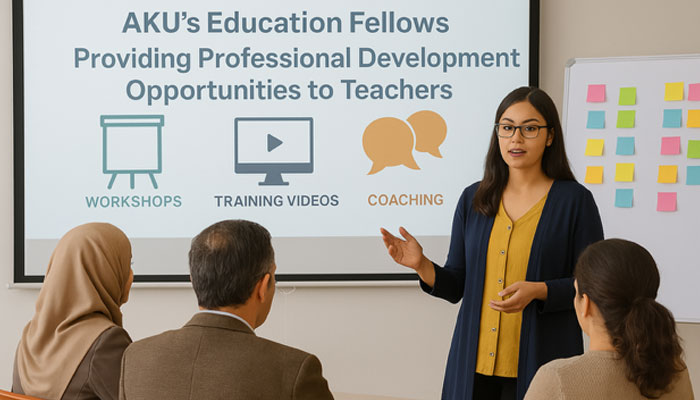

In the remote and mountainous regions of Pakistan, the Aga Khan University has emerged as a beacon of hope, pioneering educational initiatives that transcend mere infrastructure development. Among its impactful ventures, the Education Fellow Program stands out, a collaborative effort between the Institute for Educational Development (IED) and the Professional Development Centre North (PDCN). This initiative goes beyond constructing schools, aiming to revitalize entire educational ecosystems by empowering teachers, engaging communities, and reimagining learning methodologies. At the heart of this transformative journey lies Darel Valley, a recently designated district in Gilgit-Baltistan, where the program’s success has rewritten the narrative of education in a region once hindered by cultural norms and economic barriers.
Darel’s story is intertwined with the dedication of individuals like Sadiqa Haleem, an Education Fellow whose return to her roots marked a turning point for the valley. After completing her education in Karachi and teaching in urban institutions, Sadiqa chose to return to Darel, driven by a mission to bridge educational gaps for girls. Her work at the Girls Middle School Semigal exemplifies a holistic approach: she introduced interactive, activity-based learning to replace rote memorization, transforming classrooms into spaces of curiosity and creativity. Beyond academics, she collaborated with local authorities to upgrade dilapidated school buildings, ensuring safer environments with proper lighting, sanitation, and learning materials. Her efforts extended into the community, where she organized regular dialogues with parents, dispelling misconceptions about girls’ education and highlighting its long-term benefits for families and the region.

The ripple effects of such initiatives are profound. Previously, cultural practices and economic pressures often sidelined girls’ education, with many families prioritizing early marriages or household labor. Today, classrooms in Darel buzz with the energy of young girls who view education as a pathway to empowerment. Teachers, trained in gender-sensitive pedagogies, foster inclusive environments where students feel valued and motivated. Community ownership has grown, with parents actively participating in school committees and advocating for equitable access. This shift is mirrored in the valley’s upgraded administrative status, where improved educational outcomes were a key factor in its recognition as a district—a testament to the program’s role in driving systemic change.
The Aga Khan University’s vision extends further, embedding education within broader goals of social justice and equity. By integrating local traditions into curricular frameworks, the program has cultivated cultural relevance, ensuring that education resonates with community values. For instance, storytelling sessions in native languages and partnerships with elders to preserve indigenous knowledge have strengthened trust. Meanwhile, mobile libraries and digital literacy workshops introduce students to global perspectives without erasing local identity. Challenges remain—limited resources, rugged terrain, and lingering societal resistance—but the groundwork laid by Sadiqa and her peers has ignited a movement. Parents once hesitant now speak proudly of their daughters’ aspirations to become teachers, engineers, and healthcare workers.
Darel’s journey reflects a universal truth: education thrives when communities co-author its future. As valleys once shadowed by inequality now gleam with the promise of progress, the story of Darel is not merely one of classrooms constructed or lessons taught, but of minds awakened and horizons expanded. It is a reminder that even the most entrenched barriers can yield to collective resolve, innovation, and the unwavering belief that every child deserves the light of knowledge.


Comments are closed, but trackbacks and pingbacks are open.