

Defining theme of New Middle East: Cheap energy and the Old Middle East is not anymore now
By: Ehtsham Dar

Iran war within the context of China’s Weiqi game: a reordering of global politico-economic leverage.
Will you dare to march on Iran if a globally uninterrupted 20% chain of energy supply is still consequential?
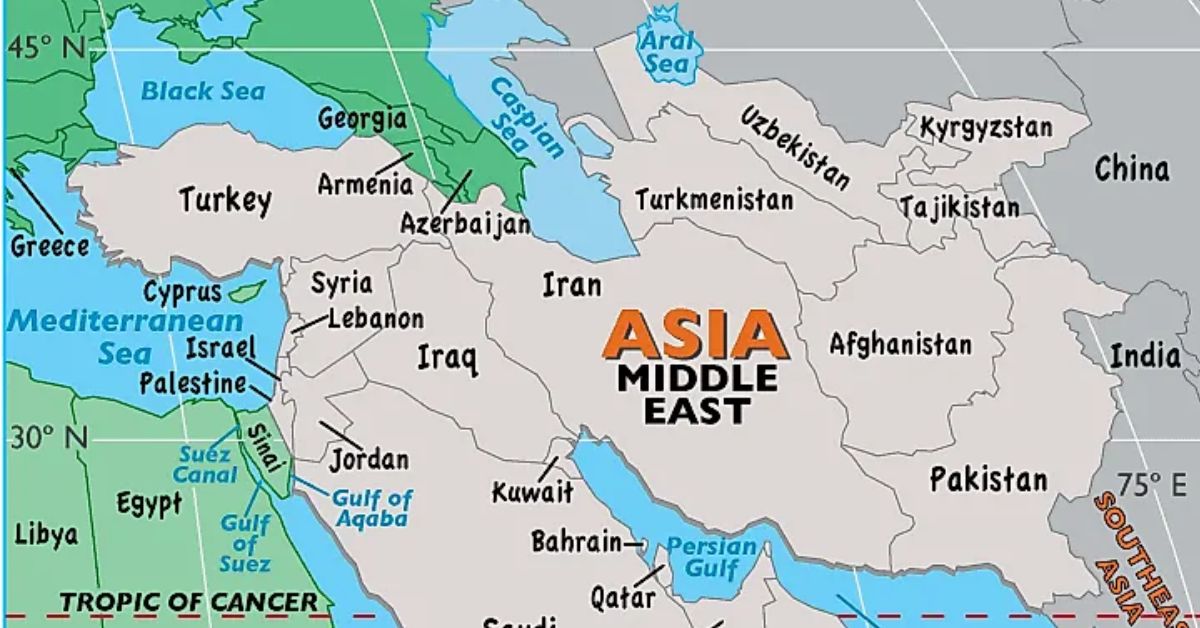
From “Operation Eagle Claw”, on 24th April 1980, to “Operation Epic Furry”, on 28th February 2026, it took almost forty seven years to swallow the fact that “time is Iran ‘s weapon”, duration” is its strategy and “positioning is its geographic strength which has not only challenged the oil pricing structure and dominance of global reserve currency, in the transactional structure of informal petrodollar deal since 1974, but it has also threatened the family led monarchies, sham democracies and financial leverages. This fact was well comprehended by China. China’s strategic maneuvering in West Asia, particularly in Iran, can be traced through the moves of Weiqi game. China’s Belt and Road initiative, (BRI), Maritime Silk Road Initiative (MSRI), and Arial assistance aim at reshaping the global politico-economic landscape through regional alliances, infrastructure investments and introducing alternative energy resources. Forces of history are facilitating China, Russia and American continent to realize opportunities and to take responsibilities to balance the imbalance of power in adjusting in the new multipolar world order, resulting from the undemocratic, inhuman, immoral and illegal decision of Trump’s US and Netanyahu’s Israel to launch a war on 28th of February 2026 against the Islamic Republic of Iran.
The Islamic Republic of Iran, after 52nd day of war, has demonstrated consistent resilience an unconquerable stance across five domains: strategic, operational, tactical, narrative and diplomatic both inside and outside the threats of war. This resilience has altered the balance of power with lasting implications for West Asia, the Global South and beyond. Iran is fighting a war of its survival and it was not a war of its choice. By blocking the “Strait of Hormuz”, a critical global chokepoint, Iran has disrupted the continuous flow of cheap energy, global shipping routes and informal petrodollar arrangements. This disruption has exponential impacts: 20% of global oil consumption and LNG trade stranded, 75% of affected oil and 60% of LNG was destined for Asia. In short the global economy is on high alert, with food security, economic stability, governance functionality, political durability and individual reliability. The iea calls it the, “largest supply disruption in global oil market history”. Despite renewables growth, the global economy remains reliant on hydrocarbons, with no immediate alternative. Although, Iran has suffered enormous loss in the form of precious human lives and infrastructure yet it has dismantled Israel’s multi-layered air defense system and US techno-military dominance.
Iran’s blocked of the Strait of Hormuz was not a regional skirmish. It was a, litmus test of the credibility of the unipolar order. By weaponizing a 20% global oil chock point; Iran proved the unipolar order could not guarantee its core promises: cheap energy, safe shipping routes, security provider to GCC countries and beyond, Israeli invulnerability, US dollar cum techno-military control. It is, therefore, reasonable to argue that the transition from unipolar world to multi-polar world began in real time and space on 28th February 2026.
Pakistan emerged as a credible regional middle power and crises mediator in 12 months, because of its leveraging geography, demography, quality military strength and unique positioning at regional as well as at global level. On 12th April 2026 Pakistan hosted round 1 talks between US and Iran as a trust worthy facilitator and now Pakistan seems to host round 2 phase as peacemaker mediator. Pakistan’s advantages are incomparable: unique relations with China, amicable relations with Russia, bi-lateral trust with both US and Iran, geographic skin in the game via Hormuz / Gawadar, ability to convene Saudi’s, Turk’s and Egyptian’s, military credibility post “Bunyan-al-Marsoos”. But it has disadvantages also: no enforcement power, economic fragility under IMF, domestic polarization. However, the role of Pakistan has brought it in to the limelight because it took serious risk for becoming a peacemaker. Which, in turn, provides opportunities to Pakistan: institutionalizing it as permanent host via signed principles, presenting Gawadar humanitarian corridor like Turkeys grain deal, leveraging China for CPEC 2.0 funding ($ 62 billion) and boosting Global South stature to a 1972 level.
It is also important to highlight that Israel, India and UAE appear to be the spoilers of the “US & Iran Peace Deal in Islamabad” for their own reasons which may include: any untoward incident in Iran, Lebanon, Palestine, narrative high jacking like painting Pakistan as Iran’s lawyer or as US face saver etc. Nonetheless, Pakistan’s geographic and demographic affinity with Iran, only nuclear-armed Muslim majority state but dependent on the US through IMF bailouts and deeply influenced by China through CPEC, military aid and beyond. Forces of history, outstanding diplomacy and calculated message to all the relevant quarters have surprised the global order that the bigger state has outsourced high-stakes risk to a smaller, dependent state because the direct costs of diplomacy or military action deems too high to be absorbed. US is experiencing a new role in the current changing global system. From primary architect to one of several competing managers, from direct control to indirect influence, from direct confrontation to indirect competition from visible warfare to structural tension, this transaction carries implications for allies who need to adjust in the new changing global order which extend across regions, across systems, across time. So the real story is not about how the war ends but it is about how the global order adapts it. Because it is a bitter reality that there are no permanent friends or foes rather “National Interests” are permanent in international relations.
Defining theme of New Middle East: Cheap energy and the Old Middle East is not anymore now
Iran war within the context of China’s Weiqi game: a reordering of global politico-economic leverage.
Will you dare to march on Iran if a globally uninterrupted 20% chain of energy supply is still consequential?
{Part 1} The writer is a student of political science and it is an earnest bid to write on the current global situation and has no agenda of any kind other than promoting national interest and stature of nation-state, Long Live Pakistan.

Comments are closed, but trackbacks and pingbacks are open.