

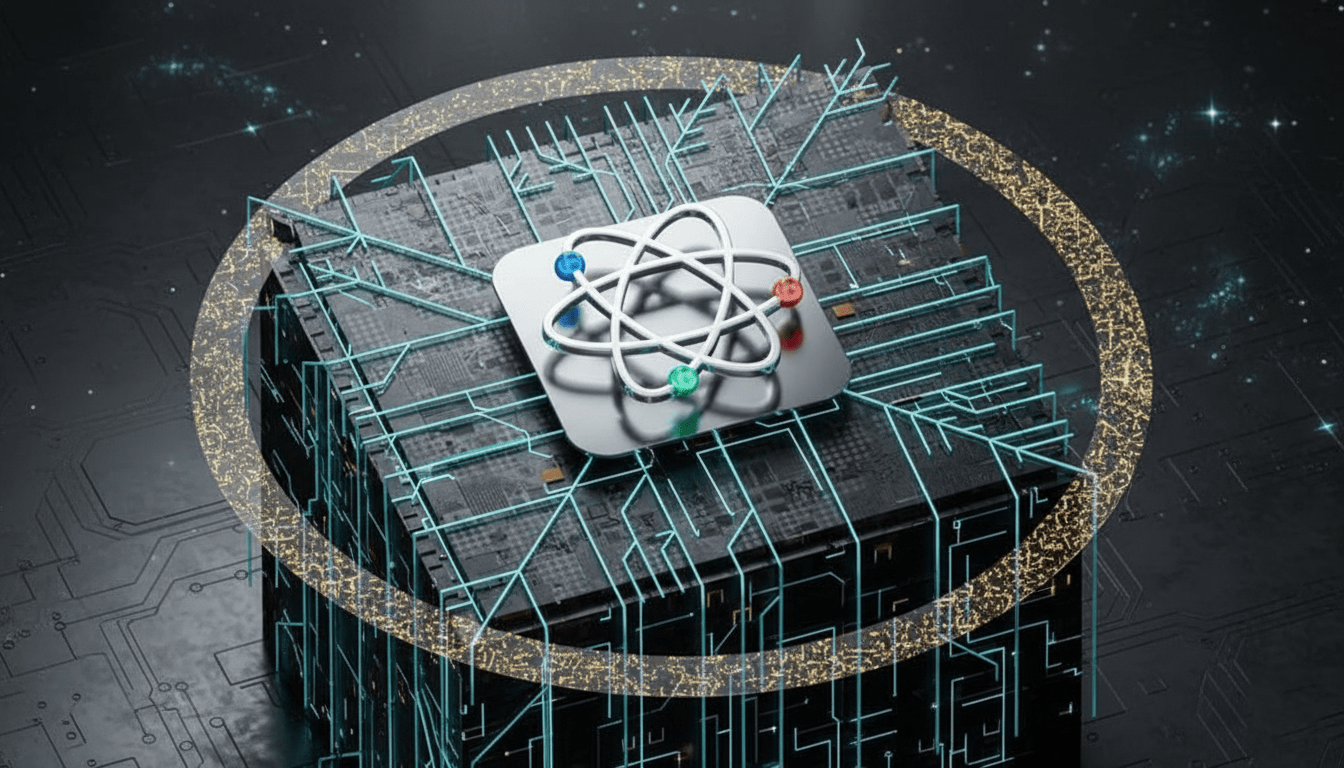
China achieves major quantum error correction milestone with Zuchongzhi 3.2
China achieves breakthrough quantum error correction with Zuchongzhi 3.2, advancing logical qubit stability, competing with Google’s Willow processor.

China – China has reported a major breakthrough in quantum computing through an experimental test conducted on its superconducting processor, Zuchongzhi 3.2. The achievement, described as “quantum supremacy 2.0,” highlights progress in quantum error correction, a key challenge in building reliable quantum systems.
The Zuchongzhi 3.2 processor successfully demonstrated a surface-code logical qubit with a code distance of seven. Researchers emphasized that increasing the code distance led to a lower logical error rate, an essential milestone showing improved stability in quantum operations. This performance places China’s approach in direct competition with Google’s earlier quantum error correction results from its Willow processor.
China’s superconducting quantum computing processor “Zuchongzhi 3.2” has recently achieved quantum error correction below surface-code threshold on a distance-7 surface code via an all-microwave leakage suppression architecture, marking a new breakthrough for the country in… pic.twitter.com/zhbEVwoWih
— China Science (@ChinaScience) December 24, 2025
What sets China’s claim apart is an all-microwave leakage suppression architecture designed to minimize “leakage,” where Qubits escape the computational states assumed by error-correcting codes.
Addressing leakage is crucial, as it can lead to correlated failures that traditional decoders struggle to manage. This new method makes leakage control a vital design consideration, as previous research also advocated for its importance in maintaining clean surface-code cycles.

While China’s results aim to match Google’s benchmarks, they do not yet demonstrate the capability to run large computations on multiple interacting logical Qubits.
Transitioning from a single logical quit too many brings complex engineering challenges and new error pathways.
IBM’s roadmap emphasizes that scaling to practical fault-suppressing systems will require efficient codes and real-time decoding pipelines.
As the industry is adopting the “error correction era,” the focus is shifting to make error correction repeatable, automatable, and economically scalable.
New York mandates mental health warnings on addictive social media
With multiple groups achieving below-threshold behavior, the next challenge is expected to lie in efficiently stacking logical Qubits and maintaining manageable error budgets during actual computations.

Comments are closed, but trackbacks and pingbacks are open.