
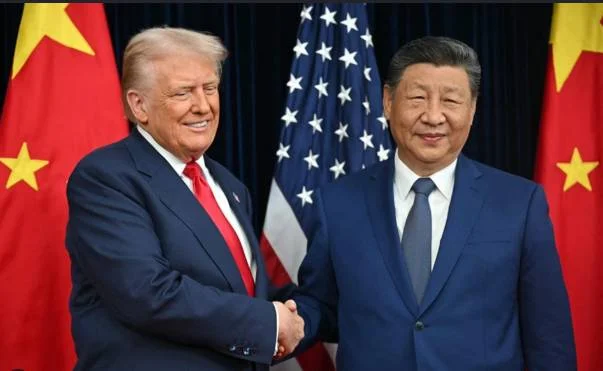

The shifting global political landscape is giving rise to new international blocs, with the geopolitical environment looking vastly different, particularly in the wake of the conflict involving Iran.
Several European nations and NATO allies chose not to support their long-standing partner, the United States, in the US-Iran conflict—a move that deeply resentful to Washington. The US declared victory before bringing this unilaterally initiated war to a definitive conclusion, and this hasty ceasefire exposed vulnerabilities in its superpower status. Throughout the conflict, the US frequently blamed China’s support for Iran’s resilient response. However, the reality on the ground was that the US possessed limited capability to intercept Iranian missiles, compounded by its allies’ deliberate non-intervention. These are the very same allies who accompanied the US in every war over the past three decades and were previously at the forefront of countering China’s economic dominance.
A pivotal moment in this shifting dynamic occurred in September 2023 during the G20 Summit in New Delhi, India, where the vision for the India-Middle East-Europe Economic Corridor (IMEC) was unveiled. Nominally, this project connects Asia (India, UAE, Saudi Arabia, Jordan, and Israel) with several European nations, backed by financial sponsorship from the US and the European Union. Conversely, China’s Belt and Road Initiative (BRI) is nearing completion, funded exclusively by Beijing. A comparative analysis reveals that both projects hold the potential to be future game-changers.
India-Middle East-Europe Economic Corridor (IMEC)
On September 9, 2023, world leaders at the G20 Summit in New Delhi signed a Memorandum of Understanding (MoU) for IMEC. The proposed transit route is structured as follows:
• Sea Route (Phase 1): Cargo will ship from Indian ports (in Maharashtra and Gujarat) to UAE ports, specifically Jebel Ali or Fujairah.
• Land Route: From the UAE, goods will be transported via rail and road through Saudi Arabia and Jordan, leading to Israel’s Haifa Port.
• Sea Route (Phase 2): From Haifa, cargo will be shipped across the Mediterranean to European ports in Italy and Greece.
• Final Delivery: From these European gateways, goods will be distributed across the rest of Europe via road and rail networks.
Key Targets: Germany is the primary target market due to its massive industrial sector, while France stands as a founding member of the initiative.
The corridor claims it will reduce the transit distance for Indian goods to Europe by 40%, resulting in significant time savings and a substantial reduction in fuel costs.
Belt and Road Initiative (BRI) & China-Pakistan Economic Corridor (CPEC)
Funded entirely by China, the BRI was officially announced by Chinese President Xi Jinping in 2013 during his visits to Kazakhstan and Indonesia. Initially branded as “One Belt One Road” (OBOR), it was later renamed the Belt and Road Initiative (BRI). The grand strategy aims to replicate the ancient Silk Road, linking China to the rest of the world via modern land and maritime routes to boost global trade, investment, and economic integration.
The infrastructure network rests on two core pillars:
1. The Silk Road Economic Belt: Connecting China by land to Central Asia, Russia, and Europe.
2. The 21st-Century Maritime Silk Road: Connecting Chinese ports to Southeast Asia, Africa, Europe, and South Asia via maritime shipping lanes.
The BRI is not merely a single road; it is a massive network of economic corridors, deep-water ports, railway networks, and energy power plants. To date, an estimated 150 countries and international organizations have signed cooperation agreements with China. Its footprint spans three major continents:
• Asia: The crown jewel of this initiative is CPEC, which directly connects the city of Kashgar in western China to Pakistan’s deep-sea Gwadar Port. In Central Asia, it links Kazakhstan, Uzbekistan, Tajikistan, Kyrgyzstan, and Turkmenistan via highways, paving a overland route to Europe. It also stretches into Southeast Asia (Myanmar, Thailand, Laos, Cambodia, Vietnam, Malaysia, Indonesia) and Southwest Asia (Bangladesh, Iran, Iraq, Saudi Arabia, Sri Lanka).
• Europe & Africa: The project connects Russia and Belarus via rail networks, integrates Greece through strategic port management, and has accelerated port and railway development across African nations—most notably in Egypt, Ethiopia, Kenya, Tanzania, and Djibouti.
• Latin America: Countries like Chile, Peru, and Argentina have also formally joined the initiative.
China’s international blueprint is already highly functional on the ground. For CPEC specifically, the foundational road networks are complete, and Phase Two is currently underway. Within this global framework, Gwadar Port holds a pivotal, geostrategic position, serving as the bridge that anchors the entire transcontinental network.
Which Project is More Viable in the Current Global Climate?
While both initiatives have the potential to redefine global commerce, current geopolitical alignments and shifting realities in the Middle East heavily influence their practical execution.
The Challenges Facing IMEC
Although IMEC offers an optimized route on paper, severe geopolitical risks have cast doubt on its operational viability. The ongoing conflicts in the Middle East have dealt a major blow to the project. Currently, the initiative remains largely confined to paper.
A primary obstacle is the halt in normalization between Saudi Arabia and Israel—a crucial link in the chain. Riyadh has explicitly stated that it will not formalize ties with Israel until an independent Palestinian state is established. Consequently, until a permanent resolution to the Israeli-Palestinian conflict is reached, IMEC faces a standstill. Additionally, maritime instability around the Strait of Hormuz poses a recurring threat, and the logistical requirement of repeatedly loading and unloading cargo between ships and trains raises transit costs and the risk of cargo damage.
The Advantages of CPEC
In contrast, CPEC is a bilateral agreement strictly between two decisive stakeholders: Pakistan and China. This project is a tangible reality on the ground, backed by over a decade of continuous development. From the operational deep-water port of Gwadar to the extensive highway networks stretching to the Chinese border, the primary infrastructure is active, and Phase Two is launching.
Furthermore, this route remains largely insulated from active global war zones. While Pakistan faces localized security challenges, these are being actively managed, positioning the corridor to become an increasingly secure international route. Looking ahead, if international sanctions on Iran ease, the integration of Iran and Turkey could turn this into a premium overland route straight into Europe. Observers note that Gulf states, realizing these dynamics, are showing a keen interest in Gwadar; nations like Oman and Qatar are increasingly looking toward CPEC to facilitate trade with China and Central Asian economies.
“Now is the time for the Pakistani government to understand the sensitivity of the moment, finish this project as soon as possible, and instantly clear all hurdles. Otherwise, we risk losing this natural, golden opportunity to a competitor. Gwadar Port needs to be made fully operational on a war footing and transformed into a world-class free port. This way, global trade will pivot away from the landlocked UAE free port and turn toward Gwadar, which is located right on the main maritime highway. This single move can take Pakistan’s economy to new heights in a matter of days.”
Comments are closed, but trackbacks and pingbacks are open.