

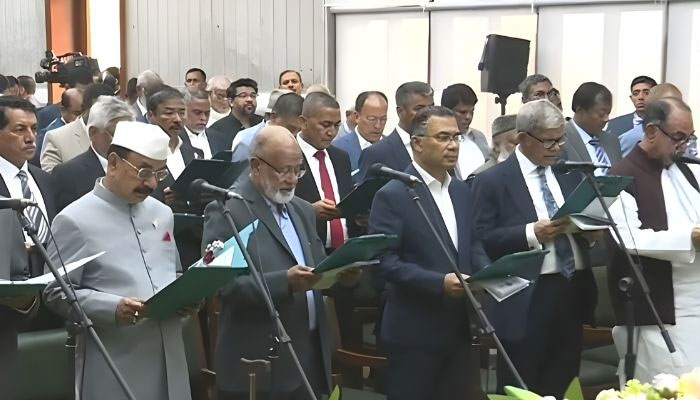
Bangladesh Lawmakers Take Oath, New Parliament Formed
Bangladesh Elects Tarique Rahman Following Historic Post-Uprising Elections

DHAKA (Web Desk) – Bangladesh’s prime minister-designate Tarique Rahman and newly elected lawmakers were sworn into parliament on Tuesday, marking the first elected representatives since the deadly 2024 uprising that toppled the autocratic government of Sheikh Hasina.
Rahman, 60, chief of the Bangladesh Nationalist Party (BNP) and scion of one of the country’s most influential political dynasties, is poised to take office from the interim government that has administered the country of 170 million people for the past 18 months. The lawmakers took their oath of loyalty to Bangladesh before Chief Election Commissioner AMM Nasir Uddin.
BNP lawmakers are expected to formally elect Rahman as their parliamentary leader, after which President Mohammed Shahabuddin will administer the oath of office to the prime minister and his cabinet later Tuesday.
Rahman won a landslide victory in the February 12 elections, with his coalition securing 212 seats compared with 77 for the Jamaat-e-Islami-led alliance. In his victory speech, Rahman said, “This victory belongs to Bangladesh, belongs to democracy… to people who aspire to and have sacrificed for democracy.”
Gandapur Praises Mohsin Naqvi’s Efforts for Imran Release
He acknowledged the economic and political challenges ahead, noting the fragile economy, weakened institutions, and a deteriorating law and order situation left by the previous regime. As the world’s second-largest garment exporter, Bangladesh faces a critical period to restore investor confidence and revive growth. Rahman called on all parties to “remain united” in a country long divided by bitter political rivalry.

Opposition and Political Context
The Jamaat-e-Islami coalition, which increased its parliamentary presence fourfold, has challenged results in 32 constituencies but pledged to act as a “vigilant, principled, and peaceful opposition,” according to leader Shafiqur Rahman.
Sheikh Hasina, barred from participating in the elections and sentenced to death in absentia for crimes against humanity, issued a statement from India condemning the vote as “illegal.” Meanwhile, India welcomed the BNP’s “decisive win,” signaling a notable shift in regional relations.
The election saw the direct election of seven women, with an additional 50 reserved seats allocated to parties proportionally. Four minority community members, including two Hindus, also won seats, reflecting Bangladesh’s diverse demographic makeup.
Voting day passed without major unrest, and observers have noted that economic recovery will be key to stabilizing the country. Crisis Group analyst Thomas Kean commented, “If the BNP can do a good job with the economy, it will make everything else easier for the government. It will help to create a level of stability, to tackle the many other challenges beyond the economy.”
Rahman’s return to Bangladesh in December after 17 years in exile in Britain underscores a remarkable political turnaround and a new chapter for the nation.


Comments are closed, but trackbacks and pingbacks are open.