
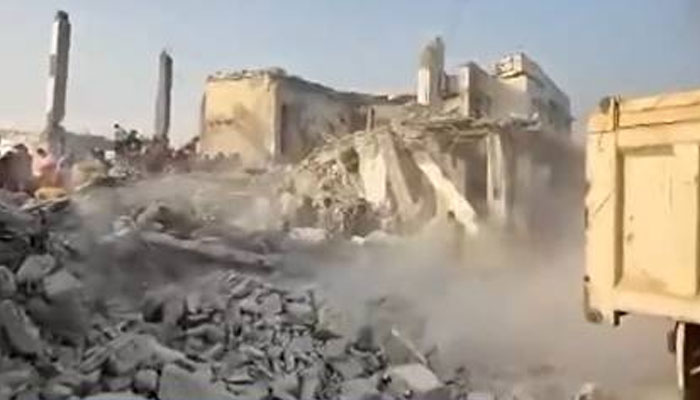

The atmosphere in the Middle East today is heavy with the scent of gunpowder. The escalating tensions among Iran, Israel, and the United States have created a war-like environment whose consequences will not remain confined to the borders of a few states. Rather, they will affect the entire architecture of global politics, economics, and security.
History repeatedly testifies that major wars are not fought solely on the battlefield. Their true consequences often unfold in the silent corridors of diplomatic institutions, in the fluctuations of global markets, in the fragile routes of energy transportation, and in the shifting alignments of international alliances. The narrow maritime passages of the Persian Gulf—particularly the Strait of Hormuz, through which a significant portion of the world’s oil supply flows—have now become symbols of potential danger for the global economy in the event of military confrontation. The tensions emerging in the region have already shaken global oil prices, financial markets, and the flow of international trade.
Thus, the present crisis is no longer merely a passing headline or a temporary episode for the Islamic world. It has evolved into a profound and decisive test—one that demands political wisdom, collective unity, and farsighted strategic thinking.
Global politics is presently passing through a transitional phase in which the centers of power are gradually shifting. The world order that remained under the shadow of Western dominance for several decades now faces new geopolitical challenges. China, Russia, and other emerging powers are striving to reshape the global balance, while the United States seeks to preserve its traditional supremacy.
The war in Ukraine, the growing rivalry in the South China Sea, and the emergence of new military alignments in Asia all signal that the world is slowly moving toward a multipolar system. In this context, the political strategy of U.S. President Donald Trump reveals a striking contradiction. He entered the political arena promising to keep America away from new wars and to promote global peace. Yet in practice, within a single year of his tenure, new fronts of global tension and military confrontation have continued to emerge.
Under such circumstances, the latest war-like unfolding in the Middle East is no longer merely a regional dispute; it has become a symbol of a broader and more complex contest for influence among global powers. Trump has made it clear that he seeks a government in Iran aligned with his preferences, and in the process, he has also invoked religious rhetoric—an indication that the objectives of this confrontation extend far beyond ordinary geopolitical calculations.
In this struggle, it is not merely borders that may change. The flows of the global economy, the routes of energy supply, the direction of defense alliances, and the priorities of world politics may all be reshaped. If tensions escalate further, their impact will not remain confined to Iran alone. The entire Middle East could be engulfed, and the repercussions may extend to Europe, Asia, and Africa. In such a scenario, the global system would enter a new phase in which the balance of power, diplomatic priorities, and economic routes begin to be rearranged. This background transforms the present crisis from a mere news event into a historic turning point whose effects may be felt across the horizons of world politics for years to come.
In recent years, developments in South Asia and the Middle East have also sparked a new intellectual debate regarding the global military balance. The standards of power that were once considered unquestionable during the last century now appear to be shifting.
The limited yet significant clashes between Pakistan and India in May hinted that modern military technology is beginning to challenge traditional principles of warfare. For instance, reports about damage to India’s advanced Rafale fighter aircraft raised questions about the assumed superiority of European defense technology.
This debate is not confined to South Asia. The growing tensions between Iran and the United States in the Middle East have deepened the discussion further. Modern warfare is no longer merely a contest of explosives and artillery. Behind the scenes, a silent yet highly complex front involving cyber technology, electronic warfare, and artificial intelligence has become equally active.
Analysts point out that in recent years certain advanced military systems have encountered unexpected technological challenges that have surprised defense experts. In the background of these incidents, possibilities such as electronic interference, system jamming, and cyber operations are being discussed. Some circles even associate these developments with emerging Chinese technological capabilities, although definitive evidence remains limited. Nevertheless, one reality remains clear: in this new technological race, China appears to be advancing with remarkable speed.
It increasingly appears that the true battlefield of future wars will lie not on land or sea, but in the digital domain. In earlier centuries, cannons and gunpowder determined the fate of empires. Today, however, algorithms, data networks, and artificial intelligence systems are becoming the new instruments of power. On this emerging battlefield, technological superiority, cyber defense, and digital infrastructure may prove as decisive as conventional military strength.

The face of war is changing—and the scales of power seem to be tilting in new directions.
The recent military actions by the United States and Israel against Iran have also brought another important question into focus. The speed, precision, and diversity of modern missile technologies have triggered new debates about the effectiveness of existing defense systems. On one side, multilayered defense shields are being constructed; on the other, hypersonic missiles, drone swarms, and smart weapons are constantly devising new methods to bypass those shields. It has become a chess game in which every move is met with another, more complex countermove.
The cumulative picture of these developments clearly suggests that the global balance of power is quietly but steadily changing. In this emerging world, only those states will be able to play an effective role that is strong in technology, economic capacity, research, and diplomacy. In contemporary geopolitics, the sharpness of the sword alone is no longer sufficient; the power of knowledge, innovation, and intellectual capability has become equally indispensable.
Within this shifting global landscape, China’s rapid progress in technology, artificial intelligence, quantum computing, and digital infrastructure has already shaken the balance of global power. If this trend continues at the same pace, it is not impossible that the leadership of global military and technological systems may gradually shift in a new direction in the coming years.
The story of global power may well be entering a new chapter one whose ink is not written with gunpowder, but with the luminous yet complex language of technology.
Against this backdrop, a fundamental question confronts the Islamic world: will Muslim nations remain mere spectators in this global chessboard, or will they adopt a balanced and dignified role to safeguard their collective interests?
Unfortunately, the greatest weakness of the Muslim world remains its internal fragmentation. Had Muslim countries advanced with mutual trust and a shared strategic vision, their weight in global politics would have been far greater. Despite vast energy resources, a youthful population, strategic geography, and abundant natural wealth, the Muslim world has yet to exercise the level of influence in global decision-making that its potential would otherwise allow.
At such a delicate moment, the most prudent strategy for Islamic countries would be to act with wisdom and foresight rather than emotional reactions. They must avoid becoming proxies in the conflicts of global powers and instead prioritize their national and collective interests.
For Pakistan, this situation holds particular significance. As a nuclear power with a critical geopolitical location, Pakistan occupies an important diplomatic and strategic position within the Islamic world. Yet it is equally undeniable that the country is presently facing serious economic pressures and severe energy challenges.
In this context, the wisest course for Pakistan would be to avoid unnecessary confrontation and instead play a responsible and balanced role during the crisis.
Pakistan’s priority should be to promote peace in the region through active diplomacy. Islamabad should strive to strengthen dialogue and reconciliation among Muslim nations.
The second key priority is energy security. If the conflict in the Middle East escalates or if crucial maritime routes such as the Strait of Hormuz are disrupted, global oil and gas prices could rise dramatically. Pakistan must therefore urgently focus on alternative energy sources, regional energy cooperation, and the establishment of strategic reserves.
The third-dimension concerns defense and security preparedness. In times of global tension, medium and smaller states often become vulnerable to pressure from larger powers. Pakistan must strengthen its defense capabilities, cyber security, and internal stability.
The fourth—and perhaps the most fundamental—strategy is economic sovereignty. Until Pakistan and other Muslim countries achieve genuine economic strength, their foreign policies cannot be shaped with complete independence.
The present crisis serves simultaneously as both a warning and an opportunity for the Islamic world: a warning because if Muslim nations remain entangled in internal rivalries and divisions, their role in global politics will diminish even further; and an opportunity because if they embrace unity, active diplomacy, and economic cooperation, they may emerge as a dignified and influential force within the evolving global balance.
For Pakistan, true wisdom lies in stepping away from dependency and avoiding emotional slogans, and instead placing prudence, diplomacy, and national interest at the center of its domestic and foreign policy. For it is through farsighted decisions that nations ultimately reshape their destiny.
Comments are closed, but trackbacks and pingbacks are open.