


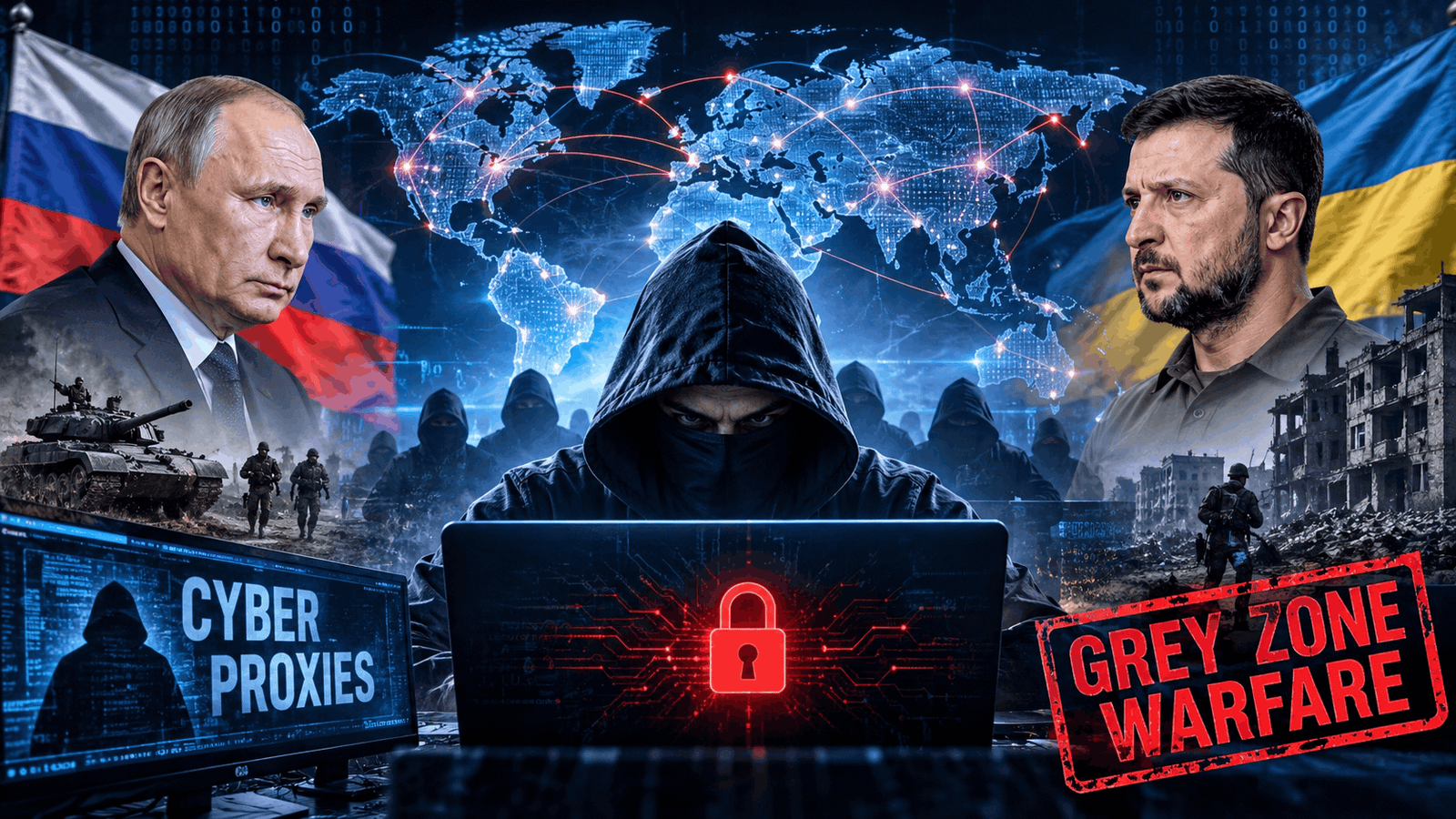
Enemies Behind the Screen: The Growing Role of Cyber Proxies in Modern Conflict
Please make it a subtitle for this news content. Please 3 small hashtags, please must be Google SEO friendly. Please make sure a cover image caption as human words. Please write a Meta description which is 22 words. Please make sure the Meta description must be SEO friendly and human words. Please only text format. Please some hashtags for social account like, Facebook and x, the hashtags of this post 100% relevant,

The conventional understanding of interstate warfare rests on an identifiable relationship between sovereign states, uniformed militaries and physical force. Yet the rapid growth of cyberspace is quietly dismantling this model. In modern geopolitical rivalries, a government no longer needs to deploy armoured divisions, launch missiles or openly order a military strike to inflict severe damage on an adversary. Instead, states function through a shadowy, decentralized network of non-state actors, including state-backed front organizations, independent hackers and criminal ransomware groups. These digital proxies have become a permanent and consequential feature of moder statecraft. Their true importance lies not just in their technical ability to breach networks, but in the political ambiguity that shields their state sponsors from accountability.
This reliance on cyber proxies reflects a fundamental shift in how governments project power. For decades, states have used non-state groups to extend their reach while minimizing the political and military risks of direct conflict. Cyberspace makes this strategy far more effective. Unlike physical troops movements, offensive cyber operations are conducted remotely across global networks designed to hide an attacker’s identity and location. Moreover, state-proxy relationships rarely follow rigid chain of command. Some proxy groups receive direct funding and orders from foreign intelligence agencies while other operate with implicit state backing, shared political goals or informal permission. This flexible arrangement allows governments to enjoy the strategic benefits of digital disruptions while keeping their involvement deniable the tactic that acts as both a defence against blame and a political power tool.
Russia’s war against Ukraine shows how this ambiguity works during active conflict. The digital battlefield extends far beyond formal military units like Russia’s GRU intelligence agency it fully relies on a wider ecosystem of pro-Russian hacktivists and cybercriminals. Groups like Killnet mobilized rapidly following the invasion, launching distributed denial-of-service (DDoS) attacks against Ukrainian government portals and critical infrastructure in European countries supporting Kyiv. While Killnet claims operational independence while its choice of targets directly serves Moscow’s goals. At the same time, direct state attacks such as the Russian military cyberspace on the Viasat satellite network just before the invasion on Ukraine, it shows how formal military operations and informal proxy disruptions work together to blind defense systems, disrupt logistics and create chaos for civilian populations.
The Middle East offers another clear example of how digital personas and state interest overlap. In late 2023, joint advisories from U.S. and allied security agencies linked an entity operating under the name of CyberAv3ngers to Iran’s Islamic Revolutionary Guards Corps (IRGC) Cyber-Electronic Command, pointing to shared technical infrastructure and targeting pattern against industrial control systems in Israeli and Americans water utilities. While Iranian officials state that digital activist groups operate independently, western intelligence see CyberAv3ngers as a state-linked front designed to project power while keeping hostilities within a manageable grey zone. This dynamic shows how digital operations can be paired with public online narratives, allowing states to maximize political pressure without formally crossing the line into open military conflict.
Cyber proxies are uniquely suited for the grey zone. By carrying out operation that intentionally stay below the legal threshold of an armed attack under international agreements like NATO’s Article 5, proxies allow states to wage continuous digital attrition. A disabled government website, a comprised local utility or a stolen database will not win a war on its own. However, the cumulative effect of these repeated operations wears down public trust, drains institutional resources, creates constant tension and impose real economic costs without triggering a direct military response.
Yes, the true impact of cyber proxies should not be overstated. Constant digital harassment does not automatically guarantee victory on the battlefield. Despite years of persistent cyberattacks, Ukraine’s government has continued to operate, its military sustained key communications and its power grid resisted permanent failure. Moreover, Proxy actors are notoriously hard to control. Groups driven by financial profit, personal fame, or extreme political agendas can easily miscalculate causing unintended escalation, exposing sensitive state tools, or provoking strong diplomatic responses that actively harm their sponsor’s broader goals.
The biggest challenge facing international security is accountability. Under established international law the actions of non-state actors can be attributed to a state if sufficient direction or control is legally proven. The main hurdle is evidence, identifying where lines of codes came from is very different from legally proven who ordered or paid for the attack. This attribution gap creates a permissive global environment where states sponsors can comfortably deny involvement, leaving victim states with few legal remedies under traditional rules.
Addressing this security crisis requires international frameworks to move beyond technical firewalls and software patches. World leaders must establish clear rules holding host nations responsible for harmful cyber operations coming from within their borders, regardless of official military links. Furthermore, cyber deterrence must evolve, when technical evidence points strongly to a state sponsor, national responses should not remain purely defensive but should trigger coordinated financial sanctions, diplomatic pressure and active countermeasures. The future of global conflict will be decided not only by traditional military hardware, but by whether the international community can hold accountable the hidden actors operating behind the screen.

Comments are closed, but trackbacks and pingbacks are open.