
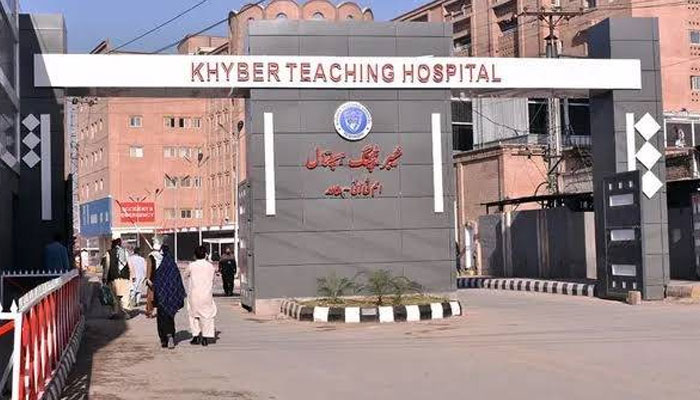

PESHAWAR: (Our Correspondent) – An inquiry into alleged financial and administrative irregularities at Khyber Teaching Hospital (KTH) has identified a discrepancy involving more than 135,000 laboratory tests, raising concerns about billing procedures, patient data management and financial oversight.
The matter emerged during a review of laboratory records following complaints about declining revenue. Investigators examined software associated with Shaukat Khanum Memorial Cancer Hospital that was reportedly being used at KTH to manage laboratory data.
The inquiry also pointed to the alleged reclassification of around 100 patients daily. According to sources, patient records were transferred to the morning outpatient department (OPD), allegedly enabling laboratory tests to be billed at lower rates.
Sources further claimed that investigators could not obtain data relating to approximately 135,000 tests from Shaukat Khanum Hospital during the inquiry.
Laboratory revenue at KTH reportedly rose by more than 130 per cent after the inquiry, prompting further questions about previous billing discrepancies and the effectiveness of the hospital’s monitoring systems.
The report also identified the absence of a barcode-based tracking system and weaknesses in the monitoring of laboratory records. It recommended a comprehensive audit of test records, invoices, patient classifications and financial receipts to determine the reasons for the discrepancies.
However, the inquiry did not establish the difference between recorded tests and available invoices as conclusive evidence of financial embezzlement. It stressed that individual laboratory records and corresponding financial entries must be examined before responsibility can be determined.
The inquiry officer also described the investigation as incomplete and called for a review of morning OPD records after potential irregularities were identified in the evening OPD. The report additionally raised concerns about restricted access to software data and the alleged possibility of modifying or deleting entries.
According to sources, the inquiry committee recommended further action. However, the hospital director subsequently issued a letter barring the relevant information technology section from sharing the records, raising concerns about investigators’ access to evidence required to complete the probe.
The inquiry officer also warned that sharing patients’ medical information with unauthorised individuals would violate medical ethics.
The KTH administration, meanwhile, maintained that the software had been provided free of charge and that the hospital had made no payments to Shaukat Khanum Hospital for its use.
The software was installed at hospitals operating under the Medical Teaching Institutions (MTI) Act 2015, including Lady Reading Hospital (LRH), Khyber Teaching Hospital and Hayatabad Medical Complex (HMC) in Peshawar.
Sources said a detailed investigation and comprehensive audit were necessary to explain the discrepancies, establish whether financial or administrative irregularities had occurred, and determine whether any individuals were responsible.
Comments are closed, but trackbacks and pingbacks are open.