
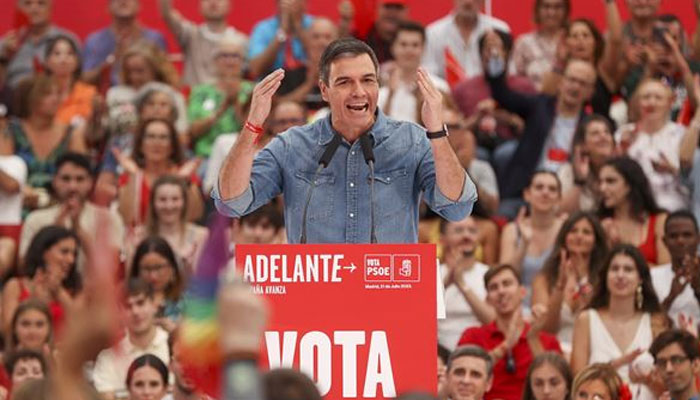
Sánchez Calls Snap Election Amid Spain Housing Crisis
Sánchez Calls November Election After Parliament Rejects Housing Measures

Madrid: (News Desk) – Spanish Prime Minister Pedro Sánchez has called an early general election for November 29, seeking a stronger parliamentary mandate after his government suffered a major legislative defeat over measures aimed at tackling the country’s housing crisis.
The election, which will be held around eight months earlier than originally scheduled, comes after Parliament rejected emergency housing measures introduced by Sánchez’s minority government. The defeat intensified political pressure on the government as protests over housing affordability spread across the country.
In a televised address, Sánchez said he wanted voters to renew the public mandate and give his government a broader progressive majority capable of advancing social reforms and addressing the country’s major challenges.
He acknowledged that his government had made mistakes and failed to deliver on some electoral commitments, while recognising that a significant section of the public remains dissatisfied.
Spain Come From Behind to Beat England 3-2

The housing crisis has become a major political issue in Spain. Tens of thousands of people have recently taken to the streets demanding stronger protections for renters and action over rising housing costs.
Sánchez’s government had proposed measures aimed at preventing evictions, curbing property speculation and strengthening tenants’ rights, but the proposals were rejected in Parliament by opposition parties, dealing a significant blow to his administration.
Sánchez has also been a prominent European supporter of Palestinian statehood and has advocated policies favouring migrant integration. His government has argued that migrants help address labour shortages and contribute to Spain’s economic growth.
At the same time, Sánchez has faced criticism from US President Donald Trump over Spain’s defence spending and its approach to relations with China.
The snap election is now expected to focus heavily on housing, immigration, the economy and the future direction of Spain’s domestic and foreign policies.
Comments are closed, but trackbacks and pingbacks are open.