
When AI Enters the Classroom, What Happens to the Teacher?
Why teacher training, not technology alone, will decide AI's real impact on education

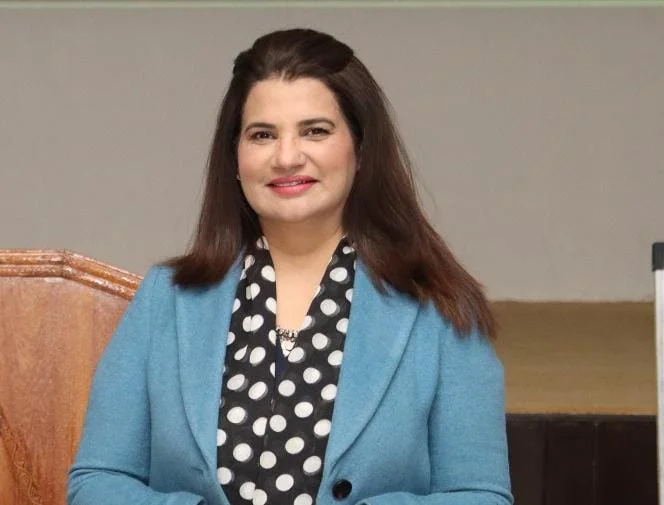
By: Humaira Latif
Educationist ELM LUMS
When AI Enters the Classroom, What Happens to the Teacher? The real question is not whether AI will replace teachers. It is whether our education systems will prepare teachers to lead in an AI-enabled world.
For generations, the classroom has revolved around one central figure: the teacher. The teacher explained. The teacher questioned. The teacher corrected. The teacher encouraged. The teacher often became the first person to recognize that a child was struggling—not only academically, but emotionally.
Today, another presence has entered the classroom: Artificial Intelligence.
AI can generate a lesson plan in seconds. It can explain a difficult concept in different ways, create questions, analyse student responses, translate content and personalise learning activities. It can even provide a form of instant feedback.
So the question confronting education systems is no longer whether AI will enter the classroom. It already has. The real question is: when AI enters the classroom, what happens to the teacher?
There are two possible responses. One is fear. The other is transformation.
The teacher cannot compete with the machine. We should stop asking teachers to compete with AI on the very things machines do exceptionally well. A teacher cannot process millions of pieces of information in seconds. A teacher cannot generate twenty versions of a worksheet instantly. A teacher cannot provide automated feedback to hundreds of students simultaneously.
But perhaps that was never the teacher’s real job. The purpose of a teacher was never simply to deliver information. Information has become abundant. Wisdom has not.
A machine can generate an answer. A teacher can ask whether it is the right question. AI can produce an essay. A teacher can ask the student whether they actually understand what they have written. AI can recommend a learning pathway. A teacher can recognise the child who has stopped believing in herself. That distinction matters.
The teacher-AI-student relationship
UNESCO’s AI Competency Framework for Teachers makes an important point: AI is changing the traditional teacher-student relationship into a teacher-AI-student dynamic. It identifies competencies across human-centred thinking, AI ethics, AI foundations, AI pedagogy and AI-enabled professional learning.
This means teacher development can no longer remain limited to traditional classroom management, lesson planning and subject knowledge. The teacher of the future will need to understand AI. But understanding AI does not mean every teacher needs to become a computer scientist.
It means a teacher should know:
- when AI can improve learning;
- when it can distort learning;
- how to verify AI-generated information;
- how to protect student privacy;
- how to use AI ethically;
- how to design learning experiences where students think rather than merely generate;
- and, most importantly, when not to use AI.
That last competency may become one of the most important.
Pakistan’s real challenge is not technology. It is capacity.
Pakistan is already discussing AI curricula, digital transformation and future skills. The Federal Ministry of Federal Education and Professional Training has also been considering a comprehensive AI curriculum from primary school through university.
But there is a danger in approaching AI as simply another subject to be added to the curriculum. We have done this before. We have introduced computers without transforming pedagogy. We have installed smart boards while continuing to teach through old methods. We have purchased digital platforms without always investing sufficiently in the people expected to use them.
The lesson should be clear: Technology without teacher capacity is merely infrastructure.
A school can have the latest AI platform and still produce passive learners. Conversely, a well-prepared teacher with modest technology can create powerful learning. This is why the next education revolution must be a capacity-building revolution.
From workshops to continuous professional learning
For decades, teacher development in many education systems has relied heavily on workshops. A teacher attends a two-day training. A certificate is issued. Photographs are taken. The training is reported as completed. And then everyone returns to the classroom.
AI cannot be integrated through this model. The pace of technological change is simply too fast. Teachers need continuous professional development—supported by coaching, peer learning, experimentation, classroom observation, reflection and evidence of changed practice.
UNESCO’s recent work in Pakistan offers an interesting example. In 2025, an AI-in-education professional development programme engaged teachers, head teachers and education coordinators and focused on practical tools and responsible use of AI.
This is the direction we need to pursue at scale. Not training for technology. But professional capacity for transformation.
What should the teacher of 2030 look like?
The teacher of 2030 should not be defined by how many digital tools they can operate. They should be defined by how effectively they can use technology to deepen human learning.
Imagine a classroom where AI handles some routine tasks. The teacher now has more time to discuss. More time to question. More time to observe. More time to mentor. More time for individual students.
This could actually restore something that technology is often accused of destroying: the human connection in education. But this will happen only if we deliberately redesign the teacher’s role.
AI should reduce administrative burden, not human responsibility. It should support assessment, not eliminate professional judgement. It should personalise learning, not label children permanently. It should expand creativity, not encourage intellectual laziness. And it should provide possibilities—not dictate pedagogy.
The uncomfortable question
Perhaps the most uncomfortable question is not: “Will AI replace teachers?”
It is: “Will teachers who are not prepared for AI be able to prepare students for an AI-driven world?”
That is a much more serious question.
Because our students are entering a world where the ability to memorise information will become less valuable than the ability to analyse it. Where asking the right question may matter more than knowing the fastest answer. Where creativity, collaboration, judgement, ethics and adaptability will increasingly define human value.
UNESCO’s student competency framework therefore goes beyond technical knowledge. It emphasises human-centred thinking, AI ethics, AI techniques and applications, and AI system design.
The implication is profound. We should not educate children merely to use AI. We should educate them to remain human while using it. And that responsibility rests heavily on teachers.
The teacher must become the navigator
The classroom of the future should not be a contest between teacher and machine. It should be a partnership—with clearly defined boundaries.
AI can be the assistant. The teacher must remain the navigator.
AI can provide information. The teacher must cultivate judgement.
AI can personalise content. The teacher must understand the child.
AI can generate possibilities. The teacher must develop purpose.
And perhaps this is where the future of education becomes less frightening. The question is not whether machines will become more intelligent. They undoubtedly will. The question is whether our education systems will become wise enough to use that intelligence responsibly.
If we invest in devices but not teachers, AI may deepen inequality. If we train teachers merely to operate tools, we will digitize yesterday’s pedagogy. But if we invest in teacher capacity, professional agency, ethical understanding and pedagogical innovation, AI could become one of the most powerful tools education has ever possessed.
The future classroom, therefore, does not need fewer teachers. It needs better prepared teachers. Because when AI enters the classroom, the teacher should not disappear. The teacher should become more important than ever.
Comments are closed, but trackbacks and pingbacks are open.