

Hamas Disarmament Agreement Sets New Path for Gaza’s Future
A new roadmap could reshape Gaza's future security and governance

Hamas – (Special Correspondent/Web Desk) – The Hamas disarmament agreement has been signed by Palestinian factions, setting a fresh path toward peace in Gaza. US President Donald Trump called it a huge step forward for the region.
According to a copy reviewed by Al Jazeera, the deal requires a detailed disarmament plan within two weeks. Extensions are possible, but only with approval from an international oversight body and agreement among all sides.
A Hamas negotiator, Ghazi Hamad, said the talks were tough but necessary. He explained that his group tried to shape the best deal it could under difficult conditions.
Still, Hamad made one thing clear. Hamas will not move forward unless Israel also meets its side of the bargain. That means Israeli troops must leave Gaza, and rebuilding efforts must show real progress.
Trump praised the deal as a win for the newly formed Board of Peace, the group tasked with overseeing Gaza’s next chapter. He said the agreement paves the way for a fresh Palestinian government that works alongside this board.
He also promised that Israel would gain lasting security once Gaza stops being used as a launch point for attacks.
How the disarmament process will actually work
Under the plan, a National Committee will enter Gaza alongside an international stabilization force. This committee will manage weapons collection and storage, while international observers watch closely and Palestinian factions take part directly.
Importantly, no weapons will go to Israel or any outside group. The National Committee alone will hold onto them.
This handover process is tied closely to Israeli troop withdrawals. Police weapons will reportedly be surrendered first, followed by heavier arms later on.

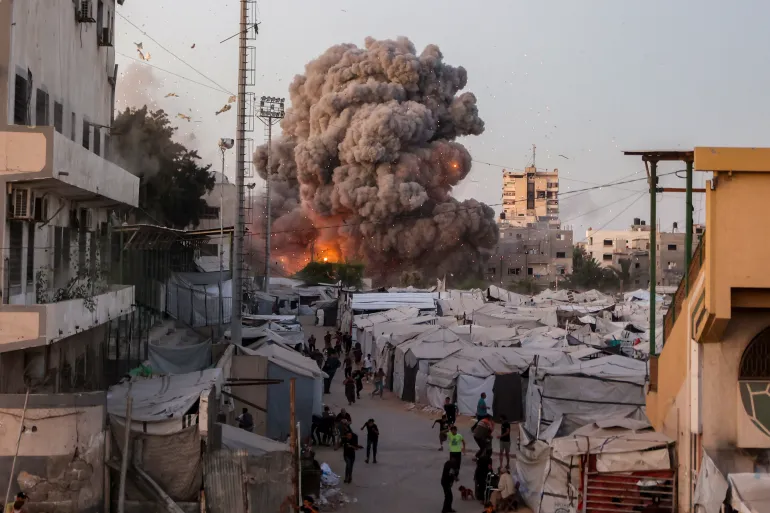
Trump described this as one part of the broader ceasefire deal he helped broker back in October. That earlier deal aimed to end months of deadly conflict that killed over 73,000 Palestinians and left Gaza in ruins.
Despite the ceasefire, violence has continued. Israel has been accused of repeated violations, including seizing more land and limiting supplies entering Gaza. Just this Thursday, six more Palestinians died in fresh strikes, among them two children.
Once disarmament wraps up, Trump said Israeli forces would exit Gaza entirely. In their place, an international stabilization force would work alongside a newly trained Palestinian police unit.
Talks continue in Cairo
Hamas leaders have spent recent days in Cairo, negotiating with mediators from Egypt, Qatar, and Turkiye. Sources described the discussions as positive, with steady progress being made.
More rounds of talks are expected soon, focused on locking in commitments for the next ceasefire phase.
However, not everyone agrees on the details. Palestinian Islamic Jihad, another armed faction, pushed back on reports of a finalized deal, saying it still has concerns about certain language in the agreement.
Notably, Hamas had already announced in early July that it was dissolving the administrative body that governed Gaza for nearly twenty years.
Analysts weigh in on the wording
Military analyst Nidal Abu Zaid pointed out something interesting. The agreement uses the phrase “inventory and storage” rather than outright “disarmament.” He explained that this distinction matters a lot in military terms, since storage can be handled by a neutral third party, while true disarmament usually implies an opposing force taking control, something Palestinian factions would strongly resist.
A US official also addressed criticism over including Turkiye and Qatar in the Board of Peace. He argued that their involvement has proven valuable, especially since this new arrangement offers an alternative to both the Palestinian Authority and Hamas: a practical, non-political government focused purely on serving everyday people.
Comments are closed, but trackbacks and pingbacks are open.