
Pakistan’s Economy Grows 3.7% to Four-Year High
Pakistan Ends FY2025-26 with Stronger Growth, Stable Economy: Finance Ministry

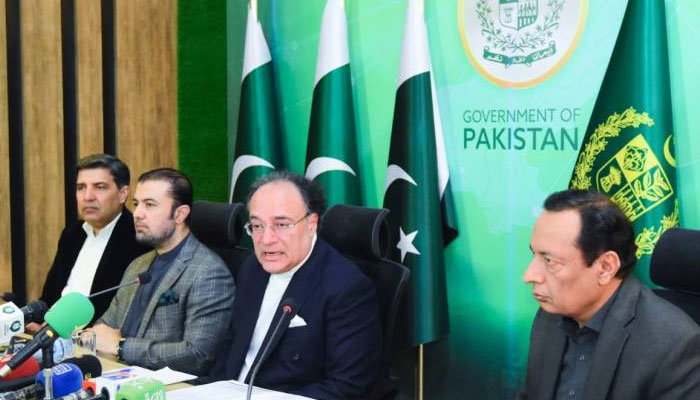
ISLAMABAD: (Web Desk) – Pakistan wrapped up the fiscal year 2025-26 with its strongest economic performance in four years, as real GDP growth accelerated to 3.7 percent and the size of the economy expanded to $452.1 billion, according to the Finance Ministry’s Economic Update and Outlook for June 2026.
The report said the economy remained resilient despite flood-related disruptions at the start of the fiscal year and fluctuations in global commodity markets. Growth was recorded across the agriculture, industrial and services sectors, while inflation remained within the government’s target range on average.
The ministry noted that prudent fiscal management, improved revenue collection and provincial budget surpluses helped narrow the fiscal deficit. A primary surplus of 3.5 percent of GDP was achieved during July-April FY2025-26, reflecting stronger public finances.
Pakistan’s external sector also showed continued improvement. Higher workers’ remittances, rising IT exports, a stable exchange rate and stronger foreign exchange reserves helped the country post a current account surplus of $255 million during July-May FY2025-26.
The report said investor confidence strengthened during the year, supported by the government’s commitment to the IMF’s Extended Fund Facility (EFF) and Resilience and Sustainability Facility (RSF) programmes, along with sovereign rating upgrades from Fitch and Moody’s.
These positive developments enabled Pakistan to return to international capital markets through a Eurobond issuance after four years, successfully launch a Panda Bond, and witness the KSE-100 Index reach a record high, making it one of Asia’s best-performing stock markets.
Looking ahead, the government said the Budget 2026-27 aims to build on these gains by promoting export-led growth, providing tax relief, strengthening social protection and maintaining fiscal discipline.
The agriculture sector grew by 2.9 percent during FY2025-26 despite flood damage and is projected to expand by 3.6 percent in the new fiscal year, supported by improvements in livestock, crops, fisheries and cotton ginning.
Large-Scale Manufacturing (LSM) recorded a 6.4 percent increase during July-April FY2025-26, compared with a 1.5 percent contraction during the same period a year earlier.
Pakistan Expected to Receive Over $4 Billion from IMF
According to the report, annual Consumer Price Index (CPI) inflation stood at 11.7 percent in May 2026, while average inflation during July-May FY2025-26 remained at 6.7 percent.
On the fiscal front, net federal revenue rose 5.8 percent to Rs8.6 trillion during July-April FY2025-26, while FBR tax collection increased 9.7 percent to Rs11.23 trillion during July-May.
Meanwhile, total government expenditure declined 9.9 percent to Rs11.62 trillion, mainly due to lower current spending and a sharp reduction in debt servicing costs.
The Finance Ministry expressed confidence that Pakistan’s economy would maintain its recovery in FY2026-27, supported by stronger macroeconomic fundamentals, continued manufacturing growth, a stable external sector, fiscal discipline and resilience in agriculture.
It also noted that easing geopolitical tensions in the Middle East have helped lower international oil prices, which are expected to reduce imported inflation, ease domestic fuel costs and improve Pakistan’s external account. Inflation for June 2026 is projected to remain in the 11-12 percent range.
Comments are closed, but trackbacks and pingbacks are open.