
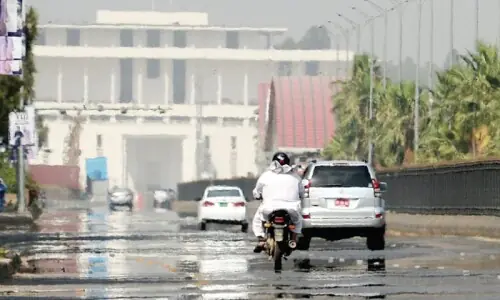
PMD Monsoon Forecast 2026 Pakistan: Heat and Dry Spell Ahead
PMD Monsoon Forecast 2026 Pakistan Warns of Below-Normal Rains and Rising Temperatures

PMD – (Web Desk) – The PMD monsoon forecast 2026 Pakistan has warned that most parts of the country will face below-normal rainfall and higher-than-usual temperatures between July and September this year.
The Pakistan Meteorological Department released its three-month outlook on Monday. The report says the Indian Ocean Dipole is currently neutral but may shift to a positive phase during the season.
At the same time, sea surface temperatures in the Pacific Ocean are warming. This points to the development of El Niño conditions, which typically reduce rainfall over Pakistan.
PMD said these warming conditions are likely to stay through July, August, and September — and may even get stronger as the season moves forward.
A positive Indian Ocean Dipole usually brings slightly more rain to Pakistan. However, PMD said its late arrival may limit any real impact on the overall monsoon this year.
The forecast shows a general trend of normal to below-normal rainfall across most of the country. Northeastern Punjab is expected to see the biggest shortfall.
Punjab, Sindh, southern Khyber Pakhtunkhwa, and most of Balochistan are likely to receive less rain than usual this season.
On the other hand, Gilgit-Baltistan, Kashmir, and upper KP may receive normal to slightly above-normal rainfall during this period.
Temperatures are expected to stay above normal across the whole country. The highest heat is likely in northeastern Punjab and eastern Gilgit-Baltistan.
PMD has warned of flash floods and landslides in mountainous areas due to near-normal precipitation in the north. Urban flooding in major cities across all four provinces is also a real risk.
Above-normal temperatures in GB, upper KP, and Kashmir may speed up snowmelt. This could raise river water levels and increase the risk of glacial lake outburst floods, known as GLOFs.
For farmers, the news is worrying. Below-normal rain in all four provinces puts major Kharif crops at risk. Sugarcane, rice, cotton, and maize may all face water stress, pushing up irrigation needs.
The department also flagged a higher risk of dengue and other vector-borne diseases. Strong winds, dust storms, and hailstorms may damage crops, vegetables, and orchards as well.
Heat stress is expected to be a recurring problem, especially in southern Punjab and Sindh. People living in plain areas should take extra precautions during peak summer months.
PMD advised that billboards in major cities should be removed or properly secured before strong winds hit. Solar energy structures should also be protected to avoid storm damage.
Comments are closed, but trackbacks and pingbacks are open.