
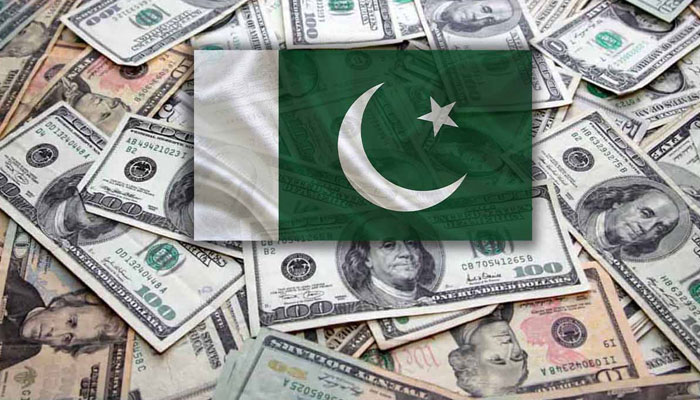

Pakistan has become trapped in a dangerous economic cycle. Every year, billions of dollars enter the country, yet the dollar shortage never truly disappears. At one point the rupee collapses, at another inflation reaches record highs, then the country is forced to knock on the doors of the IMF, while at times strict import restrictions are imposed to save foreign exchange reserves. The question is: why does this keep happening?
The core problem is simple Pakistan spends far more than it earns.
Pakistan’s annual imports range between approximately $55 billion and $70 billion, while exports barely cross the $30 billion mark. This creates a yearly trade deficit of nearly $25 to $30 billion. The gap is temporarily filled through remittances sent by overseas Pakistanis, but remittances alone cannot provide a permanent solution.
A closer look at Pakistan’s imports reveals the scale of the structural problem. The country spends around $15 billion annually on oil and gas imports, while billions more are spent on machinery, palm oil, pulses, chemicals and other essential goods. The unfortunate reality is that many of these products could have been produced domestically. However, decades of weak planning, inconsistent policies and lack of industrial development prevented Pakistan from building sufficient local capacity.
As a result, dollars entering the economy quickly flow back out to pay for imports. This is why Pakistan repeatedly faces foreign exchange crises. Unless the trade deficit is reduced, the economy will continue to remain stuck in the same cycle.
Pakistan’s second major challenge is its rapidly growing youth population. The country has one of the largest youth populations in the world. Such a demographic can become a tremendous economic strength but only if young people are provided with employment opportunities.
Every year, nearly three million graduates and skilled individuals enter Pakistan’s labour market, while the economy creates only around 500,000 to 600,000 new jobs. Millions of young people are therefore left unemployed, forced into underpaid work, or compelled to seek opportunities abroad.
Unemployment does not only create economic difficulties; it also fuels social and security challenges. Frustration increases, crime rises, mental stress deepens and political instability grows. In this sense, unemployment is not merely an economic issue it is also a national security concern.
So what is the solution?
The answer lies in building a strong private sector. But the private sector can only thrive when businesses operate in an environment supported by affordable energy, low taxes, rule of law, policy continuity and investor confidence. Unfortunately, Pakistan’s business community often struggles with uncertainty, expensive electricity, high interest rates and a complex taxation system.
Another dangerous aspect of Pakistan’s economy is the rising burden of government pensions. The situation has reached a point where the state increasingly depends on borrowing simply to pay pensions to retired employees. Pakistan largely operates an unfunded pension system, meaning there is no large reserve fund where money is accumulated in advance. Pension payments are instead financed directly through the annual budget.
In 2023, Pakistan’s pension bill crossed Rs800 billion, and it continues to grow by nearly 25 to 30 percent every year. If this trend continues, pensions themselves could become a major fiscal crisis in the coming years. The government may then be forced either to impose additional taxes on citizens or cut spending on essential public services.
Behind all these challenges lies another dangerous habit dependence on debt.
Whenever Pakistan faces an economic crisis, the immediate response is often to seek another loan. This pattern has continued for decades. Institutions and countries including the IMF, World Bank, China, Saudi Arabia and the United Arab Emirates have repeatedly provided financial assistance to Pakistan.
However, the real issue is not borrowing itself, but how borrowed money is used. Developed economies also take loans, but they invest them into industries, infrastructure, education and projects that generate future income. Pakistan, on the other hand, has frequently used borrowed money to finance current expenditures, subsidies, government spending and short-term crisis management. In other words, debt does not create new wealth it simply increases the burden of repayment.
Eventually, a point arrives where new loans are required merely to repay old ones. That is the economic trap Pakistan has remained stuck in for years.
The reality is that Pakistan no longer needs temporary relief; it needs deep structural reforms. Reforms that may initially be painful, but are necessary to place the economy on sustainable foundations. Exports must increase, unnecessary imports must be reduced, industry and agriculture must be modernised, young people must be equipped with skills and employment opportunities, and above all, the government must reduce wasteful expenditures.
History shows that nations progress only when they are willing to make difficult decisions. If Pakistan continues to avoid confronting economic realities, then debt, inflation, unemployment and recurring dollar crises may become the permanent fate of future generations.
Comments are closed, but trackbacks and pingbacks are open.