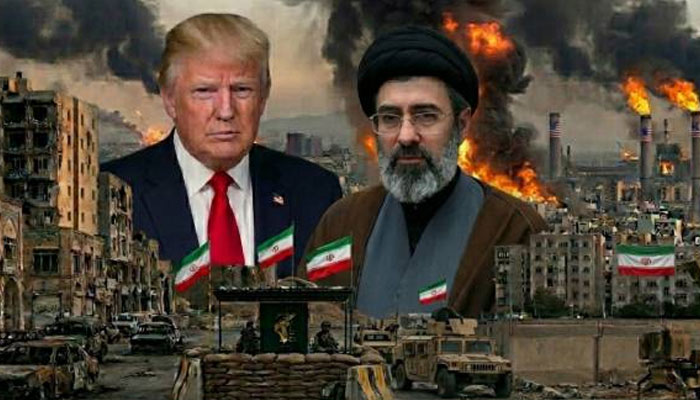
TEHRAN: (Web Desk) – Iran has outlined a series of non-negotiable conditions for any ceasefire with the United States, according to senior officials and multiple international reports. The demands, announced by the Islamic Revolutionary Guard Corps (IRGC), come amid back-channel diplomatic efforts involving Pakistan and Turkey.
The conditions include binding international guarantees that future wars will not occur, an immediate halt to all Israeli attacks on Hezbollah and allied groups, the complete closure of all US military bases in the Gulf and West Asia, and full reparations for damages caused during the conflict.
Mohsen Rezaei, military adviser to Iran’s Supreme Leader, emphasized that “the war will continue until all damages to Iran are compensated and sanctions on it are lifted.” Tehran’s stance reflects its belief in maintaining leverage after weeks of sustained missile and drone operations, which have disrupted Gulf shipping and struck energy installations across Qatar, Saudi Arabia, Kuwait, Bahrain, and the United Arab Emirates.
According to the International Energy Agency, over 40 energy assets in nine countries have been damaged, driving oil prices above $100 per barrel, with warnings they could reach $200 if the Strait of Hormuz remains contested. This vital waterway, carrying one-third of global shipborne crude, is now effectively under Iranian control.
Efforts by Oman, Egypt, Pakistan, and Turkey to mediate have been complicated by Tehran’s insistence on a permanent, comprehensive end to hostilities. Any attack on Iranian energy infrastructure, the Revolutionary Guards warned, would provoke broad retaliation against US-linked companies and host nations.
Reports suggest potential US-Iran talks could occur in Islamabad, but White House Press Secretary Karoline Leavitt stressed that nothing is final until formally announced, describing the situation as fluid.
The conflict escalated on February 28 after US and Israeli airstrikes on Iran killed several top officials, including Supreme Leader Ali Khamenei, triggering a rapid chain of retaliatory attacks that continue to destabilize the region and global energy markets.



Comments are closed, but trackbacks and pingbacks are open.