

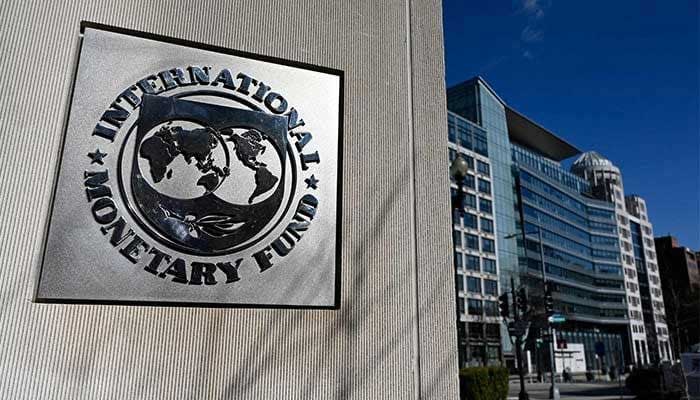
IMF praises Pakistan’s recent economic reforms and progress
IMF praises Pakistan’s economic progress while urging continued reforms, fiscal discipline, and structural changes for sustainable growth and stability.

IMF – (Web Desk) – Amid growing regional uncertainty over peace and security, the IMF review team concluded its visit to Islamabad, expressing satisfaction with Pakistan’s progress, The News reported Tuesday. At the same time, the team cautioned about potential medium-term risks that the country still faces.
The mission held a plenary session with Finance Minister Muhammad Aurangzeb and his economic team on Monday, after which it was decided that further negotiations would continue online from Turkey. During discussions last Friday, IMF officials emphasized that Pakistan’s growth trajectory depends on the continuation of structural reforms.
The IMF mission, led by Ms. Iva Petrova, is overseeing the third review of Pakistan’s Extended Fund Facility (EFF) and the second review of the Resilience and Sustainability Facility (RSF), with talks now continuing virtually. While officials praised Pakistan’s macroeconomic performance, they expressed concerns about delays in meeting certain targets, including revenue collection by the Federal Board of Revenue, external financing plans, and legislative amendments for state-owned enterprises and sovereign wealth funds.
Pakistan’s delegation highlighted that macroeconomic and fiscal stability are gradually improving. Fiscal discipline has shown positive results, and rebuilding foreign exchange reserves has created much-needed buffers. Discussions also covered the country’s fiscal outlook, FBR performance, and progress on rightsizing the federal government, which currently has 441 departments across 39 ministries. Reforms under the rightsizing initiative aim to cut approximately 54,000 positions by the end of 2025, generating an estimated annual saving of Rs56 billion.
Finance Minister Aurangzeb noted that Pakistan has continued consolidating the gains achieved under the EFF and RSF programs. He reaffirmed the government’s commitment to fiscal discipline and macroeconomic stability, emphasizing that structural reforms in taxation and the energy sector remain central to the reform agenda. Significant improvements in tax administration—including processes, technology, and workforce development—are being implemented under strong leadership at the highest level.
He further shared that steps have been taken to fully operationalise the Tax Policy Office to ensure that future taxation policy is guided by economic principles aimed at supporting sustainable growth.
On the privatisation and state-owned enterprise reform agenda, the minister reaffirmed the government’s commitment to advancing key transactions and restructuring initiatives during the year.
He observed that recent developments have demonstrated growing investor confidence and a renewed appetite among domestic investors, reflecting trust in the economy’s direction and reform trajectory. He added that the privatisation and restructuring process would continue in a transparent and orderly manner.

He also outlined progress on right-sizing the federal government, including the merger of ministries and closure of certain entities, as part of broader public sector reforms aimed at improving efficiency and governance.
He reiterated the government’s commitment to an export-led growth strategy, supported by trade facilitation measures and tariff rationalisation to enhance competitiveness and reduce import dependency over time.
Aurangzeb further apprised the mission of the government’s response to flood-related challenges during the fiscal year, noting that the availability of fiscal buffers enabled timely rescue and relief efforts. He observed that maintaining macroeconomic stability has strengthened the country’s resilience to external and climate-related shocks.
On economic performance, he shared that recent indicators point toward a gradual recovery, with positive trends in growth and key sectors. However, he acknowledged emerging global headwinds, including evolving geopolitical developments and volatility in international energy markets, which pose potential risks.
He informed the IMF mission that a high-level committee has been constituted to closely monitor the evolving situation and ensure coordinated policy responses.
The minister also emphasised that while stabilisation efforts were necessary to restore macroeconomic balance, the government remains mindful of the social impact and would continue to pursue policies aimed at enhancing social spending to protect the vulnerable population.
Pakistan Forms Committee to Monitor Fuel Amid Crisis
Iva Petrova thanked the minister for the comprehensive briefing and shared insights, including from the mission’s discussions with authorities in Karachi on the ongoing reviews under the EFF and RSF. Both sides agreed to continue further discussions virtually in the coming days. The meeting was attended by State Bank of Pakistan Governor Jameel Ahmad, the finance secretary, Federal Board of Revenue chairman and senior officials of the Finance Division.
Comments are closed, but trackbacks and pingbacks are open.