

Email: kmzameer@gmail.com
Education is the crowning jewel of any nation and the bright forehead of its future. It is not merely the recognition of letters or the manipulation of numbers; it is a sacred process of awakening consciousness, nurturing thought, and building character. When the lamp of knowledge burns bright in a society, the shadows of ignorance recede, behaviors become civilized, and values are strengthened. Education is the force that grants self-awareness to the individual and collective wisdom to society. This is why civilized nations have always made education their top priority and declared it a fundamental responsibility of the state.
District Chakwal was once a shining metaphor for educational excellence. It used to rank at the top across Punjab in terms of performance. High positions in board exams, outstanding results, and exemplary discipline were its identity. However, the passage of time has blurred that brilliant standing. Today, Chakwal has struggled to maintain its top position. There are several reasons for this decline, but the deteriorating condition and weakening performance of government schools have emerged as prominent realities. The falling academic reputation of state institutions has shaken public confidence, leading a large number of parents to turn toward private educational institutions.
It is an undeniable fact that today, the children of government teachers, officials, and bureaucrats are also studying in private schools. This trend makes it clear that private institutions have proven their capability in terms of quality, discipline, and results. Education, which was the primary responsibility of the state, is now being managed by the private sector, which is also playing a facilitative role for the government. If one looks impartially at board records and district performance, the hard work of private institutions is clearly visible in the top positions and brilliant results. In a way, private schools have become the vanguard of this educational caravan.
However, it is also true that for a strong state, the restoration of the government educational system is essential. The private sector can be a supporter, but not a complete substitute. While various administrative factors contributed to Chakwal’s recent educational decline, the lack of attention from the district administration was also sometimes discussed. But the arrival of the current Deputy Commissioner, Madam Saira Hayat, has sparked new hope. Her recent activities suggest she is well aware of the nuances of the education sector and is serious about its improvement.
Her participation in last month’s Private Schools’ Principals Convention and her encouragement of principals performing excellent educational services is clear proof that the district administration recognizes the role of the private sector. Furthermore, a delegation from APPSCA District Chakwal, led by District President Safdar Malik, met with her to congratulate her on her promotion to Grade 19. During this meeting, detailed discussions were held regarding the problems faced by private institutions, especially the issue of heavy fines imposed on some schools. The Deputy Commissioner assured that transparency would be ensured and reports would be sought from relevant authorities to reduce unnecessary financial pressure on these institutions.
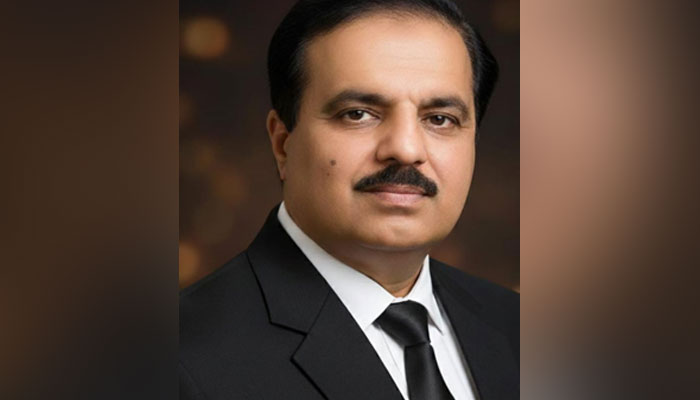
During this same meeting, the Principal of Pearl City School, Malik Khalid Zameer, presented an important and timely suggestion. He maintained that just as private institutions are sharing the government’s burden by playing a full role in the educational field, it is equally necessary to provide modern training opportunities to private school teachers alongside government teachers. He specifically requested facilitation for the inclusion of private teachers in KED Academy and Google AI training programs, so that teachers in Punjab’s private schools can align with modern educational requirements and teach the children of the province according to contemporary standards.
Expressing full support for this suggestion, the Deputy Commissioner assured that she would play an active role in including private school teachers in training programs. She clarified that she would not only move this proposal forward at the district level but also take it to the provincial Education Minister, so that a comprehensive policy can provide equal training opportunities to both private and public sector teachers. She remarked that training aligned with modern technology and Artificial Intelligence is what will strengthen the future educational system.
The Deputy Commissioner’s statement that “every possible cooperation will be provided for the resolution of problems and facilitation of private educational institutions” is a manifestation of positive and constructive thinking. It was clear from her conversation that she views the role of private schools not merely as a business activity, but as a national service. At the same time, she emphasized the need to restore government schools, reflecting her balanced and comprehensive approach.
This meeting could prove to be the beginning of a new chapter of trust, harmony, and collaboration between the district administration and private educational institutions. If this seriousness, adherence to merit, and mutual cooperation continue, it is not far-fetched to see Chakwal shine once again like a bright star on Punjab’s educational horizon. The strength of education is, in fact, the strength of our future, and private educational institutions stand as an important pillar in this journey. When the state and the private sector unite under a single purpose, the paths to progress pave themselves, and reclaiming lost glory is no longer impossible.
Comments are closed, but trackbacks and pingbacks are open.