

Pakistan reassures investors following Barrick’s review after Reko Diq attacks
Pakistan assures investors of strong security at Reko Diq mine following attacks, aiming to boost investment and economic growth.

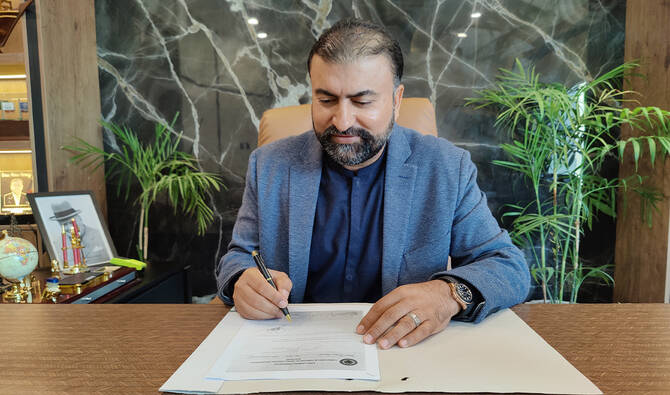
Balochistan – (Web Desk) – Pakistan has assured foreign investors that it has the “capacity and capability” to secure the multibillion-dollar Reko Diq copper and gold mine, Balochistan Chief Minister Sarfraz Bugti stated on Monday. This comes after Canada’s Barrick Mining Corporation announced a review of the project following deadly attacks in the province last month.
The mining company said it would reassess all aspects of the project after coordinated assaults on January 30-31 by the Baloch Liberation Army (BLA) killed 36 civilians and 22 security personnel across several districts in the remote southwestern province. Pakistani authorities reported that 216 militants were killed in subsequent operations.
Reko Diq, one of the world’s largest undeveloped copper and gold deposits, is central to Pakistan’s strategy to attract foreign investment and boost mineral exports amid a prolonged economic crisis. Officials expect the mines to generate $70 billion in free cash flow and $90 billion in operating cash flow, with production planned to start in 2028. The project is jointly owned by Barrick Gold and the governments of Pakistan and Balochistan.
Security concerns have long overshadowed the project in Balochistan, a sparsely populated province bordering Iran and Afghanistan that has faced decades of insurgency. Separatist groups often target security forces, infrastructure, and foreign-linked projects. Militants claim the state exploits local resources without benefiting communities, a charge the government denies.
Bugti told Arab News that the government is mindful of security risks but is taking steps to reassure investors. “Barrick Gold has a major investment, and we have other international partners in Reko Diq. We want to assure them that we can protect foreign investments and that the government and state in Balochistan are fully functional,” he said.
Authorities are redesigning security measures for the project, including creating a dedicated protection force in mineral-rich areas and strengthening border controls. Bugti acknowledged that the attacks had affected investor confidence but stopped short of calling the incidents a security failure. “A true security failure is when major military or police headquarters are captured,” he said.
There is significant improvement in Pakistan’s financial performance due to the effective economic strategy and financial discipline of @sifcpakistan @Financegovpk #RadioPakistan #News https://t.co/kq1NE6UtIs pic.twitter.com/zGUilrFUKB
— Radio Pakistan (@RadioPakistan) February 18, 2026

“I say it was a success of security forces that within hours, as I told you, other than Nushki, everything was clear.”
The minister accused Pakistan’s neighbor and archival India of supporting insurgent groups in Balochistan, an allegation New Delhi has repeatedly denied.
“What evidence do you need? Kulbhushan Jadhav was not here to sell chickpeas. It is on record that he was an intelligence officer who came to support Baloch insurgents, and the way he was arrested highlighted this,” he said.
Jadhav is an Indian national arrested by Pakistan in 2016 and convicted by a military court on espionage charges. India disputes the allegations and challenged the case at the International Court of Justice, which ordered Pakistan to review the conviction but did not rule on guilt or innocence.
Chinese group plans $1.3 billion investment in Pakistan industry
Ultimately, Bugti said long-term stability in Balochistan depended on pursuing economic development alongside security operations.
“See there is a development paradigm and the security paradigm. Both should be carried forward together,” he said.
“My vision is that meritocracy and an anti-corruption drive are key to success in Balochistan.”

Comments are closed, but trackbacks and pingbacks are open.