
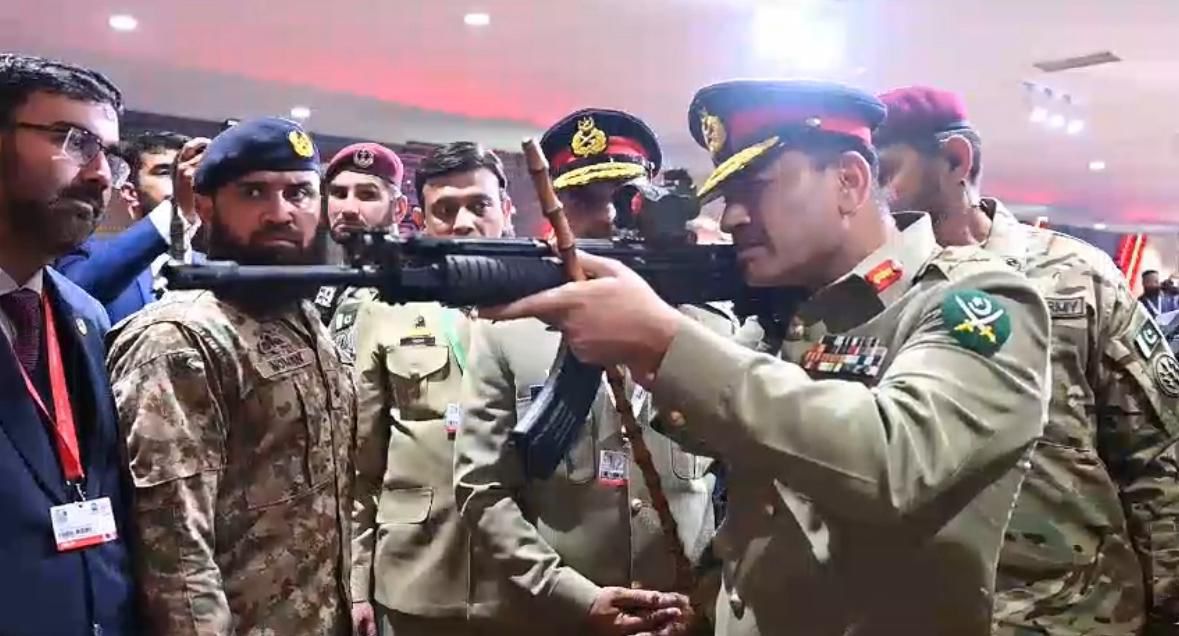

Pakistan is depicted as increasingly confident in its military rise, with the event known as Marqa Huq serving as a powerful symbol of operational unity, strategic skill, and perceived superiority over India. International reactions—especially statements attributed to Donald Trump—are interpreted as confirmation that global powers now regard Pakistan as a capable military actor. This sense of recognition is reinforced by expanding defense ties with Saudi Arabia, Qatar, Gulf states, Azerbaijan, and improved relations with Bangladesh, all seen as signs of trust in Pakistan’s professionalism and regional value. High-profile engagements, such as the visit of the King of Jordan, further strengthen the belief that Pakistan’s reliability and strategic clarity are earning it deeper respect across the Muslim world and beyond.
Growing interest from foreign countries in Pakistan’s domestically produced defense technology adds another layer to this narrative of national ascent. Advances in aircraft, drones, armored systems, and precision weapons are celebrated as evidence of a strengthening defense industry and increasing international credibility. Leadership under Field Marshal Syed Asim Munir is portrayed as bringing stability, moral strength, and diplomatic effectiveness, contributing to Pakistan’s rising profile. Throughout this narrative runs a belief that Pakistan’s military strength is paired with principled commitment to peace and justice—particularly regarding issues like Kashmir and Palestine—leading to the conviction that the world is now listening to Pakistan with greater seriousness and respect.
Pakistan’s remarkable domestic counterterrorism achievements remain another intensely vital cornerstone of collective national pride and identity. Over the past two decades, Pakistan has been compelled to fight, often virtually alone, and successfully defeat sophisticated and deeply entrenched terrorist networks that aggressively threatened the very foundations and fabric of the nation’s existence. Few other nations in the world have been forced to face down a multifaceted threat of internal and external terrorism with such prolonged intensity, complexity, and sheer brutality, and yet emerge from the struggle with such profound national resilience and restored order. The Pakistan Army’s relentless, grueling, and ultimately successful operational campaigns—conducted under extraordinarily difficult circumstances in rugged, geographically complex terrain, within intricate and sensitive social environments, and under conditions of extreme combat pressure—have been absolutely fundamental in shaping Pakistan’s contemporary international image as a country that is uniquely capable of managing and ultimately defeating the most serious and complex modern asymmetric threats. The immense and immeasurable sacrifices made by tens of thousands of soldiers, highly professional officers, dedicated law enforcement personnel, and innocent civilians have collaboratively forged a powerful, unifying narrative of national determination and shared resolve, powerfully reinforcing the belief that Pakistan’s armed forces are now definitively counted among the world’s most tested, operationally experienced, and specialized military forces in the demanding field of counterterrorism operations.
This internal, hard-won military strength is viewed as deeply and fundamentally intertwined with the absolutely core national belief that sustained national prosperity and genuine, lasting well-being depend first and foremost on an unassailable security posture. Pakistanis hold the unshakeable view that long-term, meaningful economic development and social progress are fundamentally impossible without demonstrably stable and secured borders, consistently protected and safe citizens, and a strong, technologically capable defense system acting as a national shield. Because of this powerful conviction, Pakistan’s sustained and significant investments in comprehensive military modernization, the acquisition of advanced weaponry, the development of indigenous technology, and the forging of robust strategic alliances are not perceived as isolated military expenditures but are instead wisely viewed as an integral, essential part of a holistic, long-term approach to guaranteed national progress and human development. Pakistanis believe, with profound certainty, that by actively ensuring a robust defense and comprehensive security, the country is safeguarding and protecting the very foundation upon which all future critical education, cutting-edge innovation, vital international trade, and necessary industrial development can not only survive but actively thrive. Strength, in this complex and holistic sense, is not seen as an ultimate end in itself, but rather as an indispensable means to actively support and preserve national dignity, ensure territorial integrity, and guarantee essential economic stability for future generations.
For Pakistanis, it is a great source of pride that a recent U.S. Congressional report stated Pakistan held military superiority during the Pakistan-India conflict in May of this year. The people of Pakistan derive a profound and deeply internalized sense of pride from the proven strength, resilience, and unwavering resolve of their highly professional armed forces. They maintain the powerful conviction that Pakistan’s consistent and undeniable rise—despite the decades of immense internal and external challenges, geopolitical pressures, and economic constraints—is an undeniable testimony to the unbroken, formidable spirit and profound tenacity of the nation itself. They perceive the Pakistan Army, the Pakistan Air Force, and the Pakistan Navy not merely as military institutions fulfilling a basic defense mandate, but fundamentally as the ultimate, reliable protectors of national unity, sovereignty, and sacred dignity. Every single, demonstrable exhibition of military competence, every successful and high-profile diplomatic engagement, and every sincerely expressed indication of international respect is interpreted domestically as a powerful, necessary validation of Pakistan’s enduring determination to stand tall, self-reliant, and respected among the global community of nations. Pakistan, in this determined national self-assessment, is not merely reacting to events or simply defending its established borders; it is purposefully and aggressively shaping its own destiny. It is asserting itself onto the world stage as a responsible, strategically powerful, and morally principled nation. Whether this assertion is demonstrated through its undeniable military achievements, its deep and enduring global strategic partnerships, or its consistently moral positions on contentious international issues, Pakistanis believe they are irrefutably proving that their country is decisively emerging as one of the world’s genuinely significant and indispensable military forces—a nation respected by its committed allies, thoughtfully acknowledged by neutral observers, and admired by all those who truly understand the immense depth of its sacrifices and the ultimate, unshakeable strength of its national resolve. This significant and ongoing rise is fundamentally not a matter of geopolitical chance or accidental fortune; it is the inevitable, determined result of courage, national unity, collective sacrifice, and an absolutely unshakeable national belief that Pakistan’s pivotal time on the world stage is arriving with undeniable clarity and absolute confidence.
Comments are closed, but trackbacks and pingbacks are open.