

Whispers from Margalla Hills — As Power Corridors Stir from Washington to Islamabad
When History Breathes and Islamabad Begins to Speak

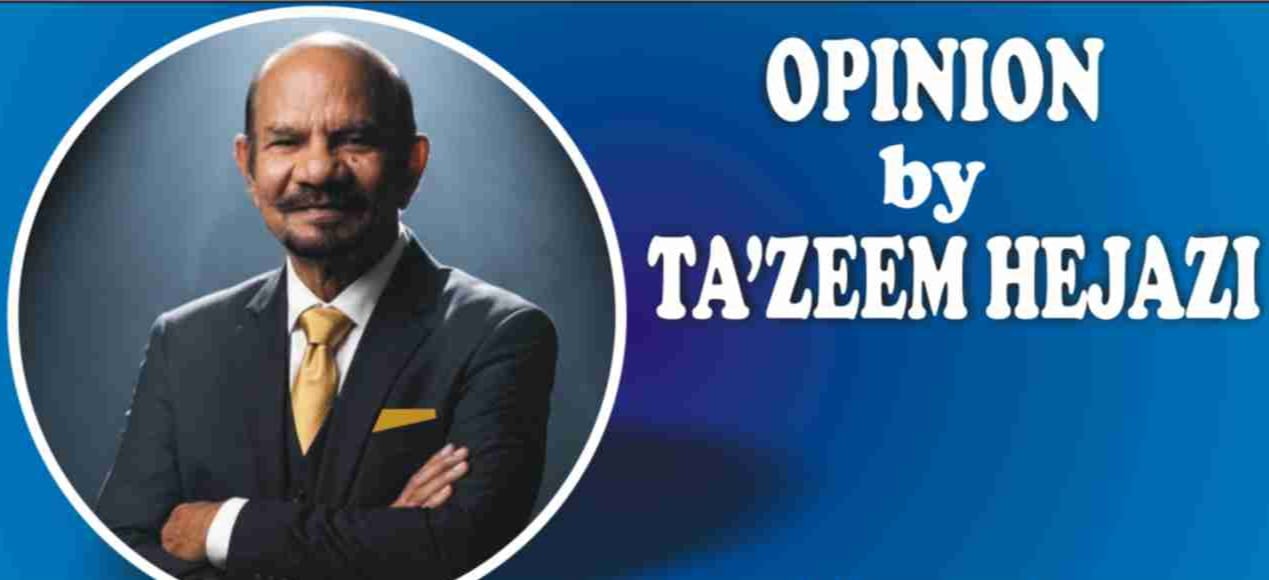
Opinion By Tanzeem Hejazi
There are moments when history does not roar—it breathes. Softly, unevenly, as if the world itself is pausing to reconsider its direction. These are the moments when power is not only exercised in grand capitals, but quietly negotiated in places once overlooked. These are the moments when geography becomes destiny, and when a city, long burdened by perception, begins to rewrite its own introduction to the world.
Far away, beneath the disciplined architecture of Washington, conversations gather weight. Diplomats prepare their language with precision, aware that every word may travel farther than intended. Among those stepping toward these corridors is Lebanon—a country shaped by conflict, yet repeatedly drawn into the center of global negotiations. Its presence is not accidental. It reflects a reality: that even the most fragile states sometimes become unavoidable in the arithmetic of power.
Lebanon’s entry into this evolving diplomatic theater carries with it layers of history that cannot be ignored. A land that has endured civil war, sectarian divisions, foreign interventions, and economic collapse, Lebanon represents more than a participant—it represents a test case. Its very existence within high-level dialogue challenges the assumption that only stable nations define global outcomes. Instead, Lebanon reminds the world that instability itself has become a central variable in modern geopolitics.
For decades, Lebanon has functioned as both a frontline and a mirror—reflecting the tensions of the Middle East while absorbing their consequences. From the shadows of Beirut’s shattered districts to the quiet resilience of its people, the country embodies the cost of unresolved conflicts. And yet, its leaders continue to find themselves invited—sometimes reluctantly, sometimes strategically—into rooms where decisions are made. This paradox defines Lebanon’s entry: a nation weakened internally, yet indispensable externally.
Its role is not one of dominance, but of presence. And presence, in diplomacy, is often the first step toward relevance. Lebanon does not walk into these corridors with strength in the conventional sense; it enters with experience—experience of survival, of negotiation, of enduring what stronger nations often seek to avoid. In this sense, its entry is not merely political; it is symbolic of a shifting world order where fragility itself commands attention.
Yet access does not equal influence. The corridors of power are not merely entered; they must be understood, navigated, and endured. Lebanon’s challenge will not be in arriving, but in sustaining its voice within a system that often prioritizes power over perspective. Whether it succeeds or fades into the background will depend not only on its own leadership, but on the willingness of global actors to listen beyond their immediate interests.
And as these global movements unfold, another city—quiet, composed, and often underestimated—begins to emerge in a different light. Islamabad, resting at the foothills of the Margalla range, is no longer just a spectator. It is becoming a setting.
This transformation did not happen overnight. It is the result of sustained effort, institutional discipline, and a relentless campaign against forces that once threatened the very fabric of the state. Under the leadership of , the struggle against terrorism was not limited to operations in remote regions; it extended into the restoration of confidence within cities, institutions, and society at large. His tenure has been marked by a strategic clarity: that internal peace is the foundation upon which any meaningful external role must be built. The dismantling of militant networks, the stabilization of volatile regions, and the rebuilding of a national sense of security were not isolated achievements—they were interconnected steps in a larger journey that has now reached a defining stage. Today, Pakistan stands able to host an international event of significant magnitude, welcoming high-level dignitaries to Islamabad with a level of confidence that reflects years of invisible labor and visible resolve.
Security, in this sense, has evolved from a defensive necessity into a diplomatic asset.
And as this transformation took root within the state, an extraordinary reflection of it appeared across society. On a recent Friday, the nation stood united in a moment that transcended routine. From the northern valleys of Gilgit to the historic resilience of Peshawar, from Muzaffarabad to Chakwal and Gujranwala, and from the grandeur of Badshahi Masjid in Lahore into the riverine lifelines of Sukkur and Jamshoro, into the dense urban stretch of Landhi in Karachi, into the tested grounds of Mastung, and further to the coastal horizon of Gwadar—the people stood shoulder to shoulder.
The sermons delivered that day were not confined to ritual. They reflected a deeper awareness: that peace is a collective responsibility, that stability is not accidental, and that a nation which has endured internal trials carries a moral obligation to contribute to global calm. Across these cities and regions, prayers were offered—not only for national well-being, but for the success of Islamabad’s emerging role as a host and facilitator in an increasingly fractured world.
There is a timeless verse in the Qur’an that captures this transformation with remarkable clarity: “Indeed, Allah will not change the condition of a people until they change what is in themselves.” It is a principle that speaks not only to individuals, but to nations. Change does not descend; it is built—through patience, through sacrifice, through an unwavering commitment to direction.
Yet not all narratives reflect this reality with balance. Regional media, particularly those shaped by strategic rivalry, continue to interpret developments through their own lenses. Their projections may amplify speculation, but even within them lies an unintended acknowledgment: Pakistan has re-entered relevance.
For nations that do not matter are rarely discussed.
It is within this evolving landscape that another dimension emerges—one that carries both symbolic and strategic weight. The presence of J.D Vence in Islamabad is not merely a diplomatic gesture; it is a signal. In the hierarchy of American power, he stands just one step away from the Oval Office—constitutionally positioned to assume leadership should circumstances demand, including the unlikely yet ever-discussed scenario of impeachment involving.
His arrival, therefore, carries a gravity that extends beyond protocol. He is not simply a representative; he is a contingency, a continuity, and a reflection of the internal dynamics of the world’s most powerful state. When such a figure steps into Islamabad, it alters the equation. It communicates that the conversation is no longer peripheral—that Pakistan is being engaged at a level that acknowledges both its strategic importance and its evolving stability.
Observers within diplomatic circles understand this nuance well. The presence of a figure like Vance suggests that Washington is not merely observing developments—it is investing attention. His interactions, his meetings, even his silences, will be studied for signals. In diplomacy, what is unsaid often carries as much weight as what is declared.
Moreover, his visit introduces a subtle recalibration of perception. Islamabad is no longer seen solely through the lens of security concerns or regional tensions; it is being viewed as a platform—a place where conversations of consequence can occur. This shift is significant, for perception in international relations often precedes policy.
And yet, such moments also carry risk. Engagement at this level invites scrutiny. Every gesture is interpreted, every statement analyzed. The challenge for Islamabad will be to maintain its balance—to welcome engagement without appearing aligned, to facilitate dialogue without becoming entangled in rivalries.

It is here that the deeper wisdom of restraint becomes essential.
On that same Friday, after offering prayers at the shrine of Bari Imam near the Diplomatic Enclave, “BaBa Tal” a mystic in simple yet striking attire, moves with deliberate pace towards Constitution Avenue. Dozens of tiny brass bells, adorning his garb, chime in harmony with each measured step, as if orchestrating his quiet journey. There was no announcement, no gathering—only a presence that seemed to move between the visible and the unseen.
He paused near the Foreign Ministry complex, observing the quiet movement of officials, the guarded stillness of a state preparing for something larger than routine.
Then, almost as if speaking to time itself, he whispered:
“bacha! power corridors do not open for those who seek entry alone… they open for those who can carry the weight of what lies inside.”
No one stopped. No one turned. Yet the words lingered.
Back in the distant halls of global power, formalities continue. Delegations speak, positions shift, outcomes remain uncertain. The illusion of control persists, even as unpredictability deepens beneath it.
It is here that a saying of (peace and blessings be upon him) becomes profoundly relevant: the strong is not the one who can overpower others, but the one who controls himself in moments of anger. Applied to nations, this wisdom challenges the very foundation of modern geopolitics. Strength is not domination—it is restraint.
Pakistan Make History with Record-Breaking Win in FIFA Series Opener
Islamabad’s emerging role must therefore be defined not by assertion, but by balance. Its value lies in its ability to connect, to facilitate, to provide a space where dialogue can occur without the immediate pressure of alignment.
Yet this path is delicate. Perception, once gained, can be lost with equal speed. The responsibility that accompanies recognition is heavier than the struggle that precedes it.
The Western poet once wrote that between the idea and the reality falls the shadow. It is within this shadow that many nations falter—where ambition exceeds preparation, where opportunity is misread, where the distance between aspiration and achievement becomes painfully visible.
Pakistan now stands at the edge of this shadow.
And as evening descends upon Islamabad, the Margalla Hills fall into silence. The city lights rise, illuminating avenues that now carry not just movement, but expectation. The presence of global actors, the quiet entry of nations like Lebanon, and the strategic arrival of figures like J. D. Vance converge into a moment that feels both fragile and profound.
Somewhere along Constitution Avenue, “BaBa Tal” walks once more. He pauses, as if listening to footsteps yet to arrive.
Then, softly, he whispers again:
“bacha! a nation is not raised by noise, but by the truth it protects in silence… and it is not tested by enemies alone, but by the weight of the role it is given.”
The world may gather in Washington.
But something deeper has already begun in Islamabad.

Comments are closed, but trackbacks and pingbacks are open.