

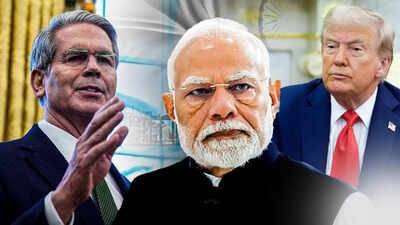
US Slams EU Over India Russia Trade Ties
US Criticises EU for Prioritising India Trade Over Ukraine

WASHINGTON: (Web Desk) – US Treasury Secretary Scott Bessent on Wednesday sharply criticised the European Union over its trade relationship with India, accusing the bloc of softening its stance on Russia-related sanctions to secure a long-awaited trade agreement with New Delhi.
Speaking in a televised interview with CNBC, Bessent said Europe had prioritised commercial interests over its stated support for Ukraine, despite being directly affected by the war with Russia.
“The Europeans should do what’s best for themselves,” Bessent said, but added that he found the bloc’s position deeply disappointing given its proximity to the Ukraine-Russia conflict. He alleged that while India continues to buy sanctioned Russian oil, European countries were purchasing refined products derived from that oil, effectively financing the war they publicly condemn.
Bessent noted that after President Donald Trump imposed additional tariffs on India in August over its Russian oil imports, European governments declined to join Washington’s pressure campaign. According to him, this reluctance was driven by Europe’s desire to finalise the EU-India trade deal.
The agreement, which has been decades in the making, includes significant tariff reductions and eliminations on a wide range of European exports, alongside broader market access commitments from both sides.
Trump Warns Iran as Tensions Escalate Again
“Every time you hear a European leader speak about the importance of the Ukrainian people, remember they chose trade over Ukraine,” Bessent said.
He also addressed wider economic tensions in Asia, including trade disputes with South Korea and volatility in Japan’s currency markets. Trump announced earlier this week that tariffs on South Korea would be raised after Seoul failed to ratify a previously agreed trade deal.
Bessent said the agreement remains invalid until South Korea’s parliament formally approves it, adding that the tariff pressure could help accelerate the process.
On currency concerns, he dismissed speculation that the US might intervene in markets amid a weakening dollar and sharp fluctuations in the Japanese yen, reiterating that Washington maintains a “strong dollar policy.”


Comments are closed, but trackbacks and pingbacks are open.