
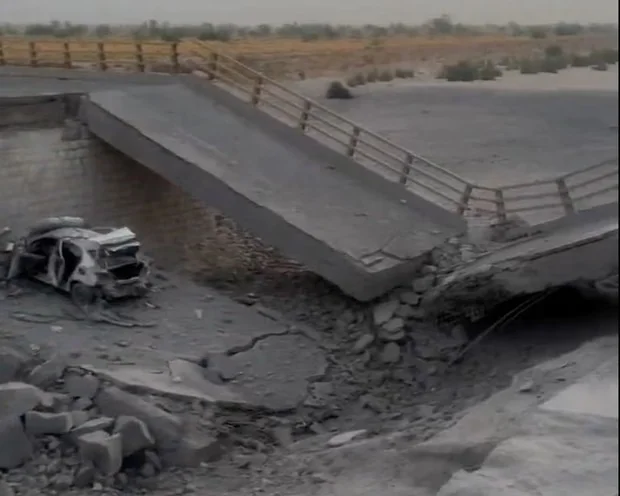
US Launches Seventh Night of Iran Strikes: Bandar Abbas Bridges Bombing Escalates Hormuz Conflict
Chabahar Port Tower Strike Adds Fuel to Growing Gulf Crisis

US vs IRAN – (Special Correspondent/Web Desk) – The Iran Hormuz blockade toll exemption debate is heating up as the United States pushes ahead with fresh military action against Tehran. Overnight strikes hit key targets, including bridges near Bandar Abbas and a tower in Chabahar port, marking the seventh straight night of American attacks in the region.
US Central Command said the goal of the latest round was simple: weaken Iran’s military strength and keep pressure on the country over the closed Strait of Hormuz. Explosions were reported in several Iranian cities, and local media pointed to strikes in areas rarely mentioned in past rounds of fighting.
Bandar Abbas Bridges Bombing Cuts Off Key Transit Route
The Bandar Abbas bridges bombing struck a sensitive nerve. These bridges served as a main link to Iran’s busiest port, and losing them makes it harder to move goods and people through the area. Iranian state television said the strikes killed at least seven people and left the region shaken.
Bandar Abbas sits right along the Strait of Hormuz, a narrow waterway that carries a large share of the world’s oil. Any damage near this port tends to ripple outward, affecting shipping schedules and fuel prices far beyond Iran’s borders.
Chabahar Port Tower Strike Targets Guard Corps Operations

Not far away, the Chabahar port tower strike took down a structure that American forces say was used by Iran’s Revolutionary Guard to help coordinate attacks on ships. Losing this tower could limit how well Iran tracks vessels moving through the Gulf of Oman.
Alongside these strikes, the US also hit electrical infrastructure and an airport in the south. Power shortages followed quickly. Iran’s energy ministry asked people to cut back on electricity and air conditioning, even as summer heat pushed demand higher.
Toll Exemption Talk Adds a New Layer to the Standoff
The idea of a toll exemption for ships crossing Hormuz has come up as one possible way to ease tensions, though nothing formal has been agreed. Iran has closed the strait, and the US has responded with a naval blockade of Iranian ports, making normal shipping nearly impossible right now.
Health officials in Iran say dozens of people have died and hundreds more have been hurt since the renewed fighting began. Human rights groups have raised concerns that hitting civilian power and water systems could cross a legal line, even during wartime.
Iran has hit back too, striking targets in Bahrain, Kuwait, Jordan, Oman, and Qatar. In Kuwait, a strike damaged a plant that supplies most of the country’s drinking water. Qatar, usually spared from Iranian retaliation, also saw damage from falling debris during an intercepted missile attack.
With the strait still closed and both sides trading blame, calls for a return to negotiations are growing louder. Pakistan’s foreign ministry said talks are still being pushed behind the scenes, though reaching common ground looks tougher by the day.
Comments are closed, but trackbacks and pingbacks are open.