
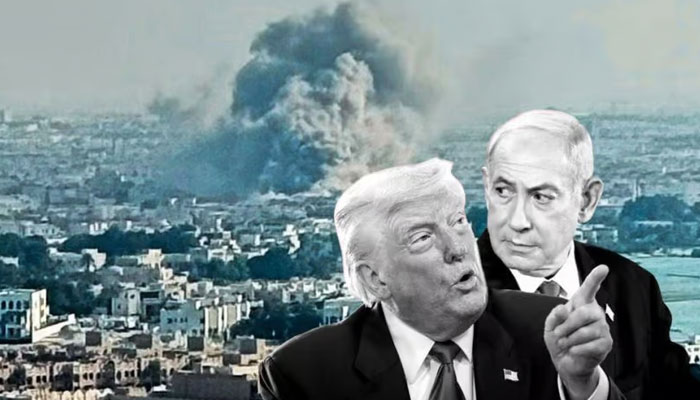
US, Israel Draw Up Plans for Possible Strikes on Iran After November Vote
Iran Faces Fresh Strike Threat as US-Israel Military Preparations Intensify

WASHINGTON: (News Desk) – The United States and Israel have drawn up plans for possible renewed military strikes against Iran after the US midterm elections on November 3, according to a report by The New York Times. However, US President Donald Trump has not authorised a new operation, and its timing and targets remain uncertain.
The report, citing US officials and people familiar with the discussions, said the two militaries had intensified preparations for a short but intensive campaign that could last around three days. Potential targets include Iranian nuclear facilities, energy infrastructure and missile and drone arsenals.
Military exercises have reportedly included flights over Iraq to practise strike manoeuvres. US Defence Secretary Pete Hegseth also met Israeli Prime Minister Benjamin Netanyahu in Israel this week to discuss possible renewed attacks, according to the newspaper.
One potential target reportedly under consideration is Pickaxe Mountain, a heavily fortified, underground site associated with Iran’s nuclear programme. Officials cited in the report believe another major round of strikes could inflict severe economic damage on Tehran and increase pressure on it to make diplomatic concessions.
Nevertheless, the plans remain options rather than an approved military operation. Trump has previously rejected proposals to resume major combat and has publicly said the United States would not attack Iran before the November 3 elections.
Trump says developments could come soon
Trump said on Wednesday that Washington was not negotiating with Tehran and suggested that developments in the conflict could come soon.
“We are not negotiating with” Iran, Trump told reporters before boarding Air Force One at Joint Base Andrews. He added that “something one way or another will happen, fairly soon,” while noting that many people expected developments after the elections.
His remarks followed an earlier statement on October 8 in which he said the United States would not attack Iran before the midterms, citing what he described at the time as productive discussions with Tehran.
A White House official told The New York Times that the administration would not comment on military plans “that may or may not exist”, while stressing that Trump was keeping his options open to prevent Iran from acquiring nuclear weapons.
The latest comments have added to uncertainty over whether Washington will pursue further military action or seek a diplomatic settlement after the vote.
Military preparations and political calculations
The reported preparations come as the United States builds up military capabilities in the region. According to The New York Times, the force includes aircraft carriers, Marines, fighter jets and special operations personnel, with preparations expected to be in place around early November.
The timing also carries political implications. Trump has publicly ruled out a new attack before the US midterms, while Israel is due to hold elections on October 27. The outcome of the Israeli vote could affect Netanyahu’s political position and the calculations surrounding any military campaign.
Reports about an earlier planned operation have differed. The Financial Times reported that Netanyahu had pushed for a major offensive during the weekend of October 10, while The Jerusalem Post, citing Israeli military sources, disputed claims that Israel had been on the verge of launching an attack at that time.
These conflicting accounts underline the difficulty of establishing how close either country has come to authorising a new operation.
Iran warns of wider regional retaliation
Iran has warned that renewed US-Israeli strikes would trigger retaliation and could widen the conflict across the region. Reports have suggested that Tehran could consider targets beyond military installations, potentially including regional infrastructure and communications networks.
Any escalation could threaten energy supplies, commercial shipping and regional security. The Strait of Hormuz, a critical route for global oil and gas shipments, remains central to the dispute between Washington and Tehran.
The conflict began on February 28, when the United States and Israel launched military action against Iran. Tehran responded with missile and drone attacks across the region, while shipping through the Strait of Hormuz was severely disrupted.
Previous fighting has contributed to volatility in global energy markets and placed pressure on military resources, including supplies of missile interceptors. Analysts have also questioned whether another campaign could achieve its objectives without triggering further economic disruption or a broader regional conflict.
Diplomatic efforts remain stalled
Diplomatic efforts have so far failed to resolve the main disagreements between Washington and Tehran. Negotiations reportedly involve Iran’s nuclear programme, sanctions and restrictions affecting navigation through the Strait of Hormuz.
The United States wants Iran to make concessions on its nuclear activities, while Tehran has sought an end to the conflict, relief from the US blockade and the reopening of the strategic waterway. Iran has maintained that its enriched nuclear material should remain on its territory.
Pakistan and Qatar have been involved in mediation efforts, but a memorandum of understanding reached in June has reportedly stalled amid disagreements over nuclear issues and maritime access.
Trump has repeatedly said Iran must not acquire nuclear weapons. Tehran, meanwhile, has resisted key US demands, leaving the prospects for a negotiated settlement uncertain.
Reported military exercises add to uncertainty
Reports of Israeli aircraft operating over Syria and Iraq during overnight exercises have further fuelled speculation about possible military action. However, such movements do not establish that a strike has been authorised or is imminent.
For now, the United States and Israel are reported to be preparing military options, but a decision to resume attacks has not been confirmed. The US midterm elections, the readiness of military forces, Iran’s threatened retaliation and the stalled diplomatic process are likely to shape the next phase of the crisis.
Comments are closed, but trackbacks and pingbacks are open.