
US intelligence: Iran not rebuilding nuclear enrichment after 2025 strikes
Trump has repeatedly said he ordered the attack on Iran alongside Israel on February 28 because of an imminent threat.

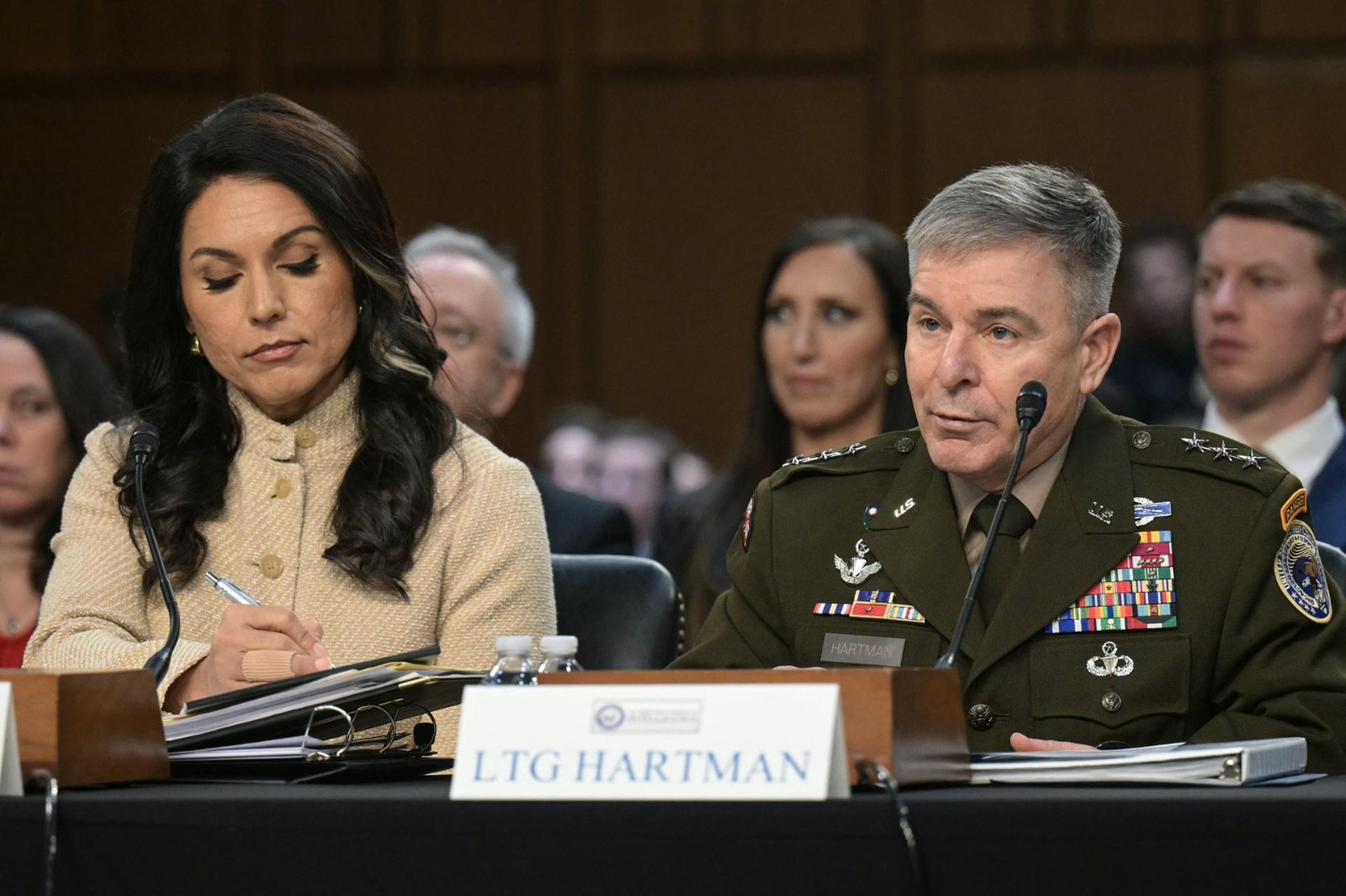
US intelligence agencies have determined that Iran has not resumed rebuilding its nuclear enrichment program, which was destroyed in joint US and Israeli strikes last year. This assessment challenges a central justification used by Donald Trump for continuing military action, where he cited an “imminent nuclear threat.”
During a Senate intelligence hearing, Director of National Intelligence Tulsi Gabbard stated in written testimony that Iran’s nuclear enrichment capability had been “obliterated” following the 2025 operation and that no reconstruction efforts have been detected since. However, her verbal remarks during the session were less direct, as she noted she had not fully reviewed the prepared statement but did not dispute its findings.
Officials also indicated that Iran’s leadership structure remains intact despite weeks of conflict. Meanwhile, John Ratcliffe told lawmakers that although Iran engaged in diplomatic talks, US intelligence believed Tehran was not genuinely committed to reaching an agreement.
The findings contrast with repeated claims by Trump that Iran was only weeks away from developing a nuclear weapon. International observers, including watchdog groups, have not confirmed the existence of an immediate nuclear threat prior to the escalation.
Israel kills Esmail Khatib, third top Iranian official in 48 hours
Gabbard herself had been an outspoken opponent of war with Iran as a Democratic congresswoman.
One of her senior aides, Joseph Kent, resigned in protest Tuesday as director of the National Counterterrorism Center, saying that Iran posed no “imminent threat” and that Trump was misled by Israel and media outlets.
Democrats attacked Gabbard over the war, saying she had not proven that Iran posed any threat beyond what it has since the 1979 Islamic revolution.
“President Trump said, we are not the policemen of the world. He ran on that,” Democratic Senator Michael Bennet said.
“Now he’s turned us into the world’s policeman, into its jury, into its judge, into its executioner,” he said.

In her remarks to senators, Gabbard said Iran had been suffering heavy blows in the weeks of attacks — which included the killing of the longtime supreme leader, Ayatollah Ali Khamenei — but that the Islamic republic was still functioning.
The US intelligence community “assesses the regime in Iran to be intact but largely degraded due to attacks on its leadership and military capabilities,” Gabbard said.
“If a hostile regime survives, it will likely seek to begin a years-long effort to rebuild its military, missiles and UAV forces,” Gabbard said, referring to unmanned aerial vehicles, or drones.
Russia ‘upper hand’
In other findings, Gabbard predicted that Russia would keep pressing its four-year invasion of Ukraine, a war that Trump had vowed to end upon taking office, largely by pressing Kyiv to compromise.
US intelligence “assesses that Russia has maintained the upper hand in the war against Ukraine,” Gabbard said.
“US-led negotiations between Moscow and Kiev are ongoing. Until such an agreement is met, Moscow is likely to continue fighting a slow war,” she said.
Gabbard said the United States faced a threat if there were an “escalatory spiral” in Ukraine or elsewhere, which could potentially lead to the use of nuclear weapons.
She said that China was “rapidly” modernizing its military with a goal of being able to seize Taiwan, the self-governing democracy claimed by Beijing.
However, US intelligence “assesses that China likely prefers to set the conditions for an eventual peaceful reunification with Taiwan short of conflict.”


Comments are closed, but trackbacks and pingbacks are open.