
US and Iran to resume Thursday nuclear talks amid strike fears
Iran and the US resume talks Thursday, aiming to prevent conflict amid military tensions and domestic unrest in Tehran.

Iranian officials – (Web Desk) – Iranian officials remain hopeful that renewed talks with the United States on Thursday could lead to a deal preventing further conflict, even as U.S. military forces have significantly increased their presence in the Middle East.
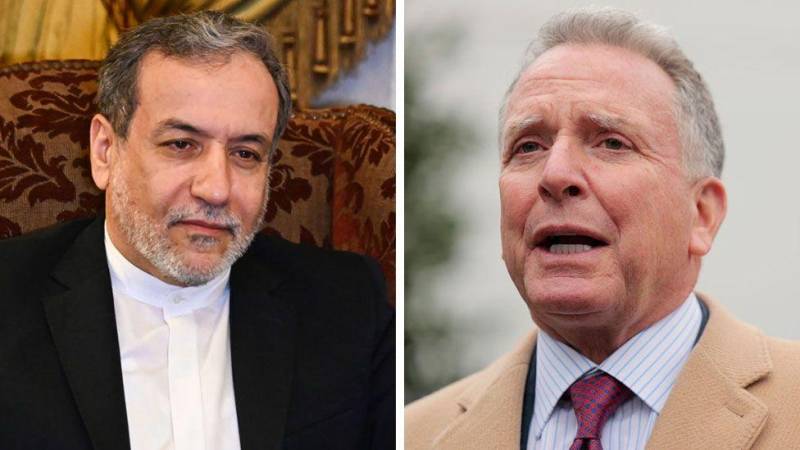
Iran’s Foreign Minister, Abbas Araghchi, told CBS News on Sunday that a draft agreement was being prepared ahead of the new discussions on Tehran’s nuclear program. This comes after U.S. envoy Steve Witkoff questioned why Iran had not yet “capitulated.”
Oman’s Foreign Minister, Badr Albusaidi, who is mediating the talks, said the Geneva meeting would resume Thursday with “a positive push to go the extra mile toward finalizing the deal.”
The U.S. has ramped up threats of military action following nationwide protests in Iran, which rights groups say have led to thousands of deaths. On Sunday, Iranian students staged both pro- and anti-government demonstrations, despite the risk of arrest or worse.
Araghchi warned that Iran would defend itself if attacked, including against American interests in the region. However, he added there is “a good chance for a diplomatic solution.” Iran’s President, Masoud Pezeshkian, echoed this optimism, noting that previous talks “yielded encouraging signals.”
After recent Geneva discussions, Iran said it was preparing a draft proposal aimed at preventing military action. “I believe that when we meet again this Thursday, we can finalize a good text and reach a swift agreement,” Araghchi said.
Axios reported that if Iran submits its proposal within 48 hours, Washington is ready to meet later in the week for detailed negotiations.
Meanwhile, the U.S. has deployed two aircraft carriers, additional jets, and ships to the Middle East, strengthening air defenses to support its threat of intervention. U.S. President Donald Trump’s chief Middle East negotiator, Witkoff, expressed frustration over Iran’s reluctance to yield under pressure.
“He’s curious as to why they haven’t… I don’t want to use the word ‘capitulated’, but why they haven’t capitulated,” he said.
“Why haven’t they come to us and said, ‘We profess we don’t want a weapon, so here’s what we’re prepared to do’?”
Western governments fear Iran’s nuclear programme is aimed at developing a bomb, which Tehran has long denied, though it insists on its right to enrich uranium for civilian purposes.
On the subject of uranium enrichment, Araghchi said Sunday that Iran had “every right to decide for ourselves”.
A previous round of diplomacy last year was interrupted by Israel’s bombing campaign against the Islamic republic.
That sparked a 12-day conflict in June that the US briefly joined with strikes on Iran’s nuclear facilities.

Despite the recent Oman-mediated talks, Iranians’ fears of a new conflict have grown.
“I don’t sleep well at night even while taking pills,” Tehran resident Hamid told AFP.
IT technician Mina Ahmadvand, 46, believes that “at this stage, war between Iran and the US as well as Israel is inevitable”.
“I don’t want war to happen, but one should not fool around with the realities on the ground.”
The concerns have prompted several foreign countries to urge their citizens to leave Iran, including Sweden, Serbia, Poland and Australia.
Pakistan Bangladesh Agree to Expand Bilateral Cooperation
Iran has previously said that quickly striking a deal is in its interests if it means relief from sanctions that have hamstrung its economy, which contributed to protests late last year over the high cost of living.
Those demonstrations quickly expanded into mass anti-government protests that marked one of the largest challenges to the Islamic republic’s leadership in years, prompting a deadly crackdown by authorities that saw thousands killed, according to rights groups.
On Sunday, Iranian students gathered for fresh pro- and anti-government rallies commemorating those killed following similar gatherings the day before.
Local and diaspora media outlets reported demonstrations at multiple Tehran universities, with some participants waving the flag of Iran’s deposed monarchy, and others chanting “death to the shah”, who was toppled by the 1979 Islamic revolution.
Trump had initially cheered on the protesters, threatening to intervene on their behalf amid the crackdown, but his threats soon shifted to Iran’s nuclear programme.
Over 80 Militants Neutralised in Pakistani Strikes Along Afghan Border
Voicing their support for the protests, several Iraq-based Kurdish-Iranian groups announced on Sunday that they were forming a political coalition to unite against Iran’s Islamic system.
The main goals of the alliance, a joint statement said, are “the struggle to overthrow the Islamic republic of Iran, and to achieve self-determination for the Kurds”.

Comments are closed, but trackbacks and pingbacks are open.