

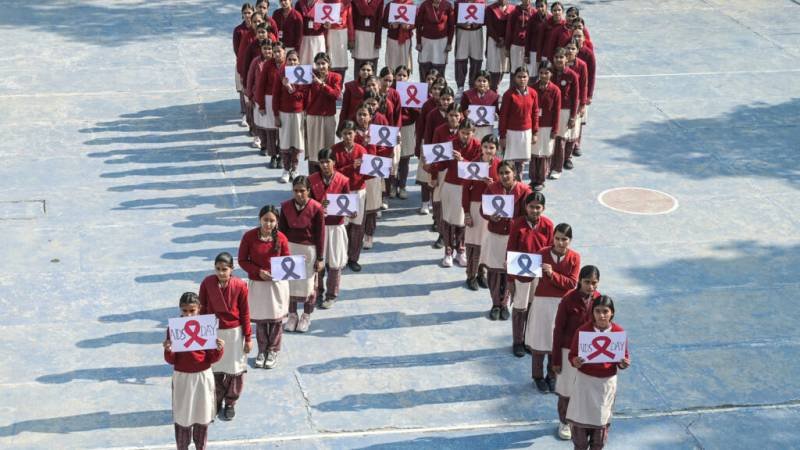
UN Warns Global HIV Progress at Risk Amid Funding Cuts, 1,600 Daily Deaths
Global HIV Progress at Risk as International Funding Falls 18 Percent

In its annual global update, the UNAIDS agency said the world had moved closer to controlling the HIV pandemic, but funding reductions and disruptions to essential services were putting these gains at risk.
AIDS-related deaths fell to their lowest level in more than two decades, largely due to wider access to treatment and improvements in healthcare programmes.
Around 570,000 people died from AIDS-related illnesses in 2025, equivalent to nearly 1,600 deaths every day. The figure was down from 600,000 in 2024 and 1.3 million in 2010.
Based on data from 172 countries, UNAIDS estimated that approximately 41 million people were living with HIV worldwide last year, including 32.1 million who were receiving antiretroviral therapy.
The agency said wider access to antiretroviral medicines had also helped reduce the risk of HIV transmission. An estimated 1.2 million people acquired HIV in 2025, compared with 1.3 million in 2024 and a peak of 3.5 million in 1994.
“HIV, which was once a death sentence, has become a manageable health condition for millions of people thanks to life-saving HIV medicines,” UNAIDS said.
The agency also highlighted the potential of lenacapavir, a twice-yearly injectable medicine, and other long-acting prevention innovations to protect more people from acquiring HIV.
International funding declines
Despite these advances, UNAIDS reported an 18 per cent decline in international financing for HIV programmes over the past year, warning that funding losses had destabilised prevention and treatment services worldwide.
The United States, the largest source of international HIV funding, reduced its contributions by 26 per cent between 2024 and 2025.
Meanwhile, disbursements from the Global Fund to Fight AIDS, Tuberculosis and Malaria fell by 13 per cent during the same period.
UNAIDS Executive Director Winnie Byanyima warned that the world was moving towards a preventable crisis.
“Every clinic that closes, every outreach worker who loses their job and every young woman turned away from prevention services today risks becoming a new HIV infection tomorrow,” she said.
The agency said governments had acted quickly to protect HIV treatment programmes, but prevention services and community-based support systems had been severely affected.
Fewer HIV and viral load tests are being conducted, while the number of people starting treatment for the first time has also declined.
Sub-Saharan Africa faces major risks
UNAIDS warned that sub-Saharan Africa, the region most affected by HIV, was expected to bear the greatest impact of the funding cuts.
It added that current estimates did not yet reflect the full consequences of disruptions to funding and services during 2025, meaning the worst effects could still lie ahead.
Reduced testing, prevention campaigns, outreach activities and treatment support could eventually lead to increased HIV transmission, more AIDS-related illnesses and rising deaths, the agency cautioned.
Since the beginning of the epidemic, an estimated 92 million people have acquired HIV, while 44.2 million have died from AIDS-related illnesses.
The United Nations set a target in 2015 to end AIDS as a public health threat by 2030.
UNAIDS maintained that the goal remained achievable, stressing that the resources and strategies needed to revive global efforts were available despite the financial challenges.
Comments are closed, but trackbacks and pingbacks are open.