

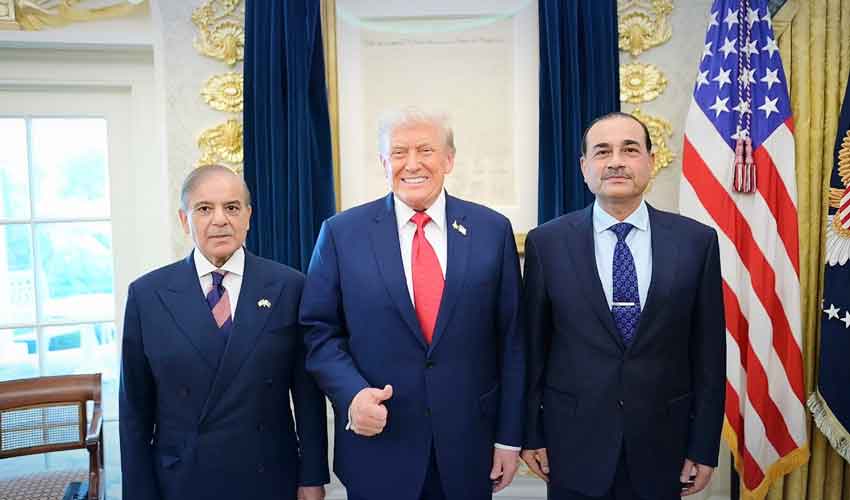
Trump’s Transactional Diplomacy Elevates Pakistan, Marginalises India
It noted that India’s continued purchase of Russian oil had drawn displeasure in Washington and contributed to growing strains in US-India relations, which the magazine described as having fallen to their lowest level in two decades.

WASHINGTON: Pakistan has emerged as a “winner” under President Donald Trump’s new foreign policy approach, while India has been labelled a clear “loser”, according to a report published by the American magazine Foreign Policy, which says the balance in Washington has shifted in Islamabad’s favour due largely to Pakistan’s military leadership.

Citing diplomatic developments during President Trump’s second term, the magazine noted that Pakistan has regained a level of trust and access in Washington that even many long-standing US allies have struggled to secure, marking a strategic comeback for Islamabad.
According to Foreign Policy, Pakistan successfully pursued result-oriented diplomacy within Trump’s “transactional” framework, helping redraw the regional diplomatic landscape. The report said emerging areas such as cryptocurrency and cooperation on critical minerals had also become part of Pakistan-US discussions and potential agreements.
Read More: Trump Again Praises Pakistan’s General Munir as ‘Highly Respected’
The magazine highlighted President Trump’s growing closeness with Pakistan’s military leadership, particularly Field Marshal Asim Munir, saying this relationship had injected new momentum into bilateral ties and restored Pakistan’s influence in Washington.
Referring to a high-level engagement in the Oval Office, the report said US Secretary of State Marco Rubio received Field Marshal Asim Munir and Prime Minister Shehbaz Sharif, describing the army chief’s role as a key driver in advancing relations between the two countries.
The report said Pakistan’s military leadership had given Islamabad a strategic diplomatic advantage, while its renewed progress in Washington had weakened India’s standing with the United States.
It noted that India’s continued purchase of Russian oil had drawn displeasure in Washington and contributed to growing strains in US-India relations, which the magazine described as having fallen to their lowest level in two decades.
Calling Pakistan’s return to Washington a “quiet but decisive” success, Foreign Policy said the United States once again viewed Pakistan as a valuable and effective partner, adding that Islamabad’s smart strategy had shifted the balance of power in its favour.
The report also highlighted Pakistan’s early cooperation during Trump’s second term in helping secure the arrest of a mastermind behind a major terrorist attack, describing it as an immediate and encouraging success for the US administration.
Pakistan’s Ambassador to the United States, Rizwan Saeed Sheikh, was quoted as saying that bilateral relations had once again become very strong, stressing the need to convert the renewed goodwill into tangible outcomes.
In contrast, the magazine said India had been pushed into a defensive and increasingly strained position, facing diplomatic setbacks and mounting trade pressure. It added that President Trump remained dissatisfied with India’s trade policies, that a 50 percent tariff on Indian goods was still in place, and that prospects for a bilateral trade agreement remained uncertain.


Comments are closed, but trackbacks and pingbacks are open.