
Trump’s Middle East troubles could advantage Xi during planned summit
Trump’s Middle East troubles give China more leverage ahead of Beijing summit.

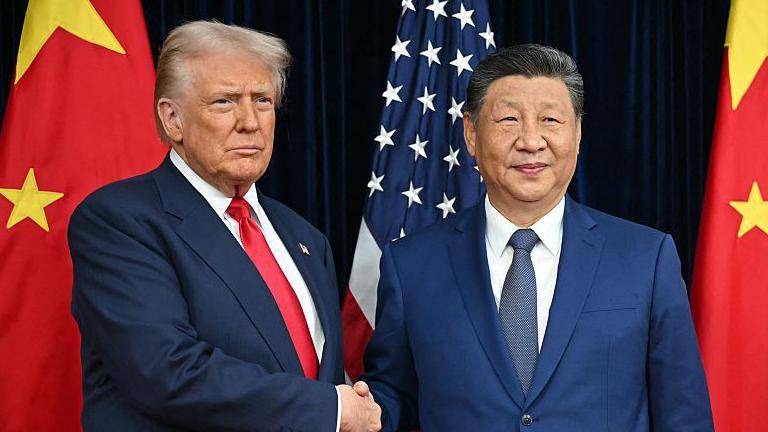
China Vs US – (Web Desk) – China could gain the upper hand with Donald Trump when he finally visits Beijing. Analysts say his troubles in the Middle East make him more vulnerable.
Trump was supposed to meet President Xi Jinping at the end of this month. But he delayed the trip by several weeks. The delay comes as he deals with the fallout from the conflict in the Middle East.
Last month, Trump joined Israel in strikes on Iran. This sparked violence across the region. Energy prices jumped to highs not seen in years. Fears grew of global supply shortages because Iran effectively closed the Strait of Hormuz.
Trump now faces a hard time explaining how the intervention will end. Many traditional allies are hesitant to support him. This means he may go to China looking for a diplomatic win.
Ali Wyne, a senior adviser on US-China relations at the International Crisis Group, said the US show of force did not intimidate Beijing. Instead, it exposed Washington’s limits.
“Unable to reopen the Strait of Hormuz alone, Washington now needs China’s help to manage its own crisis,” Wyne said.
Trump said he still expects to visit China in five or six weeks. The summit is expected to discuss tariffs. Trump and Xi had shaken hands on a deal last October in South Korea.
But Trump’s weaker position may let China push for deeper tariff cuts. It could also make it harder for the US to ask for changes on other trade issues, like access to key minerals.
Last weekend, Chinese and American trade officials met in Paris. They described the talks as “constructive.” Still, analysts say major breakthroughs are unlikely. Trust between the two sides is low after years of disputes over trade, technology, and human rights.
China has ignored Trump’s call for help reopening the Strait of Hormuz. Analysts say Beijing now has more strategic leverage over the US, at least in the short term.
Nor has it relaxed its tight control on exports of rare earths, an industry that China dominates and provides certain critical minerals needed in US weaponry.
US military demand for certain “heavy” rare earths far exceed commercial needs, Jason Bedford, visiting senior research scholar at the National University of Singapore’s East Asian Institute, told AFP.
They are used for equipment including drones, jet fighters, missile guidance systems and radar, said Bedford.
While the size of US military stockpiles is a “closely guarded secret”, he said, “in theory, (China) could certainly disable new weapons production”.

The absence of announcements on Hormuz or rare earths suggests “no concrete results were made during the trade talks” in Paris, said Wang of Eurasia Group.
Xi and Trump “have other chances to meet this year”, but “the prospects of getting breakthroughs beyond lower tariffs seem limited”, she told AFP.
China could also calibrate its actions to make Trump’s domestic position shakier at a time when a majority of Americans already oppose military action in the Middle East.
Trump and his negotiators “want China to buy US agricultural products, which is important to the midterm elections for the Republicans”, said Wu Xinbo, director of the Center for American Studies at Shanghai’s Fudan University.
“If you cannot stabilise relations with China, you have to face some big challenges,” Wu said.
Any Xi-Trump summit is unlikely to succeed in changing either side’s broader geostrategic aims.
On Thursday, the Trump administration announced that it is considering easing certain sanctions targeting Iranian oil to curb rising prices — a move experts say could benefit China.
China is believed to be the main buyer of sanctioned Iranian oil, making it Tehran’s “main economic lifeline”, Henry Tugendhat, a China expert at the Washington Institute for Near East Policy, said at a forum on Wednesday.
Beijing also has “no incentive” to stop selling weapons to Iran as long as the United States continues to provide arms to self-ruled Taiwan, Tugendhat said.
On the streets of Beijing this week, locals were circumspect about a visit from the US president.
“Trump’s personality is that he changes every day,” a 50-year-old IT worker surnamed Huang told AFP.
Pakistan rejects Afghan Taliban’s accusations of breaching agreed ceasefire deal
“Even if he comes, he may have reached agreements with you, but he will change his mind,” he said.
“He is not reliable.”
Still, Trump’s willingness to come to Beijing is a positive sign for 32-year-old finance worker Yang, who said: “I think the United States still hopes to maintain a positive and friendly attitude towards China.”

Comments are closed, but trackbacks and pingbacks are open.