

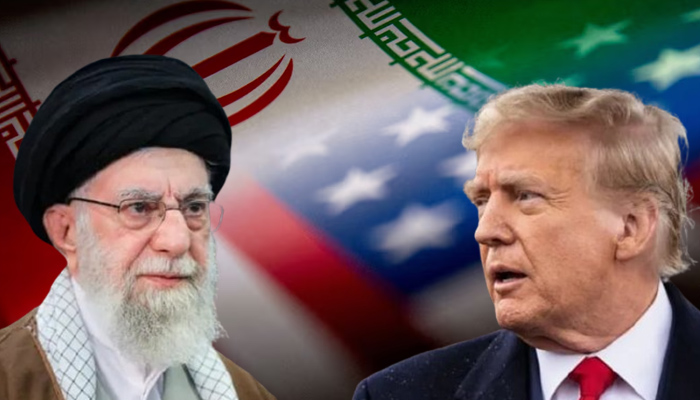
Trump Warns Iran Ahead of Geneva Nuclear Talks
Iran-US Nuclear Talks Resume as Trump Issues Stern Warning

GENEVA (Web Desk) – President Donald Trump has warned Iran of potential consequences if it fails to reach an agreement with the United States, as negotiators prepare for the latest round of nuclear talks in Geneva on Tuesday. The discussions, mediated by Oman, aim to prevent any escalation toward military confrontation.
Trump, who has repeatedly threatened military action over Iran’s nuclear programme and the recent crackdown on protesters, told reporters aboard Air Force One, “I don’t think they want the consequences of not making a deal.”
Iran, cautiously optimistic, says Washington’s position has shifted toward a “more realistic” stance on nuclear issues. Iranian Foreign Minister Abbas Araghchi met with Omani counterpart Badr Albusaidi in Geneva to discuss sanctions relief and nuclear negotiations, emphasizing Tehran’s commitment to “result-oriented diplomacy” and regional peace.
While Iran insists the talks focus solely on its nuclear programme, Washington has previously sought to expand discussions to include ballistic missiles and support for regional armed groups.

Tensions remain high, with Iran’s Islamic Revolutionary Guard Corps launching war games in the Strait of Hormuz to prepare for “potential security and military threats.” Both sides continue to leverage pressure ahead of the talks, with Iran threatening to block this strategic oil and gas route if provoked.
Trump signals indirect role in high-stakes Iran nuclear talks
US Secretary of State Marco Rubio expressed cautious optimism, stating, “The president always prefers peaceful outcomes and negotiated solutions.” Araghchi also said on X that he brought “real ideas to achieve a fair and equitable deal” but would not “submit to threats.” He is meeting with IAEA head Rafael Grossi for technical discussions.
Washington has increased military presence in the Middle East, sending a second aircraft carrier to the region. Trump recently suggested that regime change in Iran would be “the best thing that could happen,” while Iran indicated possible compromises on uranium stockpiles if sanctions are lifted. Deputy Foreign Minister Majid Takht-Ravanchi noted that a genuine American approach could pave the way toward a deal.
The upcoming talks mark a critical moment in US-Iran diplomacy, with global attention focused on whether negotiations can avert another confrontation in the volatile Middle East.


Comments are closed, but trackbacks and pingbacks are open.